


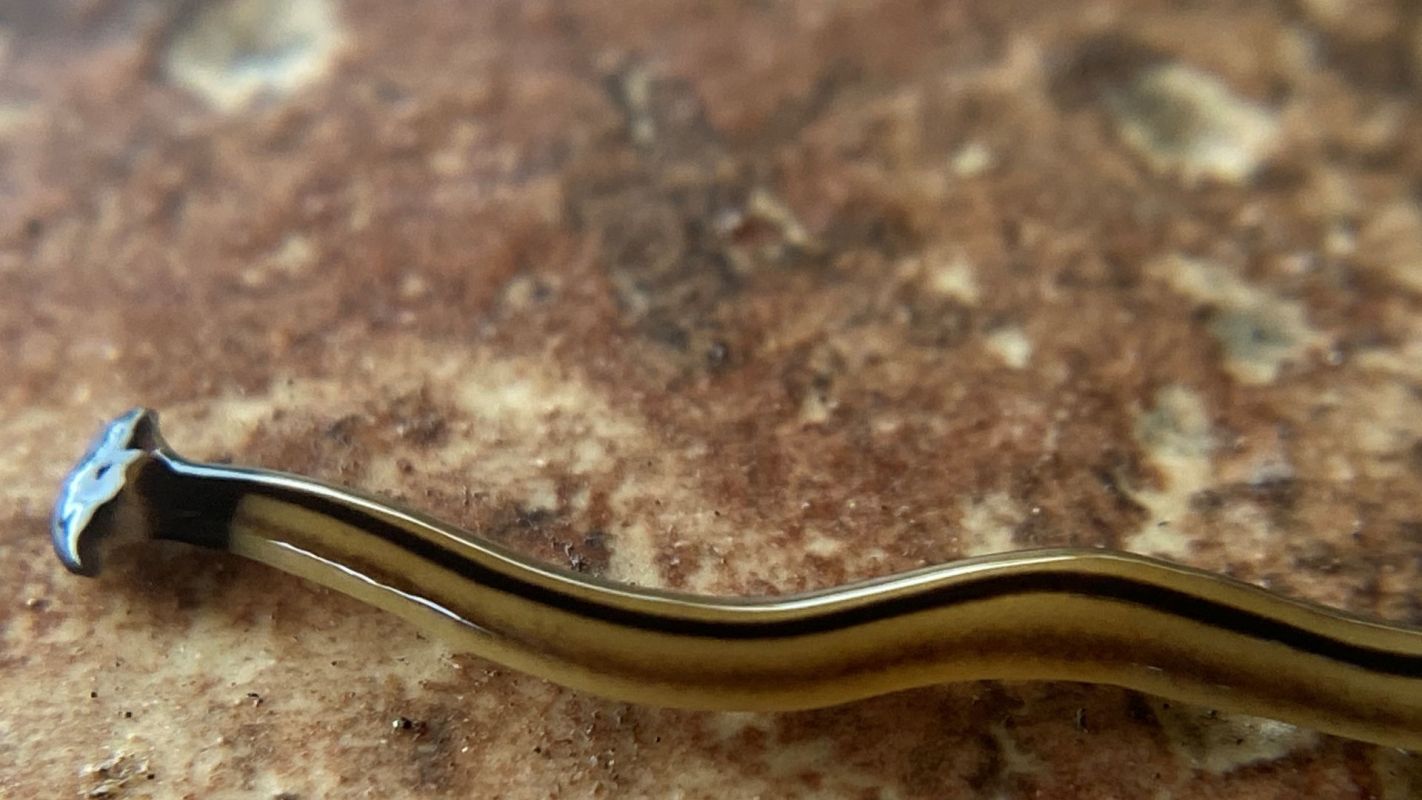
After recent rains in East Texas, an unwelcome garden pest has re-emerged: the invasive hammerhead worm.
And if you find one, there is one thing you definitely should not do — chop it up. That can turn one worm into several.
According to KLTV, hammerhead worms have resurfaced across East Texas following wet weather. Named for their distinctive head shape, the worms are common in the region and can grow up to 10 to 15 inches long.
They typically have light-colored bodies with a dark stripe running down their backs, making them relatively easy to identify.
Hammerhead worms are invasive, meaning they are not native to the region and can disrupt local ecosystems.
What makes them especially concerning is their ability to regenerate. Cutting or crushing a hammerhead worm can backfire because each separated piece may develop into a new worm.
TCD Picks » Quince Spotlight
💡These best-sellers from Quince deliver affordable, sustainable luxury for all




That creates problems for gardens and ecosystems because hammerhead worms prey on slugs, snails, and especially earthworms.
Earthworms play a critical role in maintaining soil health by loosening it and breaking down organic material.
When earthworm populations decline, soil quality can suffer, ultimately affecting plant growth in gardens and landscapes. For people trying to grow food or maintain healthy soil naturally, that can become a major issue.
There is also a direct health concern for people and pets. Officials advise against handling hammerhead worms with bare hands because they release toxins that may irritate skin. Pets can also become ill if they ingest one.
The issue highlights a broader environmental challenge. Human-shaped environments — from plant transport to backyard landscaping — can unintentionally help invasive species spread, creating long-term problems for homeowners and native ecosystems.
Invasive species can outcompete native plants and animals for food, water, and habitat, sometimes contributing to population declines or even local extinctions.
Their rapid growth and reproduction can also reduce biodiversity and destabilize ecosystems over time.
To combat invasive species, trained detection animals such as dogs are increasingly being used by conservation teams. Because of their strong sense of smell, dogs can locate invasive organisms that might otherwise go undetected, helping officials intervene earlier and manage outbreaks more effectively.
For example, in Wyoming's Snake River corridor, highly trained detection dogs have supported conservationists for six consecutive summers, successfully detecting invasive species such as saltcedar and perennial pepperweed.
If you spot a hammerhead worm, experts recommend sealing it in a container with salt, alcohol, vinegar, or citrus oil.
The container can then be frozen for 48 hours as an added precaution, though freezing alone is not enough to kill the worm.
Residents are also encouraged to report sightings to their local Texas A&M AgriLife Extension Service office.
Texans can also email the Texas Invasive Species Institute at invasives@shsu.edu with a photo and the location of the sighting.

Get TCD's free newsletters for easy tips, smart advice, and a chance to earn $5,000 toward home upgrades. To see more stories like this one, change your Google preferences here.







