


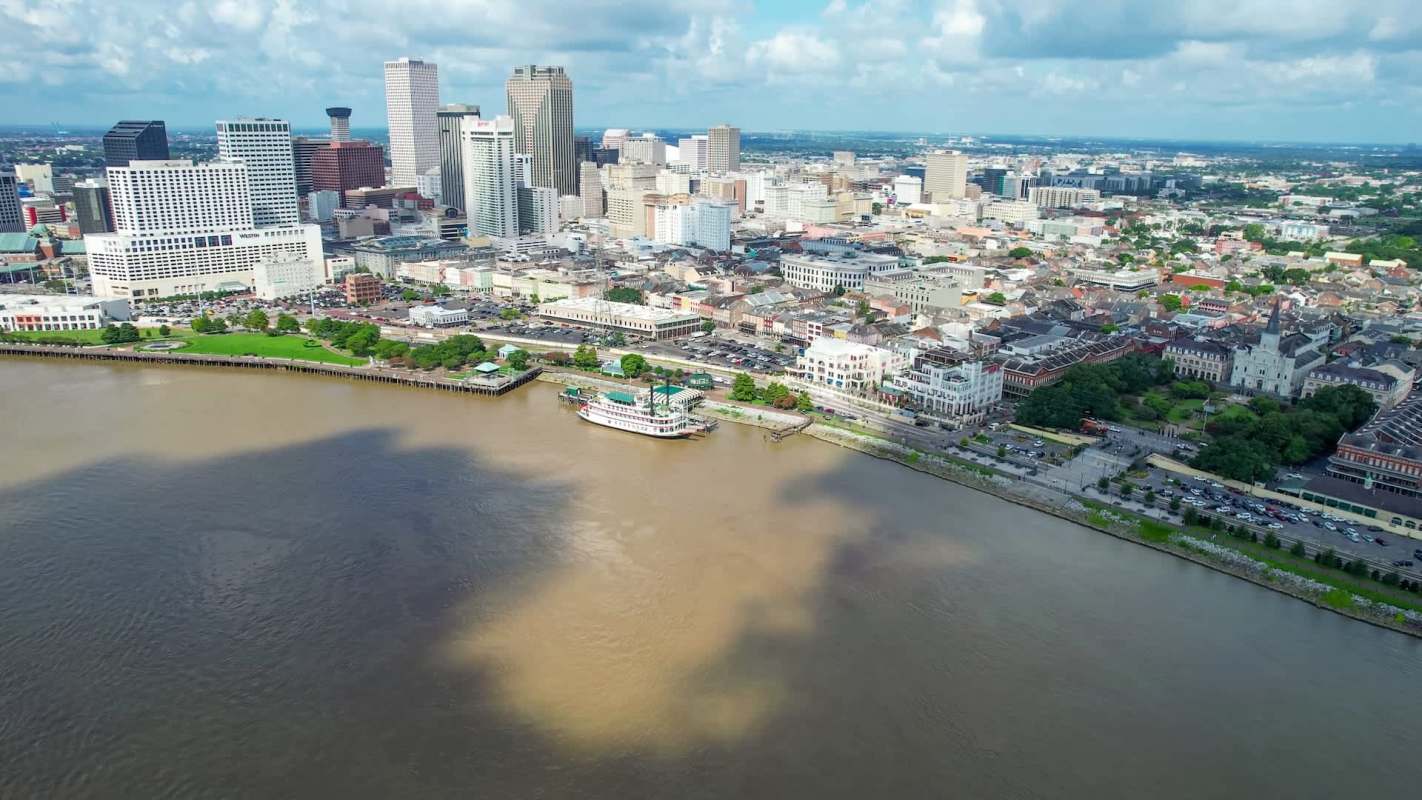
Beneath wrought-iron balconies and with the sound of jazz drifting through humid air, New Orleans has long stood as one of America's most iconic cultural hubs. But now, the city's future is under threat.
According to The Guardian, researchers have warned that New Orleans may no longer be able to outlast the rising water around it, and its long-term survival may no longer be realistic.
What's happening?
The study, published in the journal Nature Sustainability, projected that New Orleans could be surrounded by the advancing Gulf of Mexico within just a few decades as sea levels rise and the land continues to sink.
"While climate mitigation should remain the first step to prevent the worst outcomes, coastal Louisiana has evidently already crossed the point of no return," researchers wrote.
Southern Louisiana is facing between 3 and 7 meters of sea level rise, alongside the loss of as much as three-quarters of its coastal wetlands.
Land loss is already happening fast. As The Guardian noted, Louisiana has lost about 2,000 square miles of land since the 1930s — roughly the size of Delaware — and continues to lose a football field's worth every 100 minutes.
TCD Picks » Quince Spotlight
💡These best-sellers from Quince deliver affordable, sustainable luxury for all




Even the billions spent on levees and flood protection systems after Hurricane Katrina may not be enough in the long run.
"In paleo-climate terms, New Orleans is gone," said co-author of the study Jesse Keenan, per the publication. "The question is how long it has."
Why is this concerning?
New Orleans is home to roughly 360,000 people, with deep cultural roots and vibrant communities.
"They are facing one of the highest sea level rises in the world, and I don't know how long human effort can fight against that tide," said co-author of the study Wanyun Shao, per The Guardian. "It's like a time bomb."
As oceans rise due to heat-trapping pollution from activities like burning oil, coal, and gas, coastal cities like New Orleans are experiencing more frequent and intense flooding. Stronger hurricanes, higher storm surges, and disappearing wetlands are growing threats.
These changes raise insurance costs and put public health and safety at risk.
What's being done about it?
Scientists are calling for a managed retreat, a coordinated effort to help communities gradually and safely relocate.
There have also been efforts to restore Louisiana's wetlands by redirecting sediment from the Mississippi River, which could help rebuild land naturally, though some major projects have faced political and financial hurdles.
"This could be an opportunity for New Orleans to help migrate people further north, invest in long-term infrastructure, and make that sustainable," said Keenan, per The Guardian. "That exodus has already begun, so if nothing is done, people will just trickle out over time, and it will be an uncoordinated mess."

Get TCD's free newsletters for easy tips, smart advice, and a chance to earn $5,000 toward home upgrades. To see more stories like this one, change your Google preferences here.







