


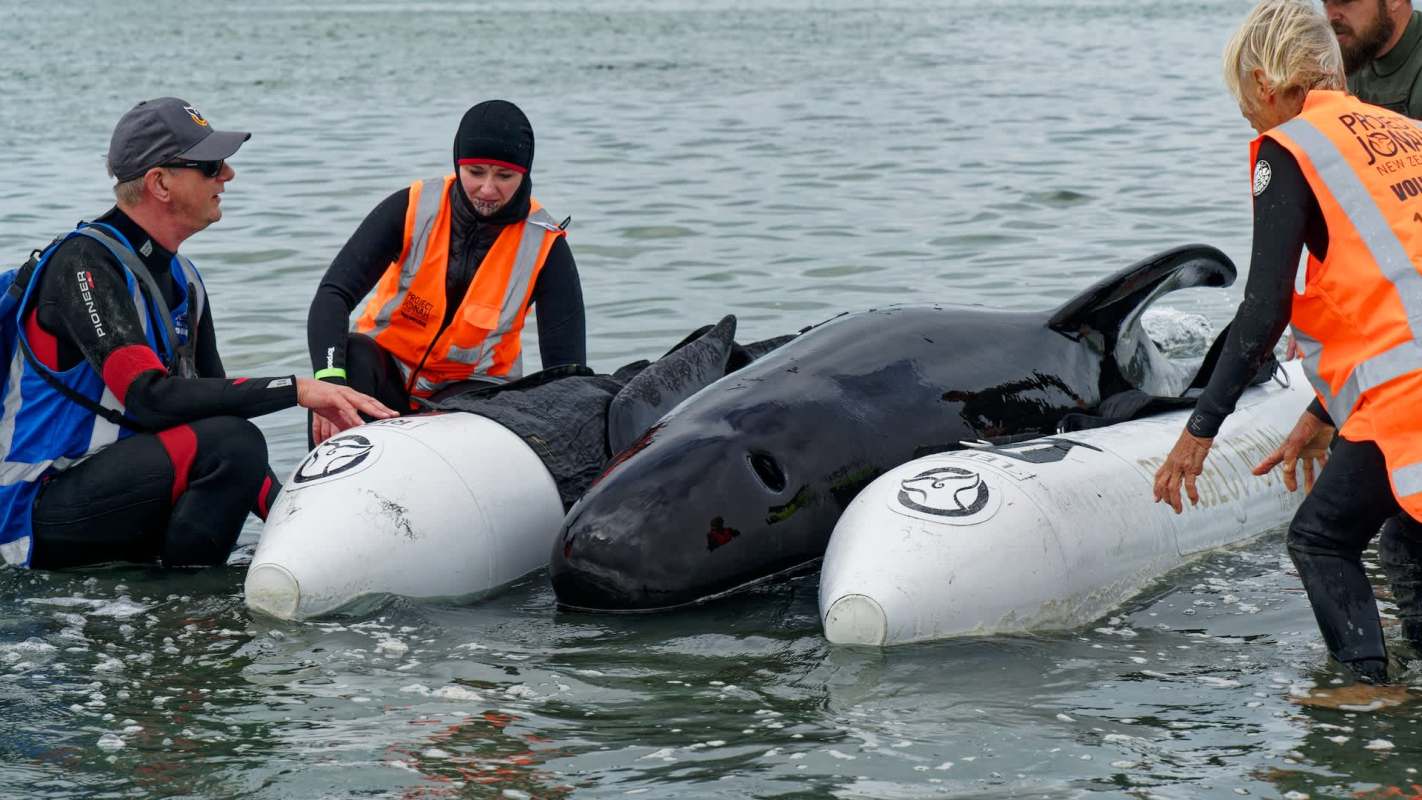
A tragic mass stranding has given scientists a rare window into the lives of one of the ocean's most elusive animals.
What's happening?
In July 2023, 55 long-finned pilot whales died after becoming stranded in shallow waters near Tolsta Bay in Scotland, as covered in a new BBC report.
While mass strandings are not uncommon, this event proved especially valuable for researchers. By analyzing skin tissue, scientists identified "chemical signatures" suggesting the whales were healthy and likely hunting fish and squid near deep waters along the continental shelf.
Researchers believe the stranding may have been triggered by a distressed female pilot whale undergoing a difficult birth. Because the species has "incredibly strong bonds," the rest of the pod may have followed her into shallow waters, ultimately becoming trapped.
"Once stranded, the animals were unable to refloat themselves due to a combination of surf generated by onshore winds and the soft sand substrate on the beach," scientists said, per the BBC.
Why is this important?
Researchers emphasized that long-finned pilot whales are a deep-water species and are "notoriously difficult" to study in the wild.
TCD Picks » Quince Spotlight
💡These best-sellers from Quince deliver affordable, sustainable luxury for all




"Our findings demonstrate the importance of deep water food sources to long-finned pilot whales, providing valuable insights into their early spring-summer feeding habits," lead author Anna Kebke said, per the BBC.
However, this behavior may also increase their risk. Continental shelf areas lie close enough to shore that a single misstep, such as following a distressed pod member, can lead entire groups into dangerous, shallow waters.
More broadly, strandings like this highlight how sensitive marine animals are to environmental changes. Shifts in ocean temperatures, food availability, and human activity can all disrupt navigation and feeding patterns.
Healthy oceans are critical for both marine life and the livelihoods of millions of people worldwide.
What's being done about it?
Studies like this help scientists identify high-risk regions and critical time periods, offering insights that can inform more effective conservation strategies and proactive measures to protect vulnerable marine species.

Get TCD's free newsletters for easy tips, smart advice, and a chance to earn $5,000 toward home upgrades. To see more stories like this one, change your Google preferences here.







