


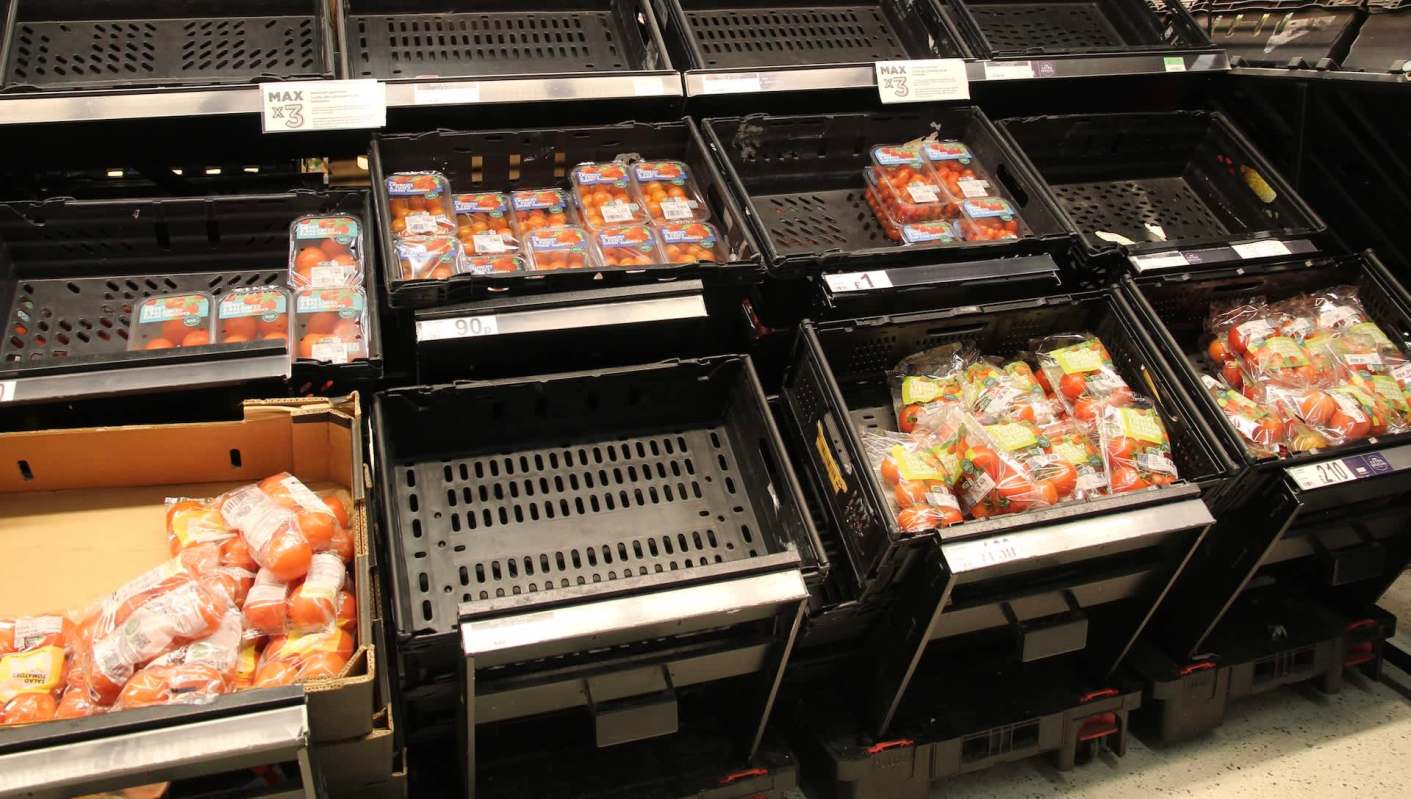
Food deserts are becoming more rampant across the United States, according to a new report from the Institute for Local Self Reliance.
What's happening?
The organization recently released an interactive map, which shows the location of food deserts across the country. For this dataset, ILSR defined an urban food desert as a low-income census tract where at least 500 people or 33% of the population live a mile or more from the nearest supermarket, large grocery store, or supercenter. For rural food deserts, the one-mile threshold increased to 10.
The Ohio Capitol Journal summarized the report, pointing out that most of the state's food deserts were in rural areas, but that urban areas were not immune.
"In Columbus, for example, eight contiguous tracts east and just north of downtown are deserts," the newspaper said.
TCD Picks » Martie
💡Martie makes it easy to find quality food at massive discounts while helping to fight food waste





ILSR blamed the growing food desert epidemic on a lack of enforcement by the federal government of a Depression-era antitrust law, which requires suppliers to offer the same pricing and terms to all retail buyers. This trend began in the 1980s, it said.
"As independent grocers faced steadily higher wholesale costs, they were forced to raise their prices. Shoppers — especially in low-income and working-class neighborhoods, where people could least afford to pay more — were increasingly pushed toward the big chains," the group said in an accompanying report. "Independent grocers began to disappear rapidly. Since the early 1980s, their market share has fallen from over 50 percent to about 25 percent."
Why are food deserts important?
Americans are dealing with food deserts while at the same time grappling with food inflation, which is making it harder than ever to access affordable, healthy food.
The warming of the planet is contributing to the problem, as more unpredictable weather patterns are decimating food crops across the world and leading to increased prices. For instance, a strong hailstorm in Malta recently destroyed crops like carrots, marrow, strawberries, cabbage, cauliflowers, potatoes, and leafy greens.
Save $10,000 on solar panels without even sharing your phone number Want to go solar but not sure who to trust? EnergySage has your back with free and transparent quotes from fully vetted providers in your area. To get started, just answer a few questions about your home — no phone number required. Within a day or two, EnergySage will email you the best options for your needs, and their expert advisers can help you compare quotes and pick a winner. Solar panels can save you more than $50k over their 25-year lifespan, and EnergySage can help you save as much as $10k on installation. Which begs the question — isn't that worth an email or two? |

At the same time, the U.S. throws out about 30-40% of the food supply, according to the U.S. Department of Agriculture. This drives prices up even further as it increases the amount of food that needs to be grown.
What's being done about food deserts?
Some organizations and individuals are working to bring fresh and healthy options to food deserts. For instance, a South Los Angeles man known as the Gangsta Gardener has been able to transform unused land in his community into food forests. He's also driven law changes that make it easier for people to grow fruits and vegetables in public spaces.
One solution for people living in food deserts is online shopping. Martie is one option that offers discounted groceries and essentials. The company takes other brands' overstock and surplus inventory, keeping it out of the waste stream and offering the products at up to 80% off.
|
Which of these savings plans for rooftop solar panels would be most appealing for you?
Click your choice to see results and earn rewards to spend on home upgrades. |
 Save $1,000 this year 💸
Get TCD's free newsletters for easy tips to save more, waste less, and make smarter choices — and earn up to $5,000 toward clean upgrades in TCD's exclusive Rewards Club.







