


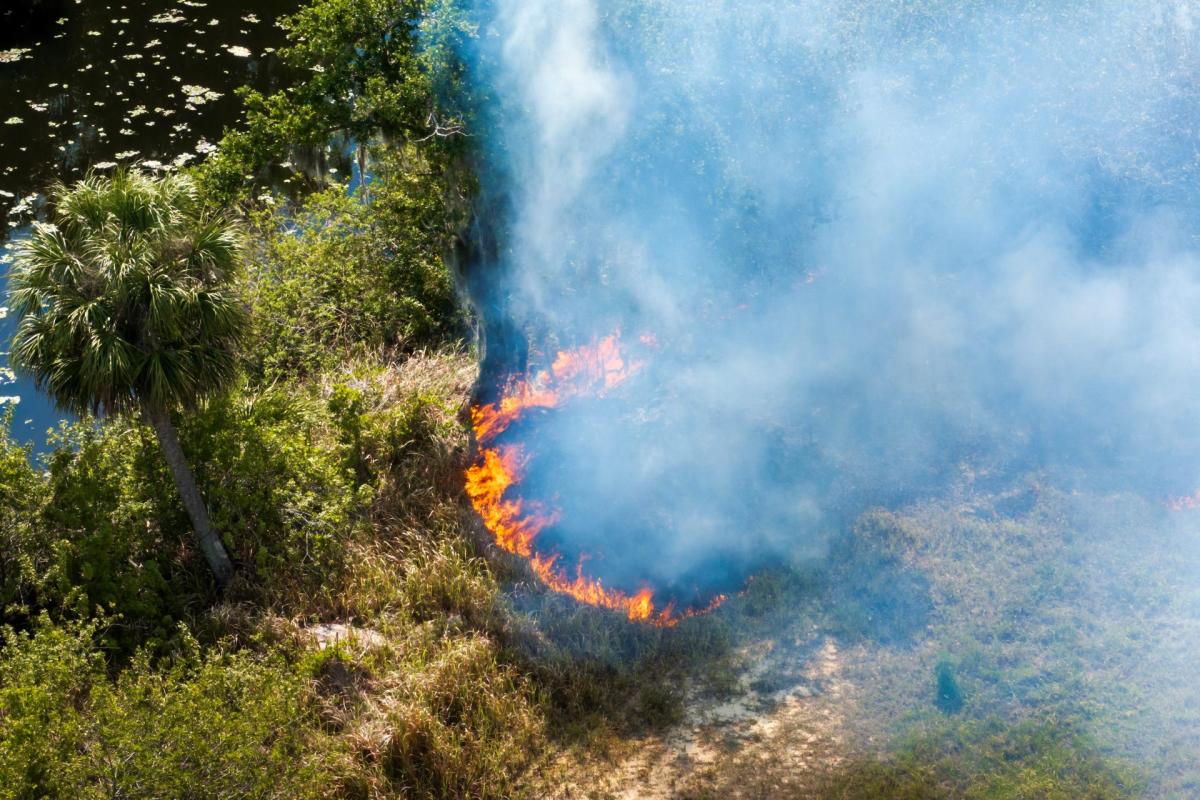
A perfect storm of extreme drought and dry conditions in Southwest Florida is contributing to a rapidly growing wildfire in Big Cypress National Preserve.
What's happening?
The Palm Beach Post reported on the so-called "National fire" that exploded overnight on Feb. 24. The NOAA Satellites' (@NOAASatellites) account on the social media platform X shared footage of the expanding spread.
The #NationalFire burning in Florida has now exploded to 25,000 acres in size. The #wildfire ignited yesterday in Big Cypress National Preserve and @NOAA's #GOESEast (#GOES19) 🛰️ has been tracking the smoke plume and heat from the blaze. @NWSMiami is cautioning residents about… pic.twitter.com/yXSIBlDjKx
— NOAA Satellites (@NOAASatellites) February 24, 2026
As of writing, the fire is 0% controlled, and up to 25,000 acres in size. Just a day earlier, the fire covered only 1,000 acres. Riki Hoopes, fire communication specialist for the U.S. Wildland Fire Services, explained the rapid growth.
"The drought we are experiencing, as well as the recent frost created really dry conditions and that is carrying the fire through," Hoopes told the Palm Beach Post. "We are seeing fuels that normally stall or stop fire getting burned through."
The National Park Service said that dry vegetation along with frost-killed fuels made for an "unusually heavy and highly receptive fuel bed." Even with some more humid conditions on the way, National Weather Service Meteorologist George Rizzuto was pessimistic.
"Tomorrow we will moisten up," Rizzuto said. "But everything is so dry already, there really isn't going to be much to keep the fire from spreading."
TCD Picks » Quince Spotlight
💡These best-sellers from Quince deliver affordable, sustainable luxury for all




Why is the fire spread in Big Cypress important?
One very noticeable impact of the fires is on the roads. Multiple major roadways including Interstate 75 and U.S. Route 41, also known as Alligator Alley and Tamiami Trail, respectively, were affected by the smoke. Worsening visibility can lead to dangerous conditions and accidents. Closures are also on the table.
Another piece of fallout is the air pollution from wildfires. Studies have revealed that wildfires present major health risks that extend far beyond where the fires destroy land and buildings.
The natural toll and economic costs are also substantial. The U.S. Forest Service now spends over half of their budget on wildfire suppression. There are also large costs in restoring the lands after fires burn.
The ongoing drought in Florida exacerbates wildfire risks, and scientists assert that rising global temperatures heighten the intensity of such events. It's worth noting that officials told the Naples Daily News that they believe a human caused this fire.
|
Which of these savings plans for rooftop solar panels would be most appealing for you?
Click your choice to see results and speak your mind. |
 Save $1,000 this year 💸
 What's being done about the fire at Big Cypress?
Crews are working to stop the fire's spread and direct it away from major highways. Those efforts include using water, removing unburned fuels before the fire reaches them, and creating a defined perimeter.
Local 10 reported that the Coral Springs Fire Department is advising residents with respiratory issues to avoid going outside amid the poor air quality.
If the fire was started by a human, holding that individual to account can help deter future arson.

Get TCD's free newsletters for easy tips to save more, waste less, and make smarter choices — and earn up to $5,000 toward clean upgrades in TCD's exclusive Rewards Club.







