


There's a certain kind of modern heartbreak that doesn't come with violins or tearful goodbyes. It comes in a photo, posted online, of perfectly usable stuff being tossed like it never mattered.
What's happening?
A post in the subreddit r/mildlyinfuriating garnered attention because a restaurant worker showed a garbage bin full of discarded wine bottles.
"We will no longer serve alcohol at work tomorrow so I had to pour nearly 100 bottles of white wine down the drain. That can was empty when I started," the original poster said.
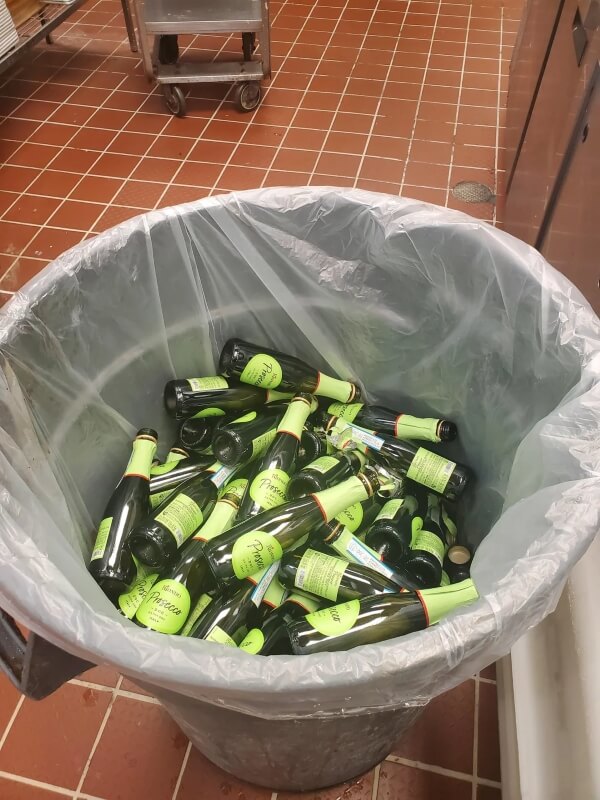
The image struck a nerve. Commenters reacted with a mix of disgust and disbelief, with one person writing, "That physically hurt to look at."
Others questioned why the beverages weren't donated or repurposed — and why the wine bottles weren't at least recycled instead of trashed.
Why is food waste important?
When food and drinks get thrown out, it's not just the actual sustenance that is wasted. It's the water and labor used to grow and harvest it, the fuel used to transport it, and the energy used to refrigerate and cook it. In this case, the wine could have been prepared over multiple years. Pouring it down the drain after one decision wastes all that time and effort.
TCD Picks » Quince Spotlight
💡These best-sellers from Quince deliver affordable, sustainable luxury for all




Meanwhile, people are struggling to afford groceries. Food banks are stretched thin. In some regions, food banks have reported increases of demand by 27-30% because of high prices and the loss of federal assistance benefits.
In these conditions, it becomes even more astonishing that edible goods can still be tossed for reasons that have more to do with corporate policy than safety.
Is the restaurant doing anything about this?
The employee didn't identify the restaurant. But that's part of what makes these moments so frustrating. A lot of food waste happens quietly, behind the swinging doors of kitchens, where customers never see it.
That said, many large restaurant groups and food brands promote sustainability goals: reducing food waste, improving inventory systems, and switching to more recyclable or compostable packaging. Some partner with donation services that redirect surplus food to shelters or community organizations.
|
What's the most you'd pay per month to put solar panels on your roof if there was no down payment?
Click your choice to see results and speak your mind. |
 $200 or more 💰
 What's being done about food waste more broadly?
The good news is that food waste is a solvable problem because proven solutions exist.
Some cities and states have expanded composting programs and require businesses to divert organics from landfills. Others are investing in food rescue networks that make donation easier, faster, and legally safer.
For everyday people looking for low-effort ways to reduce waste in their own lives, start with the simplest one. Buy less than you think you need, and treat leftovers like tomorrow's lunch instead of something to be trashed.

Get TCD's free newsletters for easy tips to save more, waste less, and make smarter choices — and earn up to $5,000 toward clean upgrades in TCD's exclusive Rewards Club.






