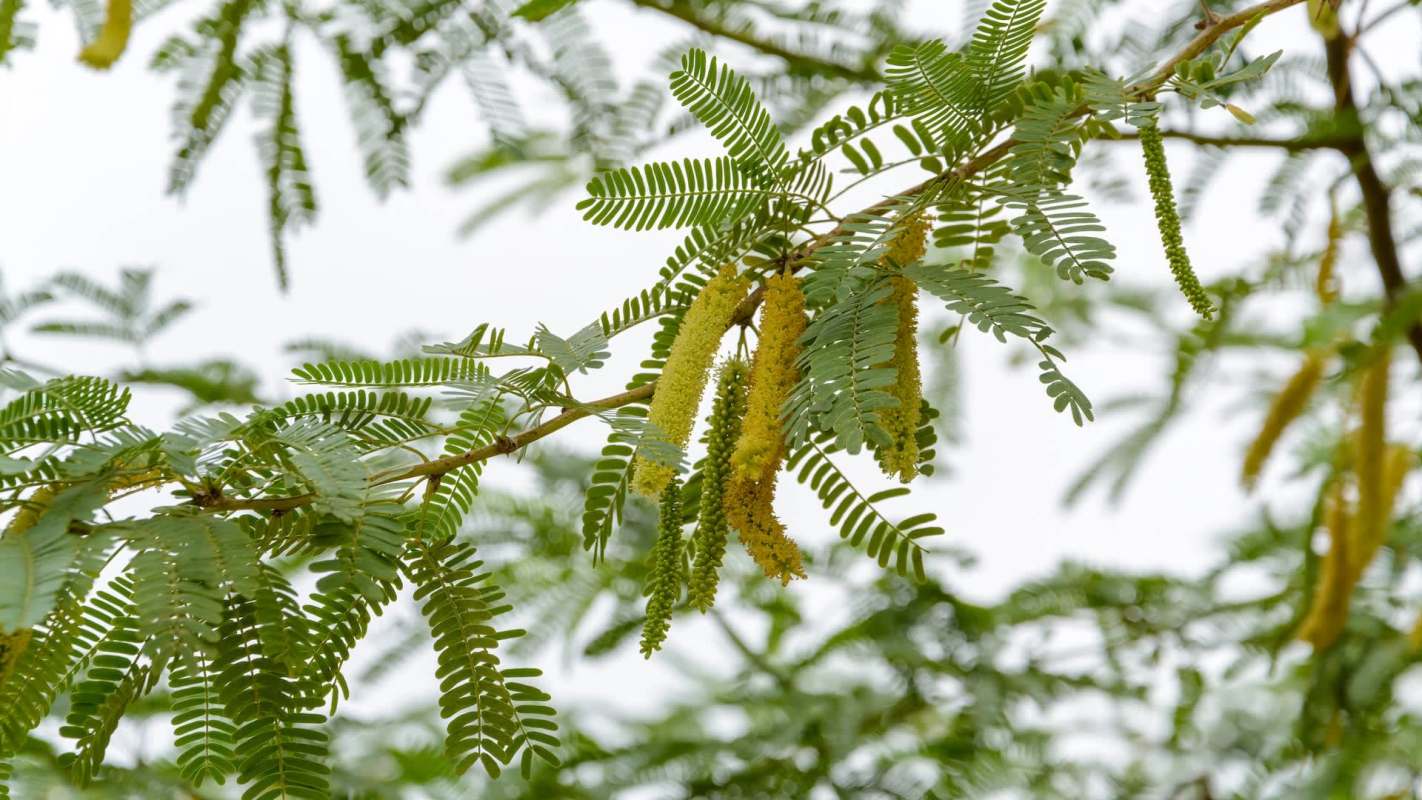
An invasive plant species called Prosopis juliflora is growing out of control in regions of India, and farmers and residents are sounding the alarm that it is harming their access to water.
What's happening?
As The New Indian Express reported, Prosopis juliflora trees have spread dramatically in the state of Tamil Nadu. Farmers warned that the Dharmapuri district, which is home to 74 lakes, has been severely impacted.
The waterways are overgrown with the invasive plants — which can grow as shrubs or trees — as a result of their aggressive nature and lack of maintenance. According to the reporting, the species guzzles a massive amount of water and blocks channels, leading to many of the lakes drying up despite rainfall. Reportedly, only 21 still have sufficient water storage.
"The entire lake resembles a desert," one farmer noted about a local 300-plus-acre body of water, per the news outlet.
Why is the plant's impact on water storage concerning?
Without water reserves, farmers cannot irrigate crops or raise livestock to make a living and supply people with food. Drinking water systems can also be put at risk, for humans and local wildlife alike.
Prosopis juliflora is native to Latin America. As a fast-growing invasive species in India, it can outcompete local native species, which destabilizes the ecosystem.
TCD Picks » Quince Spotlight
💡These best-sellers from Quince deliver affordable, sustainable luxury for all




Known regionally as seemai karuvalem, Prosopis juliflora was first introduced to the country during British rule. In the 1960s, its seeds were dropped from helicopters in an effort to solve a firewood shortage, as The Hindu detailed. Fast-forward a few decades, and its abundance has become a serious problem.
"It is not that there was no rain or the lake lacks the capacity to store water," J Prathapan, district secretary of the United Communist Party of India and the Agriculturist Labourers Association, explained to The New Indian Express, referring to 125-acre Lalligam Lake. "The seemai karuvelam trees are draining the water."
"We need to take immediate action and permanently clear invasive plants from the lakes," Prathapan added.
What's being done about the invasive species?
Invasive plants are often stubborn and tough to clear away, and physically removing them by the roots is frequently necessary to restore balance.
TCD Picks » Quince Spotlight
💡These best-sellers from Quince deliver affordable, sustainable luxury for all
|
What's the most you'd pay per month to put solar panels on your roof if there was no down payment?
Click your choice to see results and speak your mind. |
 $200 or more 💰
 In Dharmapuri, farmers and residents are demanding that the Public Works Department clear the trees that are harming lakes around the district. The department has begun that process in at least one lake, but it is a difficult task, and relief may not come soon, officials told The New Indian Express.
Supporting native plants and animals is another way to strengthen ecosystems. They are naturally in tune with their surroundings and can help conserve resources such as water. They can also help maintain food chains and control the spread of diseases.
You can help by planting native species in your area or volunteering to help remove invasives.

Get TCD's free newsletters for easy tips to save more, waste less, and make smarter choices — and earn up to $5,000 toward clean upgrades in TCD's exclusive Rewards Club.