


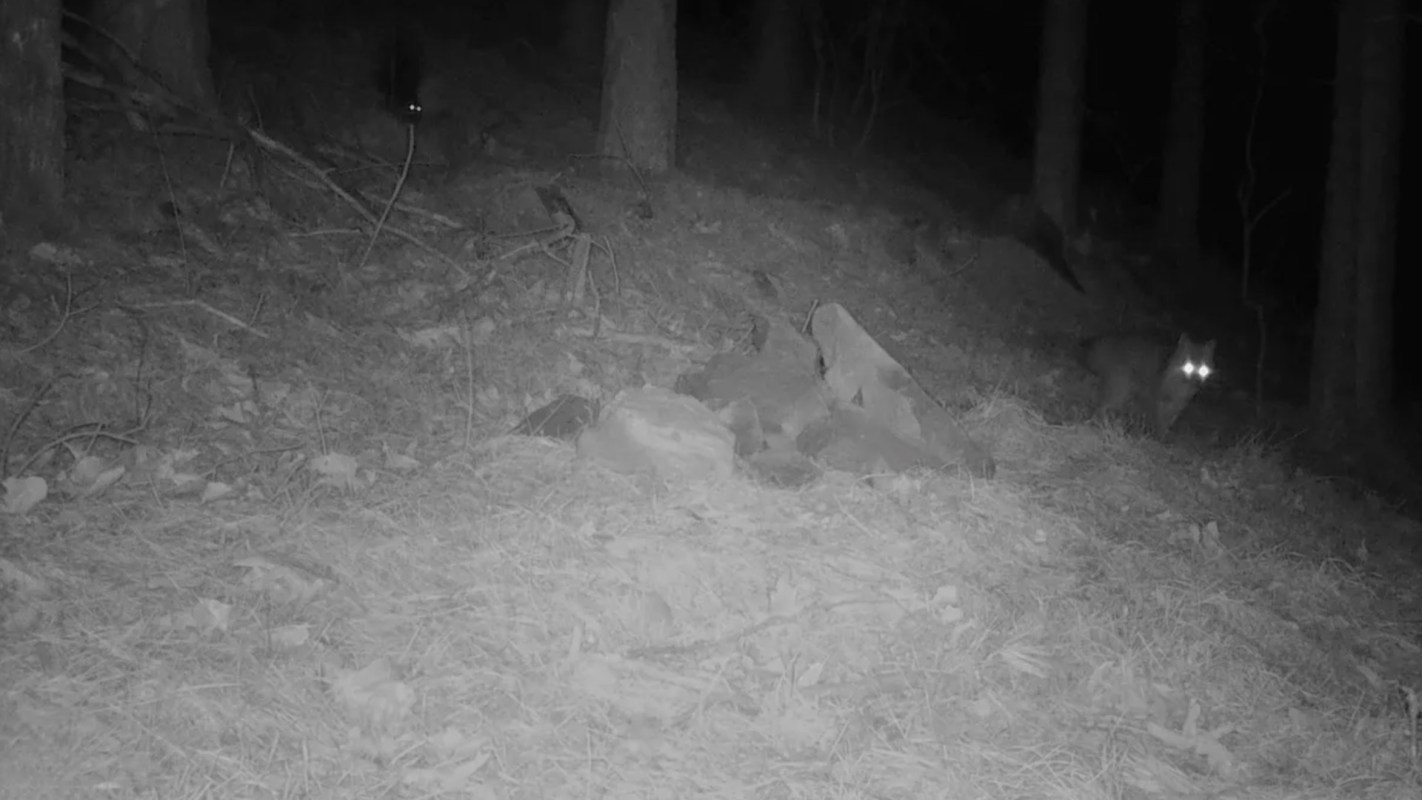
A research team from Oklahoma State University documented a notoriously shy species using camera traps and sugary enticements, per the Oklahoma Department of Wildlife Conservation.
The team was engaged in a three-year effort to gather information about the Plains spotted skunk.
While Plains spotted skunks are not listed federally as endangered, the neighboring state of Missouri designated them a Species of Conservation Concern, and Oklahoma classified the tiny mammals as a "Species of Greatest Conservation Need."
Danielle Brosend participated in the effort and explained that mesocarnivores — opportunistic carnivores like skunks and foxes — tend to be "rare or cryptic and therefore difficult to monitor."
"Rare, meaning they occur in low densities, or cryptic, meaning they are just hard to find because of their habits," Brosend clarified. Technically, the ability of wildlife to conceal itself is called "crypsis," and behavioral traits are one way animals evade detection.
Crypsis poses clear roadblocks to wildlife monitoring and conservation efforts, but recent advances in photography have enabled more thorough research. Camera traps and trail cameras have evolved rapidly over the past decade, a boon to scientists and conservationists.
TCD Picks » Quince Spotlight
💡These best-sellers from Quince deliver affordable, sustainable luxury for all




Both are motion-activated, and the evolution of solar energy introduced self-recharging equipment. With the addition of drone photography, researchers can station cameras in places humans can't access and observe wildlife without disrupting its activity or habitats.
For this particular project, using camera traps to observe Plains spotted skunks from afar also drastically reduced the risk of researchers getting sprayed by their subjects.
The team established six camera trap sites in January 2023 and collected footage through May. Unlike previous efforts to observe skunks, Brosend's team "used multiple lures" at each site.
"We used fatty acid tablets, a skunk-based lure, sardines, and a sweet lure made of peanut butter, jelly, molasses, anise oil, and marshmallows. This cafeteria style, where a skunk can visit whichever lure it had a preference for, is a novel approach," she explained.
|
What's the most you'd pay per month to put solar panels on your roof if there was no down payment?
Click your choice to see results and speak your mind. |
 $200 or more 💰
 Their strategy paid off; the team ultimately surveyed 91 sites between the Ouachita National Forest and the Wister Wildlife Management Area, confirming the presence of Plains spotted skunks at 44 of those sites. Sardines proved the most effective of the lures.
As the ODWC noted, the findings came at a critical time — the U.S. Fish and Wildlife Service dismissed a 2012 petition to list Plains spotted skunks under the Endangered Species Act, when the species had not yet been differentiated from Eastern spotted skunks.
Currently, the FWC is considering a second petition to list Plains spotted skunks amid an ongoing population decline, which would supply resources for conservation efforts.

Get TCD's free newsletters for easy tips to save more, waste less, and make smarter choices — and earn up to $5,000 toward clean upgrades in TCD's exclusive Rewards Club.







