


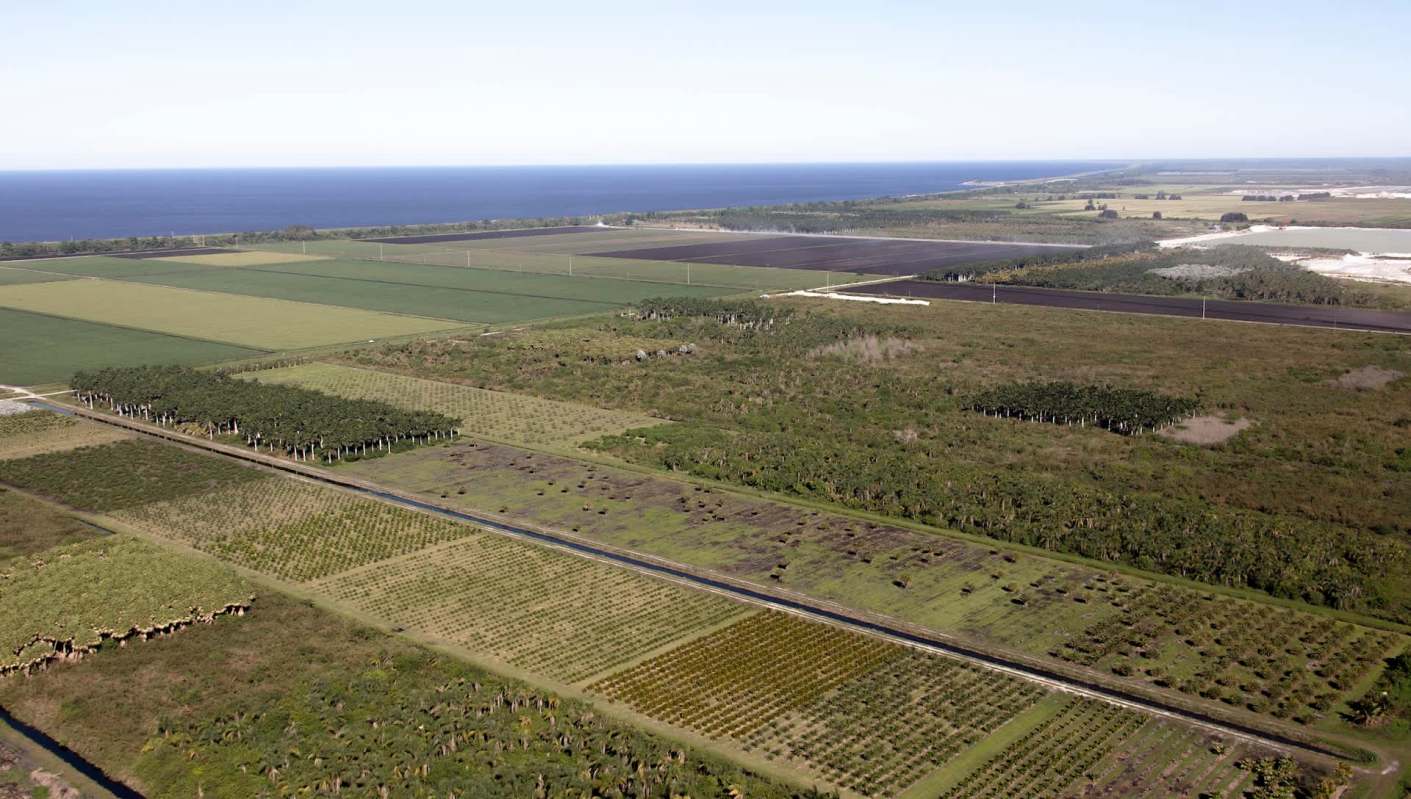
An invasive pest is wreaking havoc on Florida's crops, according to TC Palm.
What's happening?
Originally from Southeast Asia, short-spined thrips are an invasive insect that was first spotted in Florida in 2020.
Since then, they've spread to at least five counties in the state, including Miami-Dade, Palm Beach, Orange, Lake, and Indian River, Alexandra Revynthi, assistant professor of ornamental entomology and acarology at the University of Florida's (UF) Tropical Research and Education Center, told TC Palm.
"This microscopic menace is leaving devastation in its wake for growers and home growers," a UF article said.
"Devastation" is an understatement. Short-spined thrips suck the sap out of their host plants, particularly bell peppers, beans, and eggplants. However, their penchant for peppers doesn't mean that they're picky. They've been detected on 43 different plant species thus far.
Lance Osborne, an entomologist at the Mid-Florida Research and Education Center, told Hortidaily, "Growers of any crop should be aware. This insect seems to have a fairly broad host range."
TCD Picks » Quince Spotlight
💡These best-sellers from Quince deliver affordable, sustainable luxury for all




Why is the spread of short-spined thrips important?
The spread of this pest has cost people their livelihoods. According to Hortidaily, a South Florida grower lost all of their pepper crops to the pest. In the end, it cost them $1 million.
The economic damage that invasive species like the short-spined thrip cause isn't just limited to Florida. A 2021 study found that invasive species cost the North American economy at least $1.26 trillion from 1960 to 2017, with the agricultural sector suffering the greatest losses.
Since some species are more thoroughly studied and have a more quantifiable impact than others, the researchers speculated that this amount could actually be a severe underestimation.
What's being done about it?
A recent UF study found that thrips pupate in soil. Isamar Reyes-Arauz, the study's lead author, told UF's blog, "With this knowledge, we can now target the pest on the canopy and in the soil simultaneously, thus decreasing its population."
|
What's the most you'd pay per month to put solar panels on your roof if there was no down payment?
Click your choice to see results and speak your mind. |
 $200 or more 💰
 Everyday people can also do their part to prevent the thrips' spread. According to an informational pamphlet from the UF, thrips are attracted to popular ornamental plants, like gardenias and ixora.
Much like the thrip, these plants are not native to Florida. Non-native ornamental plants often host damaging, invasive insects. For example, trees of heaven — a pesky invasive species in their own right — serve as hosts for the notorious spotted lanternfly.
To counteract these pests, consider planting a native lawn. Native plant species not only boost your local ecosystem, but they also require less water and treatment than non-natives, saving you money.

Get TCD's free newsletters for easy tips to save more, waste less, and make smarter choices — and earn up to $5,000 toward clean upgrades in TCD's exclusive Rewards Club.







