


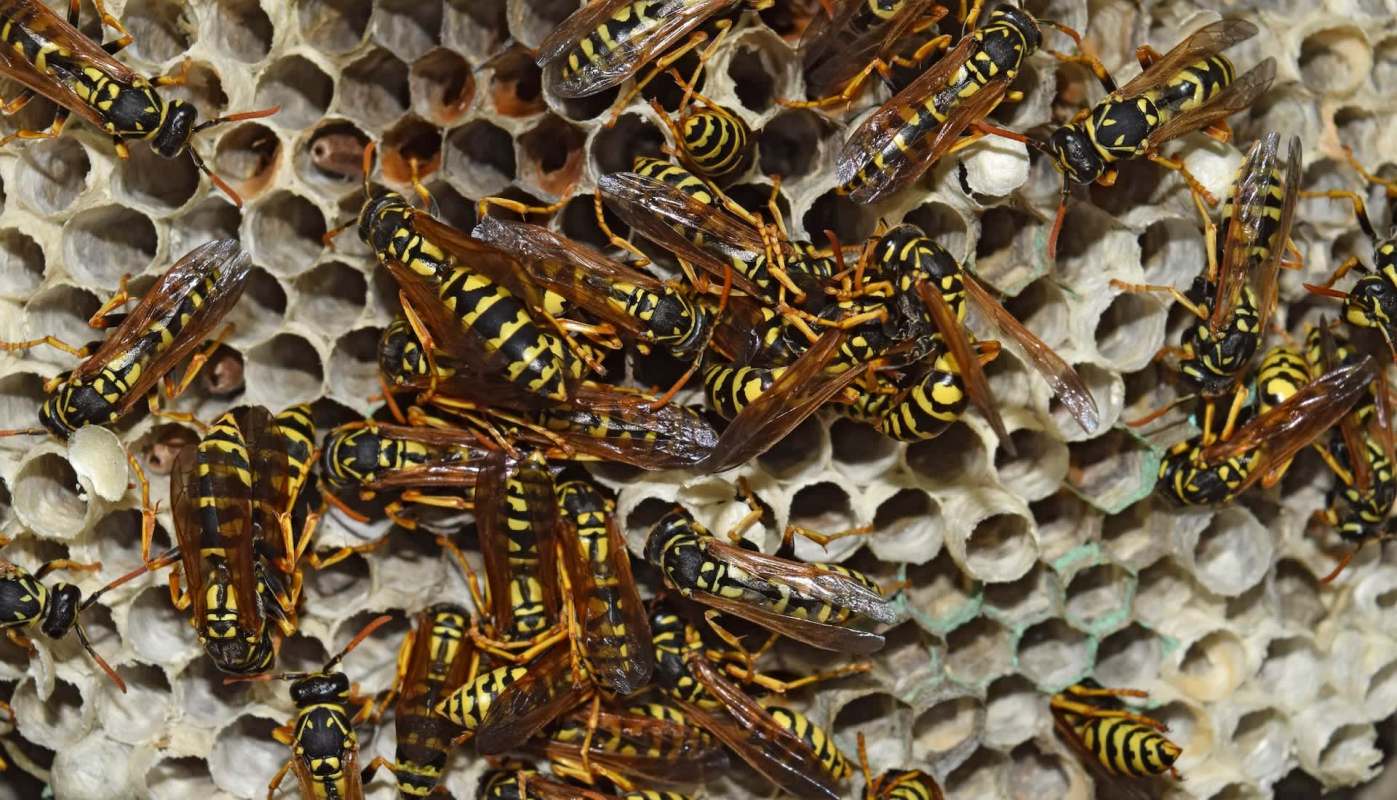
Walking outside to see a wasp nest on your home can be scary and annoying, but seeing one bigger than you've ever seen before is an entirely different kind of fear.
What happened?
According to ABC, locals discovered "an enormous 40-litre nest of European wasps" in bushland in Albany in Western Australia. It was 16 times the average size of a typical nest.
While other Australian states have established populations of European wasps, Western Australia is the only one that doesn't. However, wasps are known hitchhike on freight vehicles and find their way there.
A resident informed city councillor Lynn MacLaren, who lived nearby, that they saw the wasps flying around.
MacLaren then alerted the Department of Primary Industry and Regional Development. With the help of public reports, the DPIRD was able to track down the nest.
ABC noted that the nest was "about the size of a bar fridge."
TCD Picks » Quince Spotlight
💡These best-sellers from Quince deliver affordable, sustainable luxury for all




MacLaren, a local environment group member, told the publication, "It was pretty scary, actually."
Unfortunately, the tree had to be killed in order to destroy the nest, as the wasps would have attacked anyone who disturbed it.
MacLaren added, "They're pretty nasty stingers."
Australia's south coast offers an ideal environment for the wasps to survive year-round thanks to its Mediterranean climate.
|
What's the most you'd pay per month to put solar panels on your roof if there was no down payment?
Click your choice to see results and speak your mind. |
 $200 or more 💰
 Eastern states have stopped eradicating the wasps, as they are now established. However, if the area has a bad wasp season, the creatures can be more easily transported to Western Australia.
ABC noted that 33 nests have been removed in Albany since 2023.
Why is removing European Wasps important?
While not all non-native species are invasive, those that are can outcompete native species for food and resources, leading to native species decline or extinction.
This can have severe knock-on effects on a local ecosystem by reducing biodiversity and disrupting the natural balance.
Pollinator numbers, for example, could fall, limiting the growth of native plant species that animals rely on for food and shelter and even negatively impacting human food supplies.
According to Pollinator Partnership, "Birds, bats, bees, butterflies, beetles, and other small mammals that pollinate plants are responsible for bringing us one out of every three bites of food."
Additionally, some of these invasive pests carry diseases such as West Nile virus. Cases of this vector-borne disease have been increasing in areas across the United States.
According to the European Parliament, "Biodiversity conservation reduces the risk of zoonotic diseases when it provides additional habitats for species and reduces the potential contact between wildlife, livestock and humans."
Invasive species can also strain the economy. According to a study published in the journal Science of the Total Environment, the average annual cost of managing invasive species in the United States was $21 billion between 2010 and 2020.
Western Australia isn't the only place dealing with invasive creatures. In Florida, for example, residents have been encouraged to catch and eat invasive lionfish that are harming aquatic ecosystems.
What can be done about European wasps?
Protecting native species is vital for healthy ecosystems, food supplies for animals and people, and to prevent the spread of disease.
Planting native plants in your garden can help protect these creatures, boosting biodiversity and making it more difficult for invasive species to take hold.
In Albany, Kris Armstrong, DPIRD European Wasp Project Lead, encouraged residents to report wasp sightings even if unsure of the species. He said false reports were better than not reporting wasp sightings at all.
He told ABC, "[Local people] see things where traps aren't, so any reports help us enormously to keep them out."

Get TCD's free newsletters for easy tips to save more, waste less, and make smarter choices — and earn up to $5,000 toward clean upgrades in TCD's exclusive Rewards Club.







