


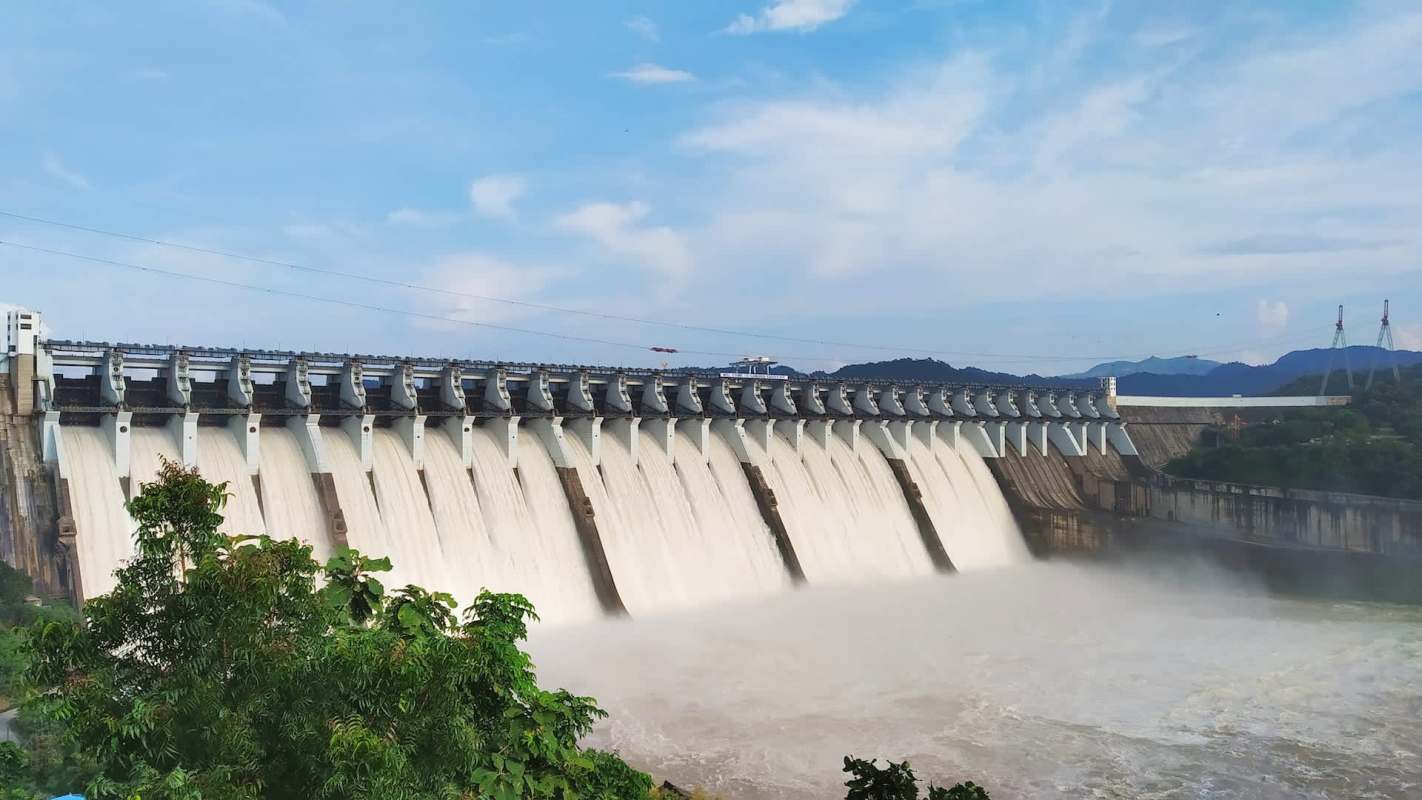
After years of worrying headlines about water shortages, there's some genuinely encouraging news coming out of Namibia.
A new report in Informanté News showed that many of the country's most important reservoirs are now holding double (and in some cases triple) the amount of water they had just two years ago.
According to the country's latest flood bulletin from the Hydrological Services of Namibia, dam levels across the central, eastern, and southern regions have risen sharply due to sustained rainfall during the current rainy season.
In Jan. 2025, most major dams were sitting below 30% capacity. Fast forward to Jan. 2026, and several are now above 50%, with some approaching full.
This is a major piece of positive news, because water access and security are what quietly run society: from household access and sanitation to farming, food prices, and local ecosystems. In short, healthier reservoirs give communities more breathing room during the next dry spell.
And this isn't an isolated story. Similar water rebounds are playing out around the world.
TCD Picks » Quince Spotlight
💡These best-sellers from Quince deliver affordable, sustainable luxury for all




In India, steady monsoon rains have pushed reservoir levels in the coastal state of Tamil Nadu to roughly 87% capacity, with several reservoirs now completely full. Officials there have said the surge is easing water concerns for both people and the environment.
There's also growing relevance closer to home. In California, reservoir levels are now at or above historical averages after years of drought, following multiple powerful atmospheric river storms. The state's water storage is reportedly sitting at well above normal for this time of year, supporting tens of millions of residents and essential agricultural regions.
Of course, the picture isn't perfect everywhere. Parts of the western U.S. are still wary of reduced snowfall, especially as major reservoirs like Lake Powell and Lake Mead depend heavily on spring melt. Elsewhere, unusually warm winters have raised concerns about future supplies.
Still, Namibia's rebound is a powerful reminder that water systems can recover, and that careful monitoring and community resilience make the biggest difference.
|
What's the most you'd pay per month to put solar panels on your roof if there was no down payment?
Click your choice to see results and speak your mind. |
 $200 or more 💰
Get TCD's free newsletters for easy tips to save more, waste less, and make smarter choices — and earn up to $5,000 toward clean upgrades in TCD's exclusive Rewards Club.







