


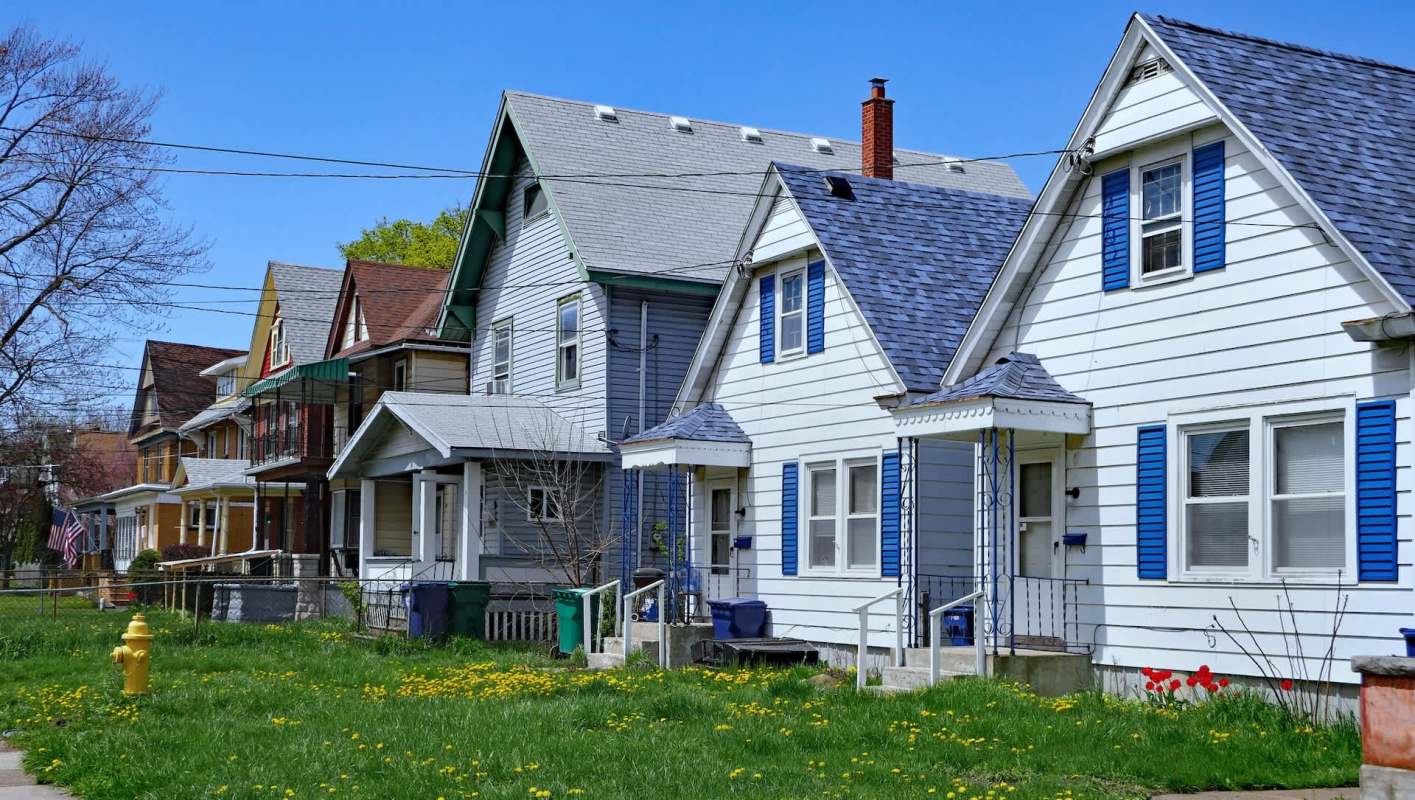
Rising home insurance costs are not only pricing out homeowners who cannot afford the rate increases, but they are also driving home values down.
What's happening?
As NPR observed, homeowners across the United States have watched their home insurance rates soar as property damage from more frequent and intense extreme weather events becomes more common.
Home insurance, which typically helps homeowners cover the cost to rebuild after a property sustains major damage — such as from increasingly frequent hailstorms in the Great Plains — is becoming harder to renew or is being renewed at rates significantly higher than before.
"It's just becoming unaffordable in our state, is the new reality," said Josh Tapio, an insurance agent from Omaha, Nebraska, per NPR.
The cost of home insurance outpaced inflation rates by 8% between 2018 and 2022, creating even greater financial strain for homeowners, per NPR.
Homeowners who can no longer afford the rising costs are being pushed out of their homes, forced to list their properties below market value to attract interested buyers who can justify the inflated cost.
TCD Picks » Quince Spotlight
💡These best-sellers from Quince deliver affordable, sustainable luxury for all




According to NPR, home values have fallen more than 16% compared to 2022.
Experts predict that this level of property depreciation and escalating homeowner expenses will contribute to mortgage defaults, as homeowners have little incentive to continue paying for a property that is worth less than the cost of maintaining it.
Why are rising insurance costs important?
While predicting day-to-day weather conditions is much more difficult to pin down, one trend is clear: Extreme weather events, brought on by increased atmospheric pollution from human activities — such as the burning of coal, gas, and oil — are becoming longer and more damaging.
Wildfires, for instance, devastated close to 9 million acres of land in 2024. Droughts have cost the country close to $2 billion in annual agricultural losses, according to RFD TV. As the Internal Displacement Monitoring Centre observed, flooding displaced more than 195 million people globally since 2008.
|
What's the most you'd pay per month to put solar panels on your roof if there was no down payment?
Click your choice to see results and speak your mind. |
 $200 or more 💰
 The increased danger posed by extreme weather events to global communities has discouraged insurance companies from continuing to serve high-risk areas, leaving more homeowners without protection and financially vulnerable.
What's being done to help?
Although homeowners may feel powerless against a highly volatile insurance industry, efforts have been made to hold insurers accountable and address the home insurance crisis.
The Florida Office of Insurance Regulation, for example, issued fines to eight insurance companies for mishandling policyholder claims in the aftermath of Hurricane Ian and Hurricane Idalia.
Insurers in certain states, like California, are offering discounts or incentives to customers who upgrade their homes to prepare for extreme weather, per NPR.
Meanwhile, 33 states, along with the District of Columbia, have introduced statewide Fair Access to Insurance Requirements programs, offering more accessible or affordable insurance options — even when private insurers consider properties to be too high-risk.

Get TCD's free newsletters for easy tips to save more, waste less, and make smarter choices — and earn up to $5,000 toward clean upgrades in TCD's exclusive Rewards Club.






