


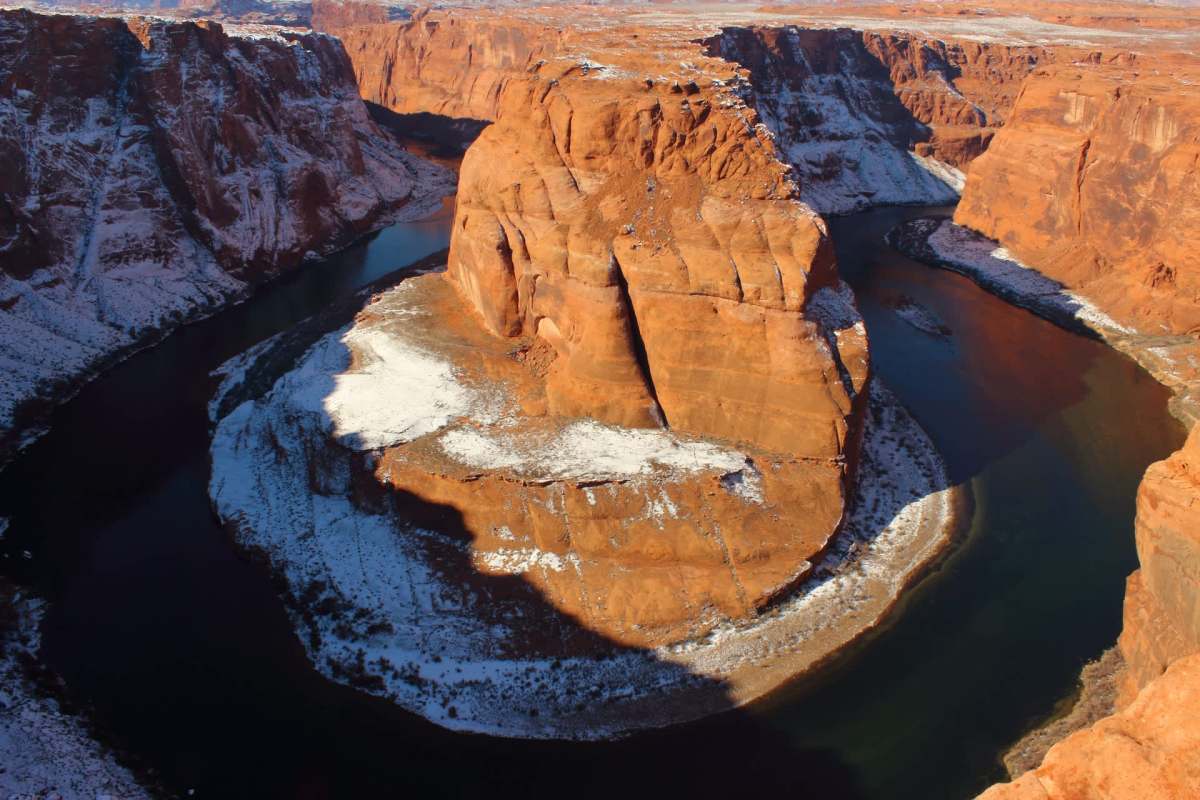
A lack of snow this winter could cause a major decline in reservoir water levels.
What's happening?
Less snowfall across the U.S. doesn't just mean fewer snow days and sledding opportunities; it could also massively impact the nation's access to water.
The Colorado River and reservoirs across the country are already under capacity due to droughts. Recent research in the Earth, Atmospheric, and Planetary Sciences journal found that Western America is a snow drought "hot spot."
As reported by KTNV, all major regions in the Western U.S. have had below-average snowpack levels this winter.
Why are snow droughts concerning?
Reservoirs rely on melted snow to replenish their water levels. With such unprecedentedly low levels of snowpack, water supplies across the country are diminishing.
Research by the Bureau of Reclamation found that of the region's major water sources, Lake Mead was at 33% capacity and Lake Powell at just 26%, after dropping by around 32 feet in a single year.
TCD Picks » Quince Spotlight
💡These best-sellers from Quince deliver affordable, sustainable luxury for all




Along with providing drinking water to people, these reservoirs are key to sustaining agriculture across the area, and also providing for data centers that are becoming more and more water-intensive with the rise of artificial intelligence.
A lack of water also leads to a higher risk of fires, posing a real threat to people, communities, homes, and infrastructure.
Although extreme weather events like droughts and snow droughts are not a new phenomenon, the scientific consensus agrees that human-induced damage to the environment supercharges these events.
What's being done about snow droughts?
Solutions on how to replenish the Colorado River's water supply are immensely complicated and require agreement across the basin states of Colorado, New Mexico, Utah, Wyoming, Nevada, Arizona, and California.
|
What's the most you'd pay per month to put solar panels on your roof if there was no down payment?
Click your choice to see results and speak your mind. |
 $200 or more 💰
 One solution that does not require these states to agree is the basic coordination alternative, which calls on residents to cut water usage in the driest years. However, this option does not do nearly enough to solve the crisis.
The Western Resource Alliance's water policy expert, John Berggren, told KTNV: "The Basic Coordination Alternative does not do enough. It does not protect the system."
He continued, "There are many scenarios where the Colorado River Basin system will crash if that's all they have the ability to do."
Ultimately, water usage needs to drastically be reduced, and the root cause of carbon pollution needs to be tackled to prevent further snow droughts.
Collecting rainwater is a way you can protect yourself and your family against potential droughts. Elsewhere, talking to friends and family about the climate, or campaigning and voting for systemic change, can have a positive impact on the planet.

Get TCD's free newsletters for easy tips to save more, waste less, and make smarter choices — and earn up to $5,000 toward clean upgrades in TCD's exclusive Rewards Club.







