


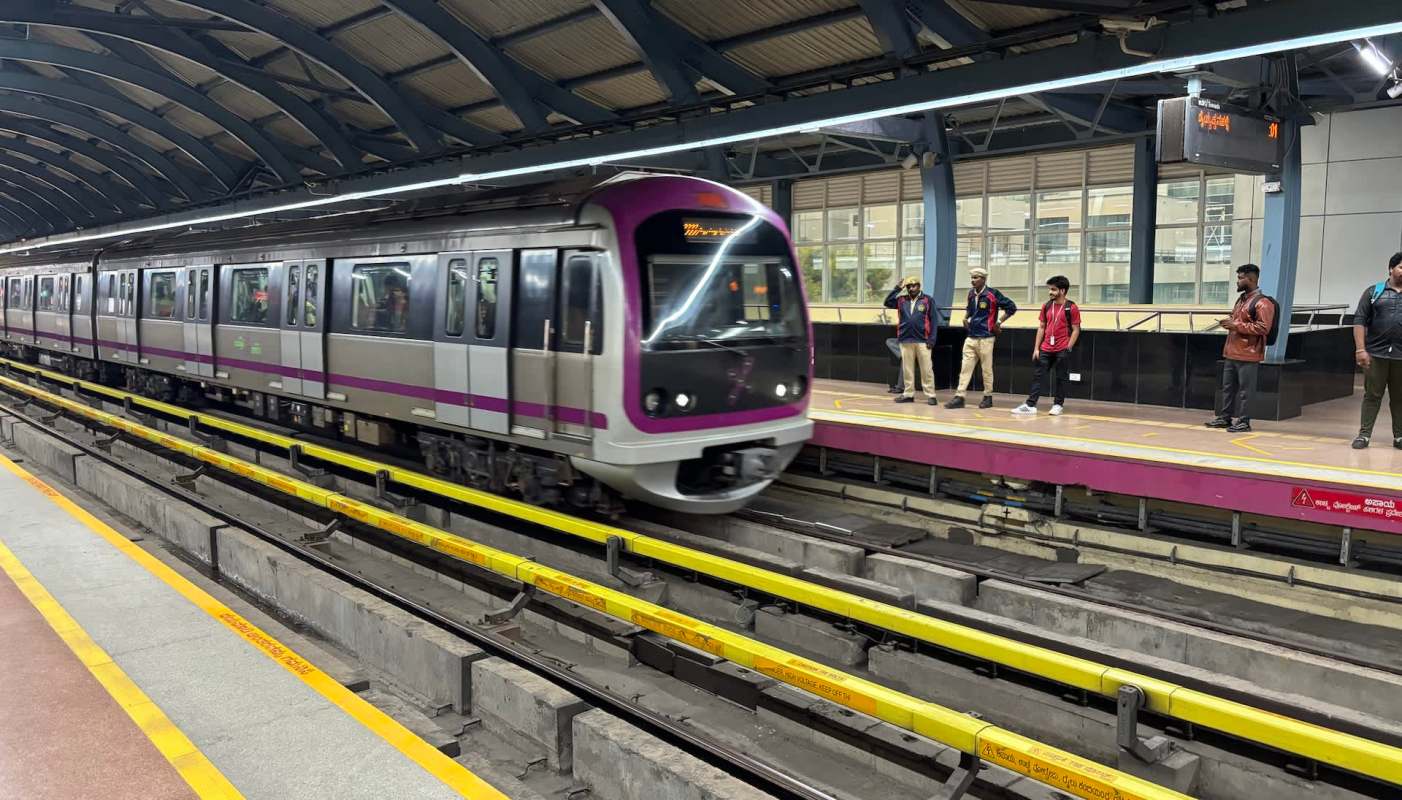
Passengers riding Bengaluru's Namma Metro are raising concerns after an unexpected group of commuters began showing up on platforms and even inside train cars.
What's happening?
According to The Hindu, monkeys have been repeatedly spotted inside several Namma Metro stations in Bengaluru, occasionally boarding trains and wandering along platforms.
Commuters say the animals appear unfazed by crowds, creating moments of chaos and concern during peak travel hours.
"At times, dozens of monkeys enter the station, forcing passengers to avoid empty seats and corners of the platform," commuter Prabhitha Kumari told The Hindu.
"This is not just uncomfortable but potentially dangerous. If animals wander onto the tracks, it could lead to serious safety risks and service disruptions."
Metro officials and wildlife authorities believe the monkeys are being drawn in by food waste and handouts from people. This pattern has made the animals increasingly comfortable in human-dominated spaces.
TCD Picks » Quince Spotlight
💡These best-sellers from Quince deliver affordable, sustainable luxury for all




While there have been no major injuries reported so far, officials warned that startled animals in confined transit spaces could pose risks to both passengers and the monkeys themselves.
Why are monkeys in train stations concerning?
This isn't just a quirky addition to commuters' journeys. Expanding cities and shrinking green spaces make wild animals enter urban infrastructure not built for them.
Animals venturing into cities are often responding to habitat loss and learned reliance on human food sources, which can escalate into dangerous encounters over time.
For commuters, the risks include bites and scratches in crowded stations. For the animals, repeated exposure to people can lead to injury, capture, or relocation.
|
What's the most you'd pay per month to put solar panels on your roof if there was no down payment?
Click your choice to see results and speak your mind. |
 $200 or more 💰
 Monkeys aren't the only animals entering human spaces. In Missouri, coyotes are roaming neighborhoods, and opossums are scavenging in Disney World. These sightings show how urban development can unintentionally reshape wildlife behavior.
What's being done about Bengaluru's monkeys?
Experts are pressuring metro authorities in Bengaluru to monitor stations, discourage feeding, and improve waste management to make transit areas less attractive to animals.
"This means no eatables inside metro stations, no food stalls near entrances, and strict control measures on littering," Dr. Navaz Shariff, a wildlife veterinarian at PfA Wildlife Hospital, told The Hindu.
"Food should be completely removed from the environment, because animals are not entering out of curiosity, they are entering for survival."
Supporting local conservation efforts, respecting wildlife boundaries, and minimizing food waste in public spaces can all help reduce these encounters before they become more dangerous for everyone involved.

Get TCD's free newsletters for easy tips to save more, waste less, and make smarter choices — and earn up to $5,000 toward clean upgrades in TCD's exclusive Rewards Club.







