


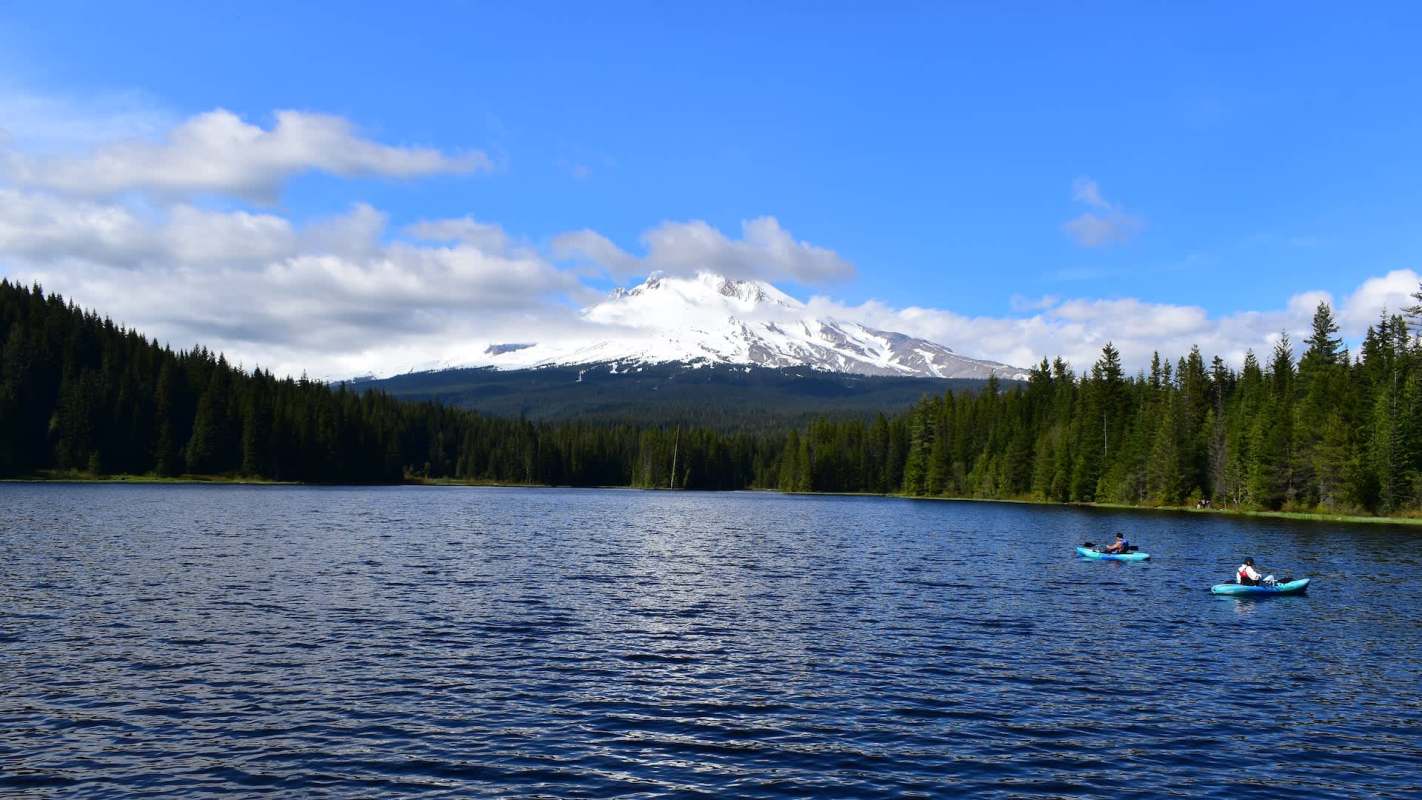
Advocacy groups raised alarms over "a proposal to transfer" part of Mount Hood National Forest to The Dalles, a city in Oregon, SFGate reported.
The controversy was part of broader, long-running concerns over Dalles City's relationship with Google and its purported willingness to surrender water resources to the search giant.
What's happening?
In June, Republican Rep. Cliff Bentz of Oregon introduced H.R. 655, "Dalles Watershed Development Act."
That legislation proposed "the conveyance of approximately 150 acres of National Forest System land … from the Forest Service to the City of The Dalles, Oregon." As written, the legislation would give the city sole control over the land's water.
According to SFGate, officials in Dalles cited population growth as their motivation. More conspicuously, the outlet reported that officials have "repeatedly denied that it is tied to Google, which operates a large data center campus in the city," a facility established in 2006.
However, local advocacy groups like Bark maintained that the proposal would further reduce transparency, particularly around its relationship with Google, which "devours nearly a third" of Dalles' water supply.
TCD Picks » Quince Spotlight
💡These best-sellers from Quince deliver affordable, sustainable luxury for all




"It doesn't really matter if it's 1 acre or, in this case, 150 acres — we want to ensure that these lands are kept and managed for the good of the environment," said Bark program director Jordan Latter.
Why is this concerning?
SFGate cited a 2022 The Oregonian estimate that Google's city water usage had already tripled in the previous five years.
As SFGate noted, Dalles City sued The Oregonian to conceal that information, arguing that disclosure would expose a Google "trade secret."
The outlet said that further development could make Oregon's waters even warmer, further imperiling already endangered cold-water fish species. Moreover, Dalles' track record with water and transparency left advocacy groups skeptical.
|
What's the most you'd pay per month to put solar panels on your roof if there was no down payment?
Click your choice to see results and speak your mind. |
 $200 or more 💰
 On Jan. 17, Dalles City Mayor Rich May challenged Oregon Public Media's contemporaneous coverage of the controversy in a Facebook post, alleging "inaccuracies." OPB followed up on Jan. 23.
"OPB incorrectly reported that projected monthly residential water rates are expected to climb by 7% by 2036. However, The Dalles 2024 Water System Master Plan forecasts that rates will climb by 99% by that year. OPB regrets the error," the outlet said.
While the energy demand created by data centers — and the costs passed on to ratepayers — have become a major point of public contention, concerns over data center water usage has escalated, too.
Steve Pedery, Oregon Wild's conservation director, told SFGate that companies like Google "are always going to find the cheapest possible source" for land, energy, and resources, "and that's going to be public land in a lot of cases."
Bark executive director Will Fett maintained that the proposal necessarily clashed with what's best for locals.
"This is a direct contradiction to what is in the public interest, even if it serves some local interest," he began.
"We can do a lot of guesswork as to [Dalles City's] motivations … but the reality is we need to protect our water resources. We need to protect the wildlife, and we need to protect the land for the betterment of the citizens of this country," Fett resolved.
What's being done about it?
Oregon Gov. Tina Kotek established a seven-member task force to monitor the impact of data centers, but Pedery questioned whether the committee served the public.
"The governor just assembled this data center task force that doesn't have any public lands or land-use representation on it," he observed.

Get TCD's free newsletters for easy tips to save more, waste less, and make smarter choices — and earn up to $5,000 toward clean upgrades in TCD's exclusive Rewards Club.






