


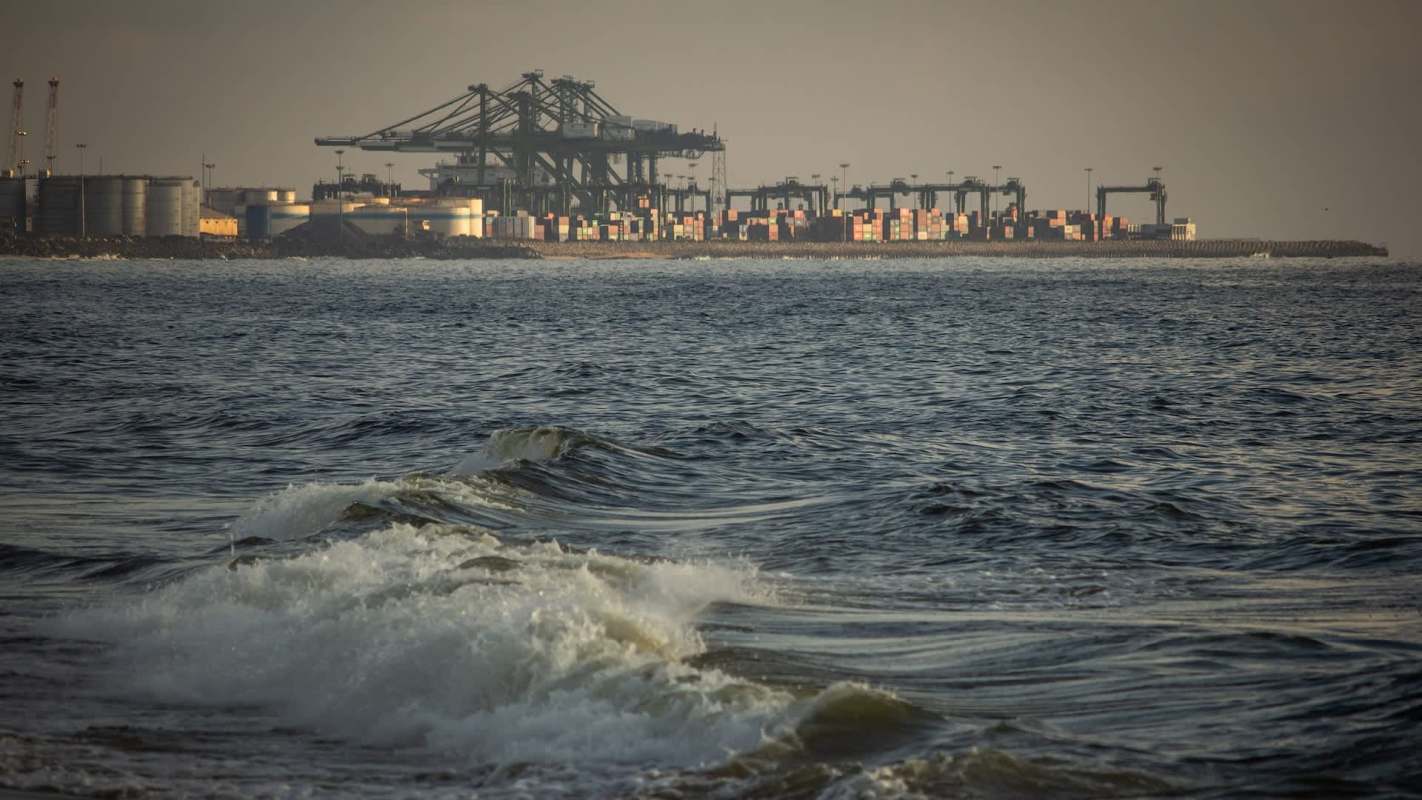
A new study projects that a major port city and top seafood exporter in India, along with a pair of cities along the Bay of Bengal, will become increasingly susceptible to sea-level rise.
What's happening?
Researchers used satellite altimetry, tide-gauge data, and advanced climate models to examine sea-level rise in Visakhapatnam, Puri, and Chennai, which are home to more than 15 million people. The study found "a distinct acceleration" in sea-level rise across the region and a "significant rise post-2010."
High-emission scenarios "substantially" amplified sea-level rise, with Visakhapatnam expected to experience up to 98 centimeters, or 38.6 inches, of rise by 2091-2100 under such a scenario. Sea-level rise is projected to hit 41 centimeters, or 16.1 inches, under a low-emission scenario.
Under a high-emission scenario, sea levels in Puri could rise 95 centimeters, or 37.4 inches, by 2091-2100. Sea-level rise in Chennai could reach 100 centimeters, or 39.4 inches. A low-emission scenario in Puri would limit the rise to 40 centimeters, or 15.7 inches, while limiting Chennai's to 42 centimeters, or 16.5 inches.
Why is this important?
Sea-level rise poses a direct threat to the cultural traditions and livelihoods of people in coastal cities, increasing the risk of flooding and infrastructure damage during extreme weather events such as monsoons. The effects of this ripple, impacting food security inland and abroad.
Visakhapatnam is India's leading seafood export hub, according to KNN India. Damage to its port's "word-class" facilities, reefer container capacity, and railroad connectivity could hinder its ability to meet global demand while also harming the economic fortunes of fishers.
TCD Picks » Quince Spotlight
💡These best-sellers from Quince deliver affordable, sustainable luxury for all




"Although Chennai shows the sharpest increase overall, Visakhapatnam's projected rise remains important because of its dense coastal settlements, concentration of industries, and the strategic role of its port," The New Indian Express wrote about the study.
What's being done about this?
The burning of oil, gas, and coal is responsible for most of the air pollution that scientists warn is contributing to sea-level rise, so the widespread adoption of cleaner technologies, from solar panels to energy-efficient home upgrades, is the best way to mitigate the issue in the long term.
In the meantime, the researchers underscored the importance of implementing context-specific adaptation strategies, including early-warning systems and coastal defenses.
Sand dunes, mangrove restorations, and oyster shells are among the natural solutions that help to protect coastal communities from storm surges and erosion. Meanwhile, an artificial intelligence-powered tool could make it easier to predict when and where climate-fueled natural disasters will strike.
|
Do you feel like the air quality is safe where you live? Click your choice to see results and speak your mind. |
 Always 💯
Get TCD's free newsletters for easy tips to save more, waste less, and make smarter choices — and earn up to $5,000 toward clean upgrades in TCD's exclusive Rewards Club.







