


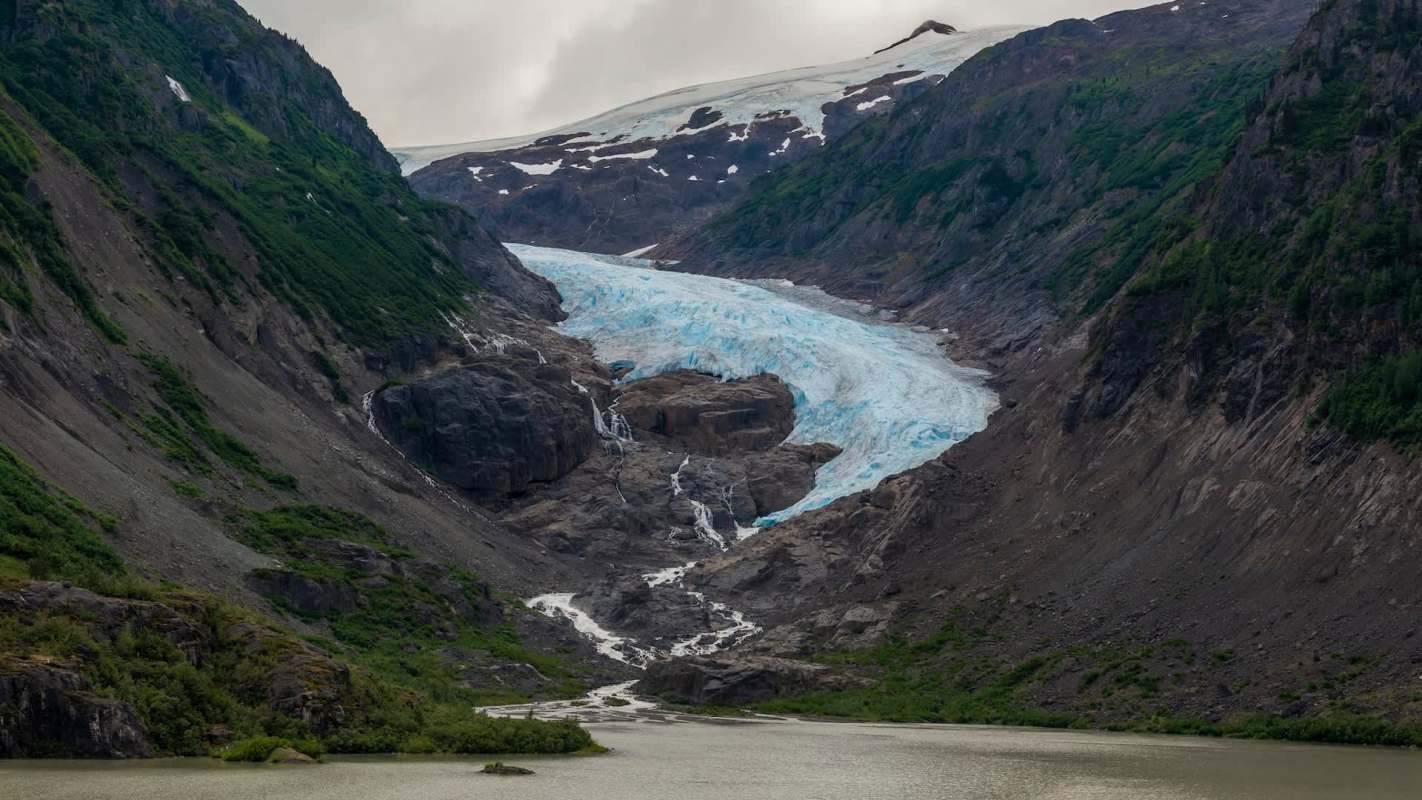
Western Canada suffered its second-worst year on record for glacier loss in 2025, with researchers warning that ongoing, accelerating ice melt threatens water supplies and hydroelectric power.
What's happening?
Scientists estimate around 30 gigatonnes, or 30 billion metric tons, of glacial ice vanished from western Canada last year — enough water to submerge California by 3 feet, per the CBC.
Brian Menounos, a professor of earth sciences at the University of Northern British Columbia and chief scientist at the Airborne Coastal Observatory of the Hakai Institute, headed the team that released the findings.
"It's not a question of if the glaciers are going to disappear — they are going to disappear," Menounos said, per CBC. "What we're finding is that these glaciers are disappearing much faster than previously projected."
The loss occurred despite the United Nations naming 2025 as "The International Year of Glaciers' Preservation," with monitoring data showing dramatic ice melt throughout the region.
Research published last summer also showed remarkable ice loss across multiple other regions, including parts of the U.S. and Switzerland, between 2021 and 2024.
TCD Picks » Quince Spotlight
💡These best-sellers from Quince deliver affordable, sustainable luxury for all




Menounos worked with international scientists to assess glacial health via satellites, air observation, and direct ice sampling. Their work showed rapid acceleration caused by rising temperatures and diminished late-summer snow coverage that changes how surfaces reflect light.
Why is glacier loss important?
Melting ice contributes to everything from rising sea levels that threaten coastal communities and infrastructure to increased flooding and water scarcity. Mark Ednie, a glaciologist with the Geological Survey of Canada, noted to the CBC that "we see glaciers shrinking, receding, thinning, losing mass everywhere in the world, and that's no exception for Canada."
That's bad news for everyone — vanishing ice undermines our communities that depend on reliable water sources for everything from drinking to industry. British Columbia alone is home to roughly 17,000 glaciers feeding rivers that sustain fish populations and power local hydroelectric facilities.
"Glaciers are like keeping water in the bank basically. So water stored during cold times and then released during hot times, for industry, for agriculture," Ednie explained, per CBC. "Once these glaciers are gone, we're going to see a difference in the amount of water that we have for all our human consumption."
|
Should America work to improve trade with China? Click your choice to see results and speak your mind. |
 Definitely 👍
 What's being done about glacier loss?
Officials in British Columbia's Ministry of Water, Land, and Resource Stewardship are working with scientists to track glaciers and analyze impacts. Canada's federal Climate Action Plan pledges to work toward carbon pollution reductions, though recent government partnerships have approved new fossil fuel infrastructure in recent years, per the news outlet.
For his part, Menounos acknowledged the challenge to CBC: "Fossil fuels have been really important for the livelihood of Canada and other developed countries, but they come with a tremendous cost."
You can help by learning more about the critical climate issues we face to gain a better understanding of how ice melt affects communities around the world and making eco-conscious decisions in your everyday life.

Get TCD's free newsletters for easy tips to save more, waste less, and make smarter choices — and earn up to $5,000 toward clean upgrades in TCD's exclusive Rewards Club.







