


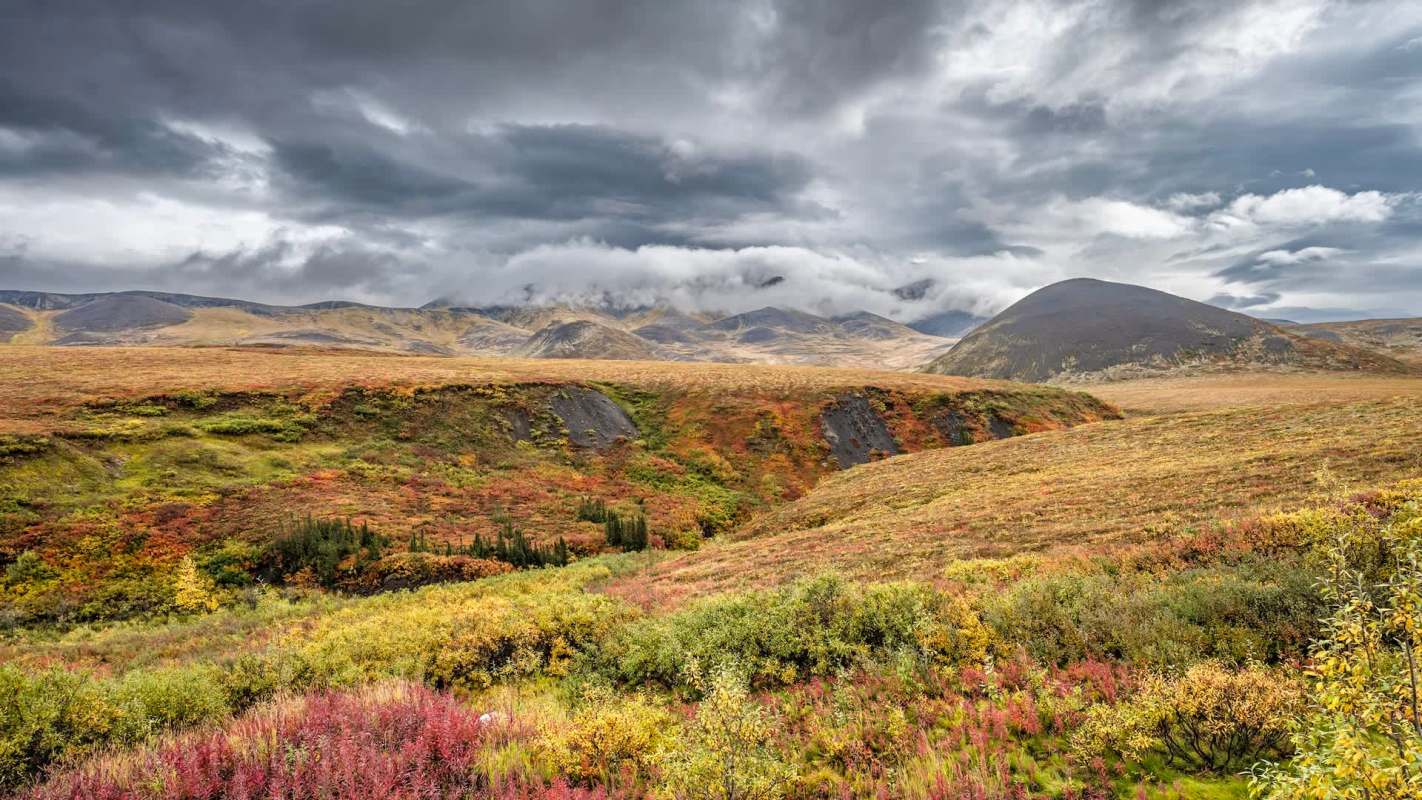
The population of one of Canada's caribou herds has been dropping drastically in recent years. New research is shedding light on possible causes, including human activity.
What's happening?
Two new maps published by the Global Initiative on Ungulate Migration show the Bathurst caribou herd's dwindling range and numbers, CBC News reported in late December.
One of the maps focuses on the herd's migration over the past 27 years and shows the locations of diamond mines, winter roads that serve the mines, and other roads and infrastructure in relation to the animals' migratory path. The map indicates that the herd is shifting away from boreal forests (those that grow in high-latitude areas with freezing temperatures), most likely due to shifting weather patterns, the scientists suggest.
According to their research, the Bathurst population has declined by 98% over the past three decades, from 400,000 to less than 8,000. CBC News also reported that the Northwest Territories government released a report showing an almost 50% decrease in the population over the past three years.
"The range has shrunk considerably," Elie Gurarie, principal investigator for the Fate of the Caribou Project, told CBC.
He also noted, "Caribou really dislike crossing roads. They really dislike being around or near mine infrastructure. The places that caribou once visited a lot, they now visit a lot less because of this fragmentation and avoidance."
TCD Picks » Quince Spotlight
💡These best-sellers from Quince deliver affordable, sustainable luxury for all




Why is caribou migration important?
The Bathurst herd is part of a subtype known as barren-ground caribou, which live predominantly in northern Canada. According to the Canadian government, barren-ground caribou are a keystone species, meaning they significantly impact their local environment and serve as indicators of overall ecological health.
Changing weather patterns, which can contribute to extreme events such as forest fires, as well as man-made disturbances such as mining and road use, put these populations at risk and increase the potential for diseases and parasites to spread.
Caribou are also a vital part of Indigenous life and livelihoods, playing an essential role in diets, clothing, shelter, and commerce. Their meat can be an important food source in northern Canada, per the World Wildlife Fund, and responsible, sustainable hunting can be a part of new generations connecting with their past.
As caribou populations shrink, Indigenous and rural communities could be put at risk of hunger, financial instability, and cultural loss.
|
Do you think America does a good job of protecting its natural beauty? Click your choice to see results and speak your mind. |
 Definitely 👍
 What's being done?
Experts continue to monitor the herd's movements, and restrictions on harvesting and hunting have also been imposed.
Stephanie Behrens, a manager of land protection and renewable energy resources for the Tłı̨chǫ government, one of the First Nations groups in the Northwest Territories, also noted that "community tours" will take place to gather feedback from members on their opinions and needs regarding the caribou.
In a related matter, the Yellowknives Dene First Nations and the Tłı̨chǫ government agreed in November to lead a road project to support job growth and transit while safeguarding caribou and other animals. Their plans seek to prioritize community feedback.

Get TCD's free newsletters for easy tips to save more, waste less, and make smarter choices — and earn up to $5,000 toward clean upgrades in TCD's exclusive Rewards Club.







