


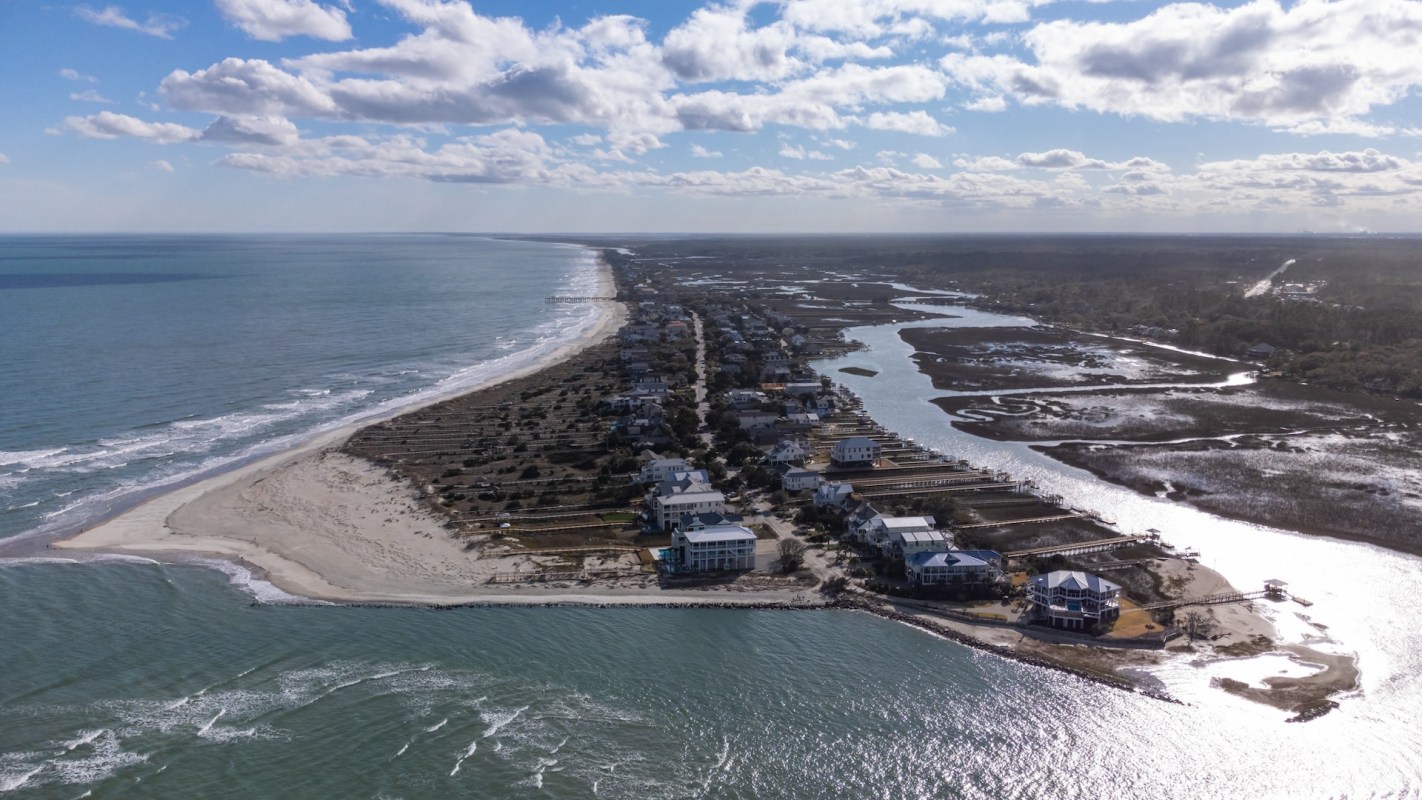
Beaches are disappearing faster than communities can keep up. Sand erosion and extreme weather are erasing hundreds of thousands of dollars worth of "new" sand at two South Carolina beaches.
What's happening?
In 2024, the U.S. Army Corps of Engineers began dumping emergency sand as part of a beach renourishment project on the barrier islands of Isle of Palms and Sullivan's Island, as well as the Breach Inlet between them. Previous projects occurred in 2008 and 2018, but they couldn't wait until 2028.
According to the Charleston City Paper, in 2025, Isle of Palms spent about $400,000 on renourishment; Sullivan's Island spent $646,000 in February 2025 to deposit 20,000 dump truck loads of sand. A mid-October nor'easter washed away half of that sand.
Since a major storm at the Breach Inlet in 2019, the high water line at both towns has retreated from 40 to 70 meters.
Why is sand erosion concerning?
Sand and coastal erosion occur as rising sea levels and storms strip away land from coastlines. These erosions cause tens of thousands of acres of lost land in the U.S. each year and cost hundreds of millions in property damage, according to Scientific American.
With increased water and air temperatures, glaciers and ice sheets are melting, causing sea levels to rise rapidly and increasing extreme weather events like hurricanes, which lead to higher tides, flooding, and stronger waves. All of this results in sand being stripped away from beaches.
TCD Picks » Quince Spotlight
💡These best-sellers from Quince deliver affordable, sustainable luxury for all




This costs taxpayer dollars for sand renourishment, which is only a temporary solution. The lack of sand harms coastal economies reliant on tourism, as tourists are less likely to return to areas without a beach.
Additionally, shipping could slow down due to lost ports, and fishing and agriculture could be devastated by extreme weather events that destroy beaches and wetlands.
Even without a supercharged climate, beaches would still experience cycles of accretion and erosion, just not at this intensity and frequency.
What's being done about these conditions?
Isle of Palms receives little funding for beach repair projects, making sand nourishment the only affordable option. The next grooming is scheduled for early 2027 and will cost nearly $30 million, according to Isle of Palms Mayor Phillip Pounds.
|
Do you think America does a good job of protecting its natural beauty? Click your choice to see results and speak your mind. |
 Definitely 👍
 Experts have suggested other solutions, such as sea walls, groins, and jetties. But some city officials worry that permanent structures could worsen downdrift erosion.
Both towns encouraged residents to obtain permits for non-permanent structures like sandbags or to rewild their own dunes with native plants.
"You just have to pay attention to nature and hopefully not get in the way when nature is moving," said Isle of Palms Councilman Blair Hahn. "If everything is washed away, well, that's the price you pay for where you get to live."

Get TCD's free newsletters for easy tips to save more, waste less, and make smarter choices — and earn up to $5,000 toward clean upgrades in TCD's exclusive Rewards Club.







