


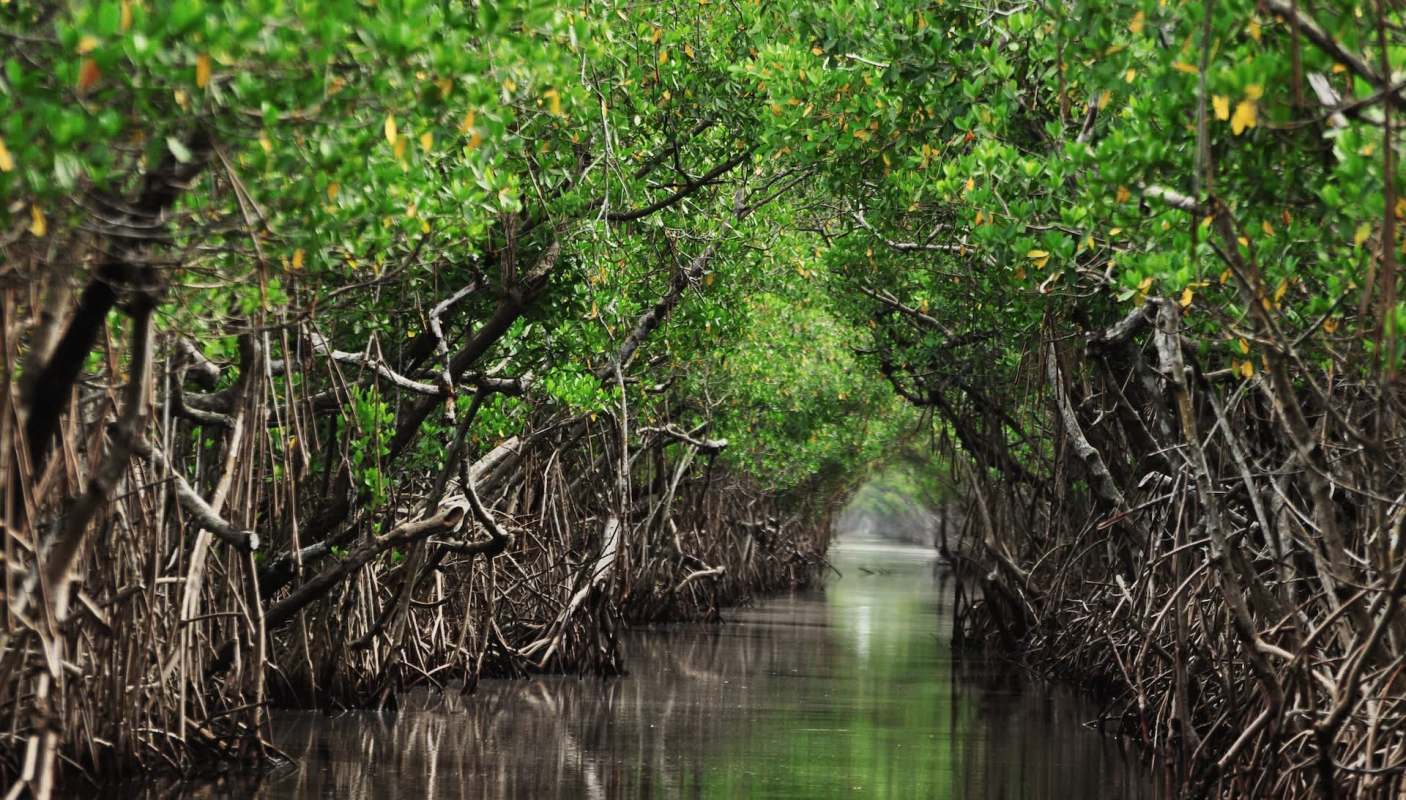
In a heavily polluted mangrove forest, a fiddler crab population is thriving — and changing the way scientists think about microplastics.
A team of researchers found that fiddler crabs can ingest and break down tiny plastic particles, the University of Exeter reported. Their study, published in the journal Global Change Biology, noted that the crabs suctioned up microplastics in "one of the highest uptakes ever recorded in nature."
People have become increasingly aware of the risks microplastics pose to their own health and that of the environment, yet scientists know vanishingly little about animals' ability to adapt to microplastics in their ecosystems.
The polluted mangrove forests on Colombia's northern coast proved the perfect spot to search for answers. The team of researchers sprayed sections of the mangrove area with brightly colored polyethylene microspheres, then measured the concentration of microplastics in the crabs and the soil.
The crabs, they found, siphoned microplastics from the sediment, so that the average crab's microplastic uptake was 16 times the concentration in the soil. The crabs' digestive systems broke the microplastics down into even smaller pieces, speeding up the decomposition process.
"We know that fiddler crabs eat a wide range of food and will ingest plastic in laboratory settings," Tamara Galloway, Professor of Ecotoxicology in Exeter's Department of Biosciences, told the University of Exeter. "But until now, we did not know whether they avoided plastic in the natural environment or would adapt to its presence."
TCD Picks » Quince Spotlight
💡These best-sellers from Quince deliver affordable, sustainable luxury for all




As remarkable as the crabs' adaptation is, it is not a cure-all for plastic pollution. The tiny, digested nanoplastics remain in the crabs' bodies, with the potential to spread through the entire food chain.
Still, the scientists' findings show that mechanical processes like exposure to light and friction aren't the only things that can break down plastics — living creatures can help, too.
Their results are also a testament to nature's resilience.
"Living creatures are not just passive components of the marine ecosystem but may be finding ways to cope with chronic anthropogenic pressures according to their evolutionary histories," the Universidad de Antioquia's Daniela Díaz told the University of Exeter. "The results could lead to a better understanding of how animals adapt to pollution and the fate of plastics in the environment."
|
What's the most you'd pay per month to put solar panels on your roof if there was no down payment?
Click your choice to see results and speak your mind. |
 $200 or more 💰
Get TCD's free newsletters for easy tips to save more, waste less, and make smarter choices — and earn up to $5,000 toward clean upgrades in TCD's exclusive Rewards Club.







