


One long-tailed lizard is making an appearance after more than 50 years since its last sighting.
The blue-tailed sandveld lizard, or bluetail scrub lizard, was spotted by researchers from the Endangered Wildlife Trust after not being seen for more than half a century, according to its LinkedIn. The lizard hasn't been seen since its original description in 1972 in Zimbabwe, South Africa, and Mozambique. This led to the lizard being classified as "lost," due to a data deficit by most environmental groups.
Like many lizards, the sandveld's blue tail is a defense mechanism so that when predators attack, the tail can detach, allowing the lizard to escape.
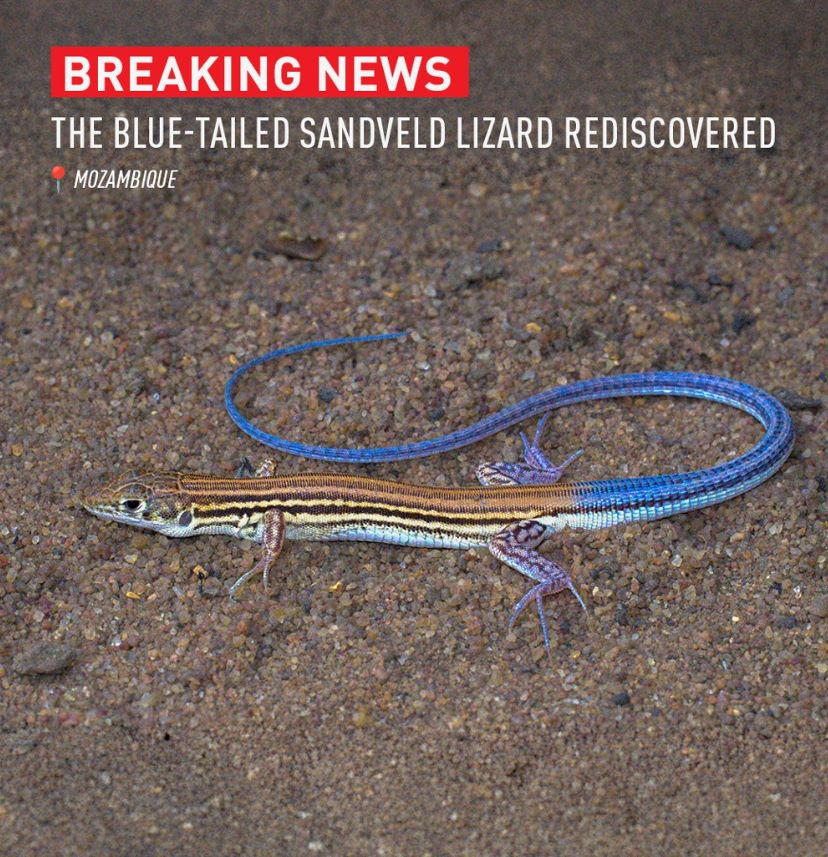
Rapid biodiversity assessments and surveys conducted by the Endangered Wildlife Trust in collaboration with local conservation groups captured and photographed the lizard in Banhine National Park, Mozambique.
Researchers collected a tissue sample for genetic analysis to help determine its biological classification. The surveys were funded by the Canadian government through Global Affairs Canada as part of the Restoring African Rangelands Project.
Surveys and conservation efforts like this can help experts gauge the population health of endangered or disappearing species and track rehabilitation efforts.
TCD Picks » Quince Spotlight
💡These best-sellers from Quince deliver affordable, sustainable luxury for all




Lizards like the blue-tailed sandveld are important players in an ecosystem or your backyard, serving as natural pest controllers by eating things like mosquitoes and even slugs, and as a vital source of food for birds, snakes, and mammals.
They also help soil health by burrowing, act as pollinators for plants, and serve as an indicator species for the health of many ecosystems and climates, as they are sensitive to small shifts in temperature and moisture levels, and even pollution.
Smart management and tracking of biodiversity can help rarer species like this lizard survive and support ecosystems that, in turn, fuel global food supplies by supporting pollinator populations and managing ecosystem resilience.
"These records confirm this species' continued existence, extend this species' known range to Zinave National Park, and will facilitate the reassessment of its conservation status," the Endangered Wildlife Trust said to the Green Guardian.
|
Do you think America does a good job of protecting its natural beauty? Click your choice to see results and speak your mind. |
 Definitely 👍
Get TCD's free newsletters for easy tips to save more, waste less, and make smarter choices — and earn up to $5,000 toward clean upgrades in TCD's exclusive Rewards Club.







