


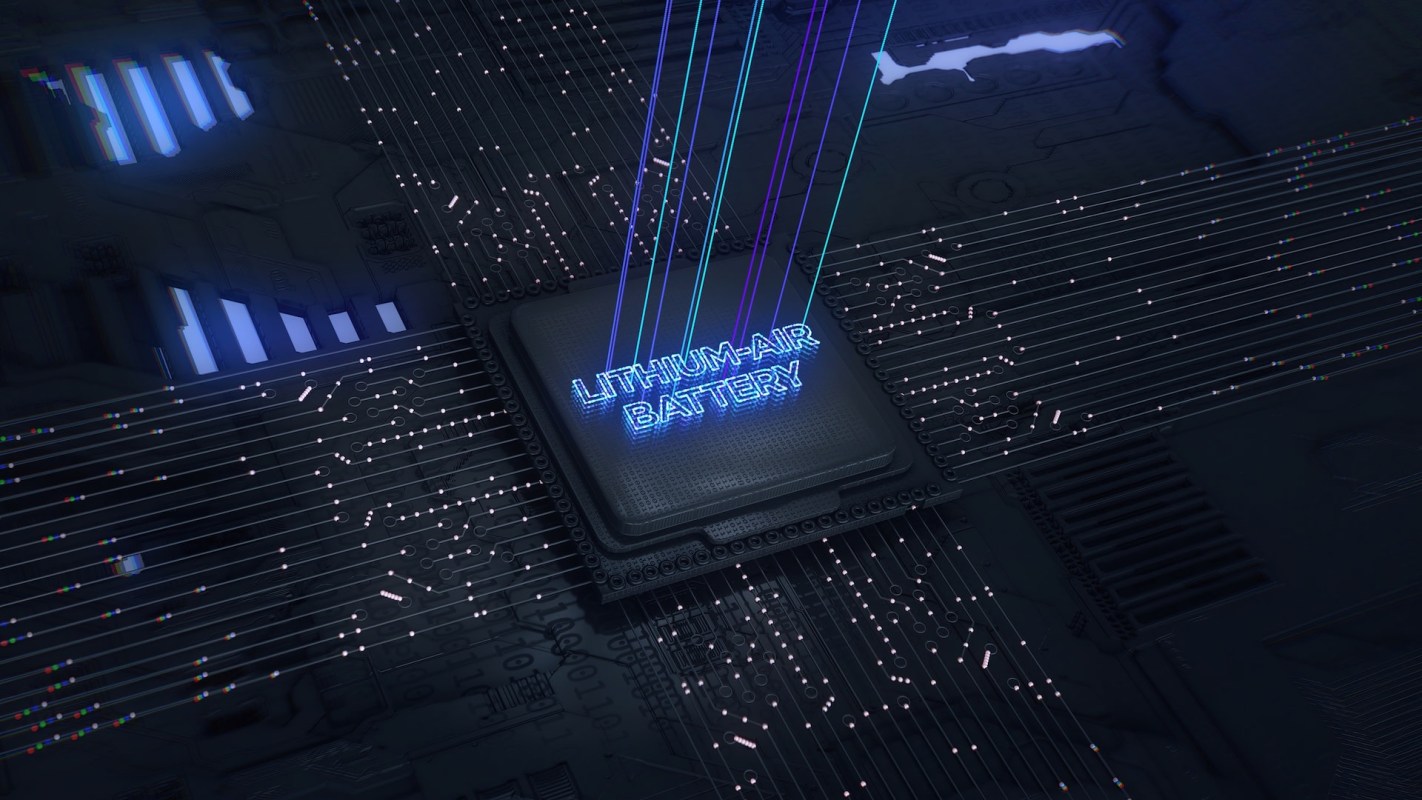
A new development in lithium batteries could revolutionize electric vehicles, making them more efficient than ever before.
Researchers from the National Institute for Materials Science and Toyo Tanso, a carbon and graphite manufacturing company, developed the new technology and published their research. The team created a carbon electrode that powers a functional 1-watt-hour-class stacked lithium-air battery.
Lithium-air batteries are thought to hold up to five times more energy than lithium-ion batteries. However, no lithium-air battery has been stable enough for real-world use.
They mix oxygen from the air with lithium to generate energy through a charge-discharge process. Until now, other compounds in the air, such as carbon dioxide and water vapor, have inhibited the battery from working.
The carbon electrode created by NIMS and Toyo Tanso represents a big step toward developing a lithium-air battery that can power phones, laptops, cars, and planes.
The new electrode allows the stacked lithium-air battery to generate higher output, survive longer, and eventually be scaled. The team optimized oxygen transport inside the battery using a layered porous carbon architecture. This structure prevents carbon dioxide and vapors from blocking up the battery.
TCD Picks » Quince Spotlight
💡These best-sellers from Quince deliver affordable, sustainable luxury for all




Aerospace Global News reported on the development, explaining that the team created "an electrode that allows oxygen and lithium ions to move freely while resisting the side reactions that normally destroy lithium-air cells."
In the published study, the researchers noted: "This approach enabled the fabrication of carbon electrodes with a hierarchically controlled porous structure, resulting in high-output operation of lithium-air batteries."
Lithium-ion batteries help reduce people's dependence on fuels like oil, coal, and gas. This saves people money and reduces the pollution caused by mining and burning these fuels. However, mining for lithium and improper lithium battery disposal also have a negative impact on the planet.
Lithium-ion batteries remain more affordable, efficient, and environmentally friendly than fossil fuels. But lithium-air would be even better for people and the planet. The high output would mean devices stay charged longer, charge quicker, and require less power to fuel.
|
Do you think EVs charge too slowly? Click your choice to see results and speak your mind. |
 Absolutely 👍
 Switching to an electric vehicle from a traditional gas car already saves you an average of $632 in fueling costs per year, according to a 2018 study by the University of Michigan's Transportation Research Institute. With lithium-air batteries, the savings would increase.
You can save even more money on fueling your EV when you charge it using home solar panels. TCD's Solar Explorer is a great tool to help you get started and save money on a new solar panel system, making your EV even more cost-effective.
Lithium-air batteries aren't ready for wide usage just yet. Scientists need to enhance stability, safety, and scaling before the batteries can be used in people's cellphones and EVs. But this new carbon electrode brings the world a step closer to affordable, abundant energy for portable devices, electric vehicles, drones, and solar power storage.

Get TCD's free newsletters for easy tips to save more, waste less, and make smarter choices — and earn up to $5,000 toward clean upgrades in TCD's exclusive Rewards Club.






