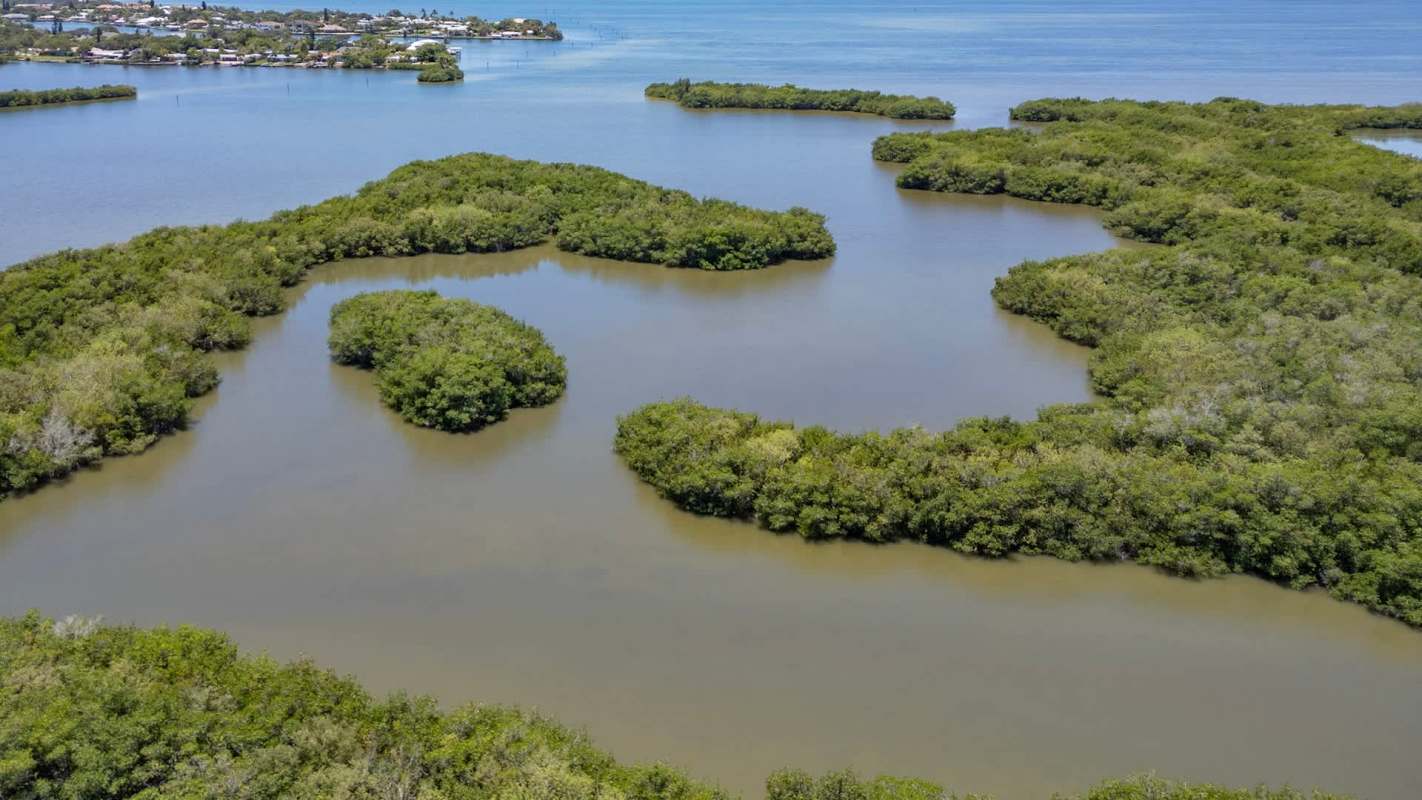
A new study found that one pervasive contaminant is entering Indian River Lagoon at an alarming rate, according to Florida Today.
What's happening?
Indian River Lagoon is a waterway situated on Florida's Space Coast.
According to the Ocean Research & Conservation Association (ORCA), the lagoon is exceptionally significant.
"Because of its unique geographical location, bordering the temperate and sub-tropical zones, the Indian River Lagoon is one of the most biodiverse estuaries in North America," ORCA explained, adding that 2,098 plant species and 2,117 wildlife species call it home.
A study recently published in the journal Environments acknowledged that an estimated 1.4 trillion microplastic particles were present in the lagoon, and researchers sought to determine whether airborne pollution was a significant contributor, or a "microplastics pathway."
With the help of citizen scientists — engaged members of the community who offer their assistance to researchers — the team placed several monitoring devices throughout Indian River Lagoon to measure the rate at which airborne microplastics entered it.
TCD Picks » Quince Spotlight
💡These best-sellers from Quince deliver affordable, sustainable luxury for all




After 14 months of monitoring, they determined that "1,224 microplastics per square meter per day" entered the waterway through the air, or via "atmospheric deposition."
Why is this important?
The Indian River Lagoon is well-known for its unmatched biodiversity and its fragility, an issue raised recently when Jeff Bezos' Blue Origin sought permission to discharge wastewater into it.
Plastic pollution has persisted since plastics virtually took over the supply chain after World War II.
By the 1970s, the general public had become aware of macroplastic waste, and actions such as cutting six-pack rings to prevent marine entanglement became common.
|
How do you feel about microplastics being inside our bodies? Click your choice to see results and speak your mind. |
 I want them out now 🚫
 However, scientists didn't identify the problem of microplastics until 2004, and despite their "micro" label, these tiny plastic particles have become a gargantuan problem.
Unlike aerospace debris, however, microplastics are infamous for the way they've pervaded not just the air, water, and soil, but also for lodging themselves in the bodies of wildlife and humans.
Plastic became so prominent in part because of its relatively low cost, durability, and ostensible disposability, and all three factors have, as Florida Today observed, "come back to haunt us at the most basic biological levels."
It can take centuries for plastics to fully decompose, and in that time, plastic items continue breaking down into microplastics.
Their size (5 millimeters or smaller) makes them largely invisible to the naked eye — and enables them to enter the human body unnoticed, typically through ingestion or inhalation.
Because microplastics are in soil, they contaminate vegetables and meat from grazing animals, and in the ocean, they're consumed by the fish that become seafood.
Although research is ongoing, microplastics have been linked to severe adverse health effects, including certain cancers and heart attacks.
What's being done about it?
Author Linda Walters speculated that nearby industrial sites could be contributing to the problem and called for further inquiry.
"Understanding what is being released at our boat manufacturing and rocket building facilities would be very helpful," she said.
Although microplastics are incredibly pervasive, using less plastic and finding non-plastic alternatives for everyday items can drastically cut your direct exposure.

Get TCD's free newsletters for easy tips to save more, waste less, and make smarter choices — and earn up to $5,000 toward clean upgrades in TCD's exclusive Rewards Club.