


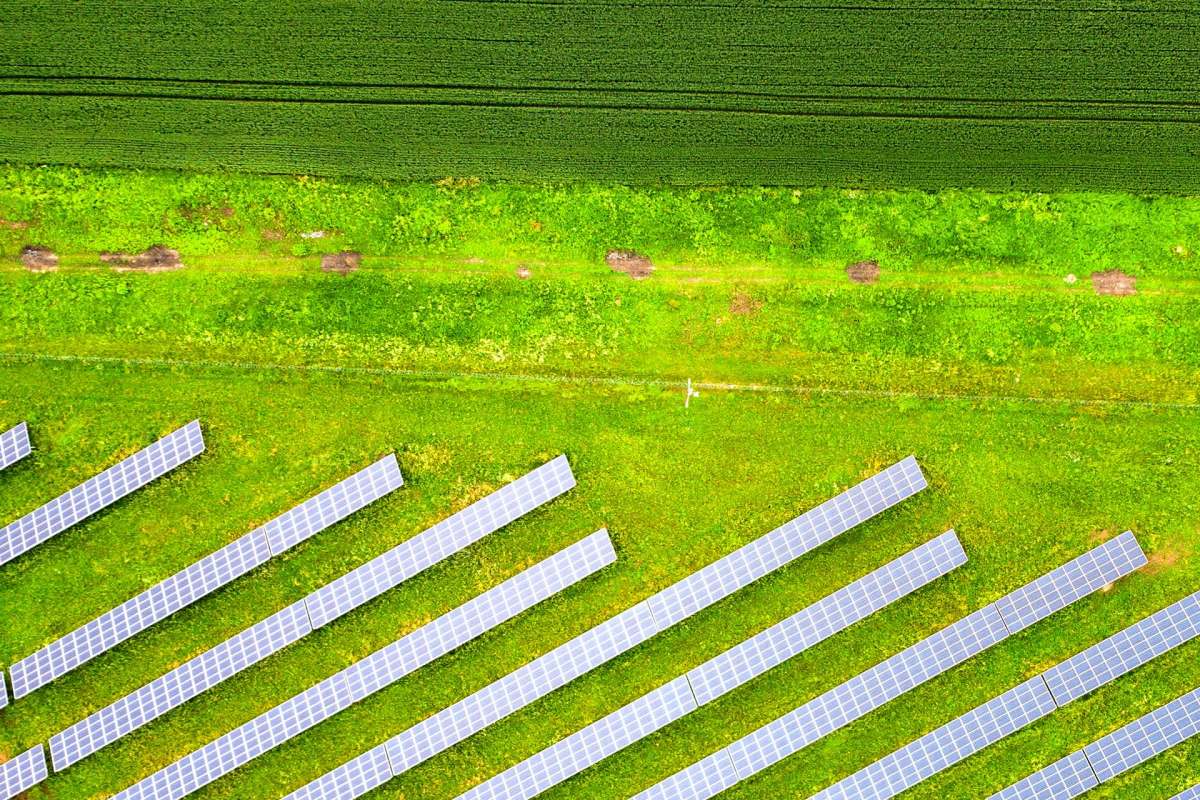
A farm owner in Colorado rejuvenated his family farm's fortunes by adding an unlikely offering, clean energy, to its output of fruits, vegetables, and herbs.
Marketplace profiled Byron Kominek, the owner of Jack's Solar Garden in Longmont. Kominek's grandfather bought the land in 1972, growing hay and wheat.
In 2018, Kominek took over the farm and was eager to find a way to turn around the prospects of the money-losing property. The concept of combining solar panels with farming, known as agrivoltaics, became the key. First, Kominek had to win over a tough cynic, his mom.
"She wasn't too interested in solar panels on our farm, but having agriculture mixed in with it was more interesting to her," Kominek revealed.
With her blessing, the farm, named after his grandfather, now features more than 3,000 solar panels, powers about 300 homes, and creates beneficial microclimates for crops beneath.
The solar panels, set 6'6" to 8 feet above the ground, do not eliminate the usable land under and around them, by any means, as they instead provide essential shade for fruits, vegetables, and herbs, as well as for workers.
TCD Picks » Quince Spotlight
💡These best-sellers from Quince deliver affordable, sustainable luxury for all




"I think of myself as a shade peddler a lot of times," Kominek remarked. "The more shade that's accessible to people, to animals, to crops, that's going to be useful in hotter, drier parts of our country."
Kominek is also in his fifth year collaborating with nonprofit Sprout City Farms on cultivating crops like tomatoes, which are sold at local markets or donated to food aid initiatives.
Jack's Solar Garden exemplifies a successful implementation of agrivoltaics. As Kominek revealed, he pockets more money selling electricity than he could on hay alone. The initiative certainly offers struggling farmers a chance to add a necessary income stream, which is particularly valuable during uncertain economic times as well as in the face of potential crop-ruining weather.
Studies also back Kominek's experience that the shade provided by the panels is beneficial to both produce and workers. Farms with sheep and other livestock have also seen success with agrivoltaics as a source of shade.
|
What's the biggest thing stopping you from going solar? Click your choice to see results and speak your mind. |
 The cost 💵
 Generating clean energy is a positive as well. It reduces our reliance on dirty energy that contributes to ever-rising temperatures and extreme weather, like droughts, that threaten farmers.
Looking forward, Kominek plans to introduce a you-pick berry operation to further enhance the farm's income. He hopes his example could inspire others.
"We don't have to leave the land useless," Kominek told Marketplace. "We can continue to make use of it, creating jobs for people underneath the solar panels, producing food for our communities, keeping rural communities especially more afloat."

Get TCD's free newsletters for easy tips to save more, waste less, and make smarter choices — and earn up to $5,000 toward clean upgrades in TCD's exclusive Rewards Club.






