


Many companies engage in greenwashing, but they usually try to be discreet about it. That wasn't the case with a certain product a shopper found at Walmart, however.
What's happening?
In the r/Anticonsumption subreddit, the original poster shared a photo of the tag from a hoodie they'd bought for their toddler. The tag said the hoodie was made with "Better Cotton," which comes from an organization that works to make global cotton production more sustainable.
That's a great initiative to back, but right beneath a message explaining more about the program, the tag read, "This product is sourced via a system of mass balance and therefore may not contain Better Cotton."
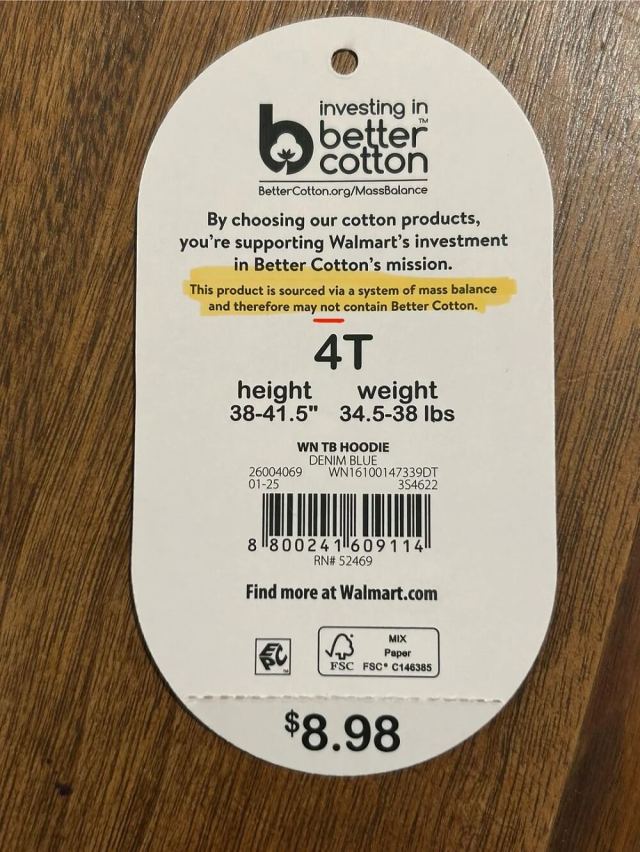
"Shameful. If you choose a path, be true to it," the OP captioned the photo.
"Nothing but marketing and branding. None of these logos mean anything," one user said.
"Better cotton without better cotton?" another shared.
TCD Picks » Quince Spotlight
💡These best-sellers from Quince deliver affordable, sustainable luxury for all




"I never trust a corporations' marketing when it comes to sustainability," another said.
Why is greenwashing concerning?
Greenwashing harms both investors and consumers, as it leads them to believe companies or products are more eco-friendly than they actually are, thereby delaying climate solutions and misleading customers. It also damages a company's image and may ultimately harm its profits in the long run.
While there isn't an exact figure for the number of companies that engage in greenwashing, over half of global executives admit to doing so, according to a 2022 survey, as reported by the University of the Built Environment. Regarding individual businesses, approximately 72% of North American and 58% of global companies admit to greenwashing, according to statistics compiled by Zippia.
It's a widespread issue, and the more companies engage in deceitful marketing, the less trustworthy they will seem to the public.
|
Should companies be required to help recycle their own products?
Click your choice to see results and speak your mind. |
 Definitely 👍
 Is Walmart doing anything about this?
This isn't the first time Walmart has been accused of greenwashing.
According to Supermarket News, the company was ordered to pay a $3 million settlement to the Federal Trade Commission in 2022 for falsely advertising certain "bamboo" rayon products, such as towels and blankets, as sustainable. The settlement required Walmart to also stop marketing the products as environmentally friendly.
While the company hasn't disclosed any information regarding the misleading marketing of its Better Cotton products, it is taking steps to become more sustainable. Its website stated that it is working to reduce polluting gases, regenerate natural resources, create a circular economy, and protect animal welfare.
What else is being done about greenwashing?
Major companies, such as Apple and oil giant Santos, have faced lawsuits over greenwashing. The former has been accused of embellishing its nature restoration projects, while the latter has been sued for allegedly failing to take action to reduce pollution. The more consumers call out corporations for harming the environment and not taking accountability for restoring it, the greater progress can be made toward more transparent marketing.
Individually, consumers can keep informed about common greenwashing tactics and choose to shop from brands that have recognized labels and third-party certifications from trusted organizations.

💰Get TCD's free newsletters for easy tips to save more, waste less, and make smarter choices — and earn up to $5,000 toward clean upgrades in TCD's exclusive Rewards Club.






