


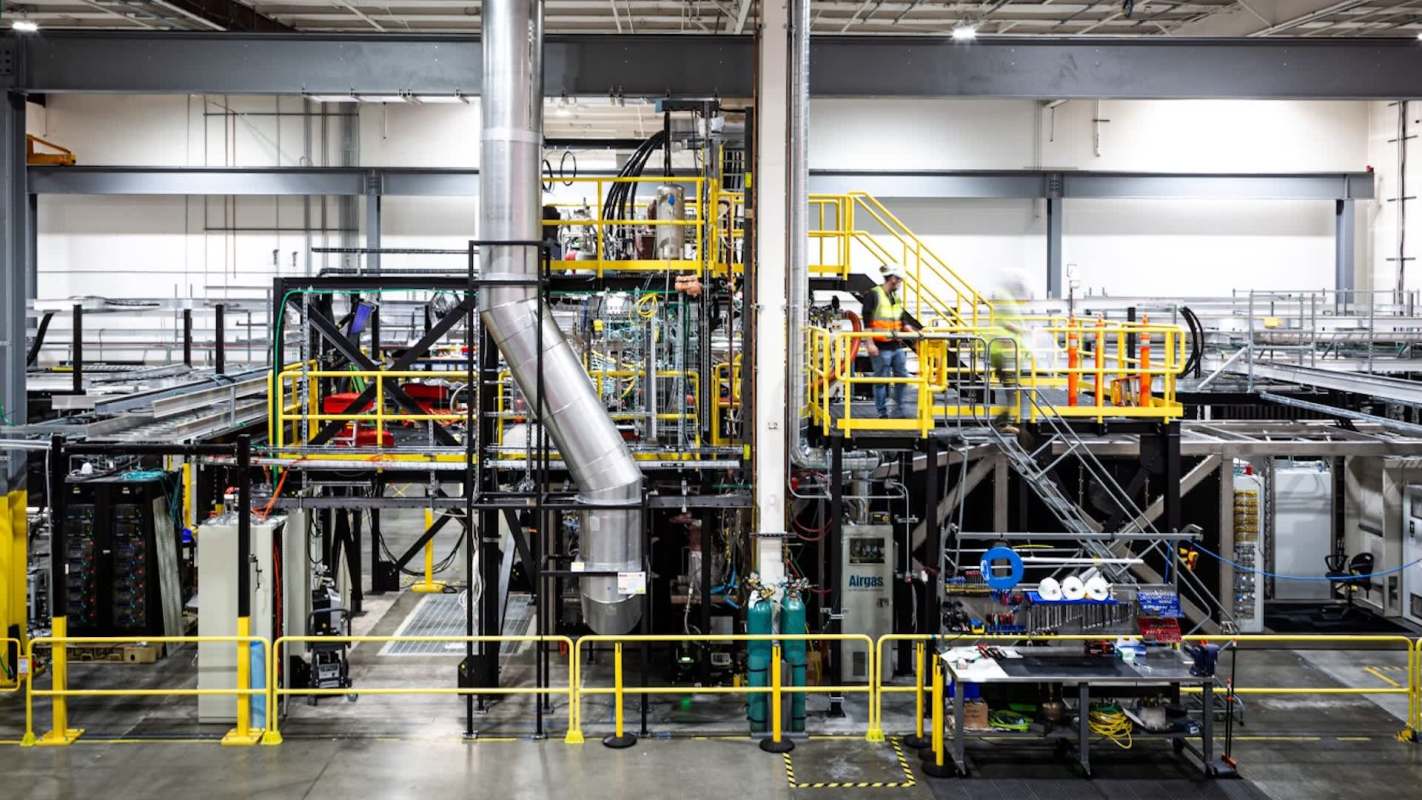
Washington-based Zap Energy has reached a fusion milestone with its unique Z-pinch reactor design by successfully delivering more than 100 plasma shots — one every five seconds — with 39 kilowatts supplied directly to a plasma chamber carrying up to 500 kiloamps of current, a TechEBlog report shared.
Since the facility's first operations last year, the company's Century fusion device has been upgraded to achieve the 30-kilowatt milestone and is now well on its way to developing a commercially viable fusion plant that uses repetitive pulsed power.
Fusion is the process of combining two light atomic nuclei to form a single, heavier one, releasing enormous amounts of energy, similar to the reactions that occur in the sun.
The reactions take place inside a plasma heated to over 180 million degrees Fahrenheit, which most reactors control through superconducting magnets or high-intensity lasers. However, Zap Energy has taken a different route.
Zap uses sheared-flow-stabilized Z-pinch fusion modules to drive a pulse of electricity through a flowing plasma stream, generating a magnetic field that compresses the plasma and stabilizes the forces that sustain the process, the company explained.
"Prolonged operations of a fully integrated, repetitively pulsed system at 30 kilowatts gives us a much clearer picture of what a sheared-flow Z-pinch fusion power plant will actually look like," said Matthew Thompson, vice president of systems engineering at Zap Energy.
TCD Picks » Quince Spotlight
💡These best-sellers from Quince deliver affordable, sustainable luxury for all




"Century's real-world tests of our engineering subsystems mean we've already begun to identify and solve many of the most difficult commercial technology challenges."
The company is using hydrogen or helium gas for the plasma instead of the usual fusion-grade deuterium-tritium fuel, since its design objective at this stage is engineering validation.
"Century is maturing technologies that will ultimately convert energy from our fusion reactions into electricity or industrial heat — systems engineering has historically been overlooked in fusion development," said Benj Conway, CEO and co-founder of Zap Energy. "Fusion is not just a plasma problem. It's a systems integration problem."
The Department of Energy certified the completion of a three-hour campaign by the Century device in February that produced more than 1,000 consecutive plasma shots, each with at least 100 kiloamps of current.
|
Should we be pouring money into nuclear fusion technology? Click your choice to see results and speak your mind. |
 Yes — it'll pay off 👍
 These recent tests show a twenty-fold increase in sustained average power over the company's initial commissioning milestone in 2024, marking significant progress toward the ultimate goal of sustained fusion energy production.
Fusion offers the promise of near-limitless energy from hydrogen, an abundant fuel on the planet. While all the fusion projects underway are still in the testing and construction phases, each advancement brings humanity closer to a powerful and sustainable energy source.
There is no carbon dioxide or other planet-warming pollution generated by fusion, and it doesn't create any long-lived radioactive waste like nuclear fission, making it the ideal sustainable complement to other clean energy sources like solar and wind.

Join our free newsletter for weekly updates on the latest innovations improving our lives and shaping our future, and don't miss this cool list of easy ways to help yourself while helping the planet.






