


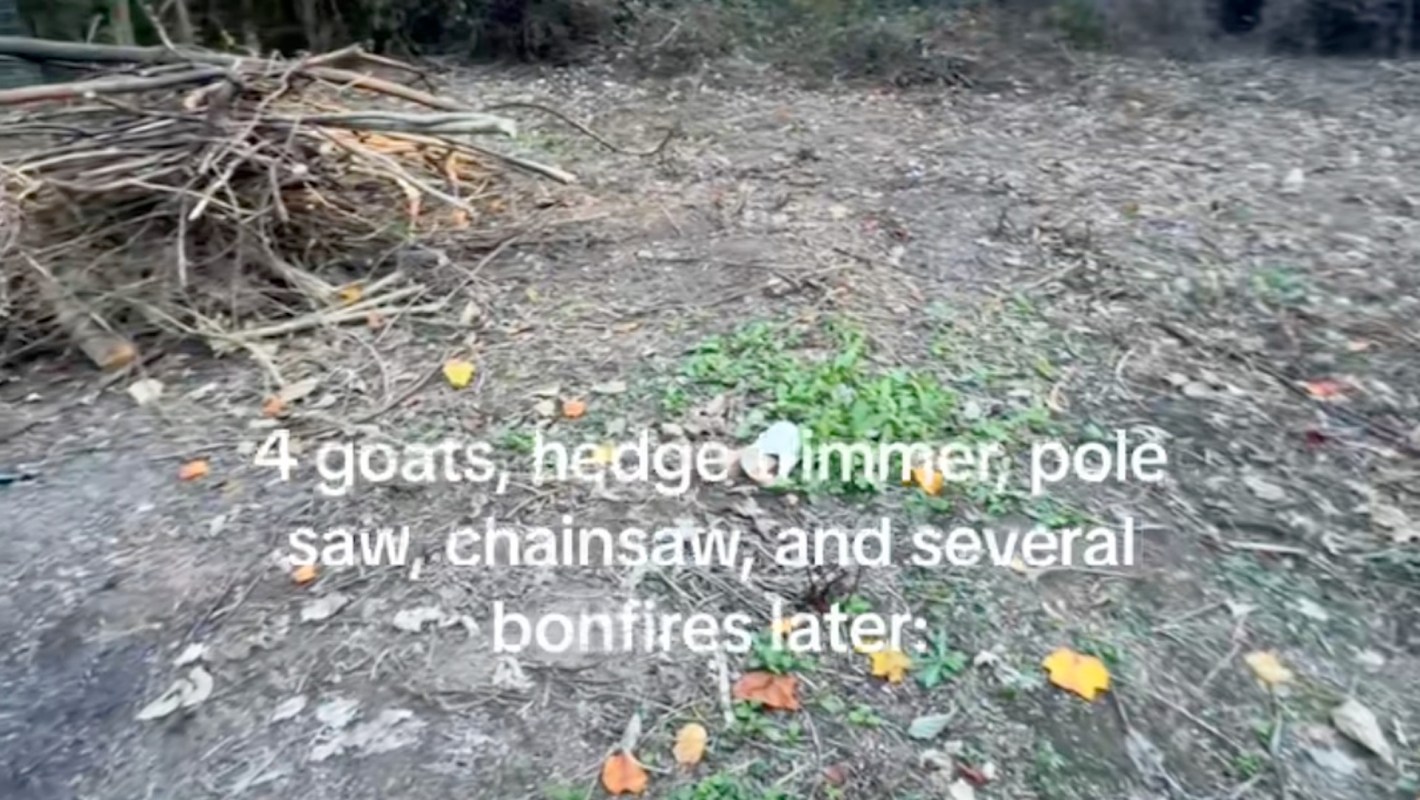
When one homeowner was told it would cost between $18,000 and $21,000 to clear her yard of invasive kudzu, she didn't back down. Instead, she picked up tools and enlisted the help of four goats — then shared the before and after on TikTok.
With a little elbow grease and several bonfires, Kaylea's (@kayleareneefite) backyard went from a kudzu jungle to open space again.
@kayleareneefite Im in it for the long game. #kayleareneefite #goat🐐 #dewalt #therapy #diyproject ♬ Do you wanna fight meeee by FluffyBaee - FluffyBaee
"I'm in it for the long game," Kaylea wrote in the caption.
"Fight the good fight," one TikToker cheered.
Kudzu, sometimes called "the vine that ate the South," is one of the most destructive invasive plants in the United States. Originally brought from Japan in the late 1800s as a means for erosion control, it quickly spiraled out of control.
"It [is] so pretty but that plant can be so destructive," one commenter wrote.
TCD Picks » Quince Spotlight
💡These best-sellers from Quince deliver affordable, sustainable luxury for all




Kudzu spreads rapidly, smothering trees, shrubs, and even entire structures under thick mats of vines. Once established, it chokes out native plants, reduces biodiversity, and alters the natural balance of an ecosystem. There's also a theory that kudzu may spread more easily thanks to the changing climate.
That's why Kaylea's decision to take action was so necessary. By turning to goats, she used one of the most eco-friendly control methods out there. Goats are natural grazers that happily munch on invasive plants like kudzu without harming the soil.
Unlike heavy machinery or chemical herbicides, they leave no lasting damage and can even fertilize the land as they graze. Many parks and municipalities now hire goat crews for this exact reason.
"I was quoted 18k for removal on 2 and a quarter acres," another user shared. "I bought 6 goats for $275 and they had it done in a season. Now the kids got new pets."
|
What's the hardest thing about taking care of your yard? Click your choice to see results and speak your mind. |
 Mowing the lawn 🏡
 The lesson here goes beyond one land battle. Planting and protecting native species is one of the best defenses against invasive plants. Native plants are adapted to local soil and climate, which means they require less water, fertilizer, and maintenance. More importantly, they provide food and habitat for pollinators, birds, and other wildlife that invasive plants displace.
Turns out, the best weed-whacker might just have four legs and a taste for vines. With persistence and patience, even kudzu doesn't stand a chance.

Join our free newsletter for easy tips to save more and waste less, and don't miss this cool list of easy ways to help yourself while helping the planet.






