


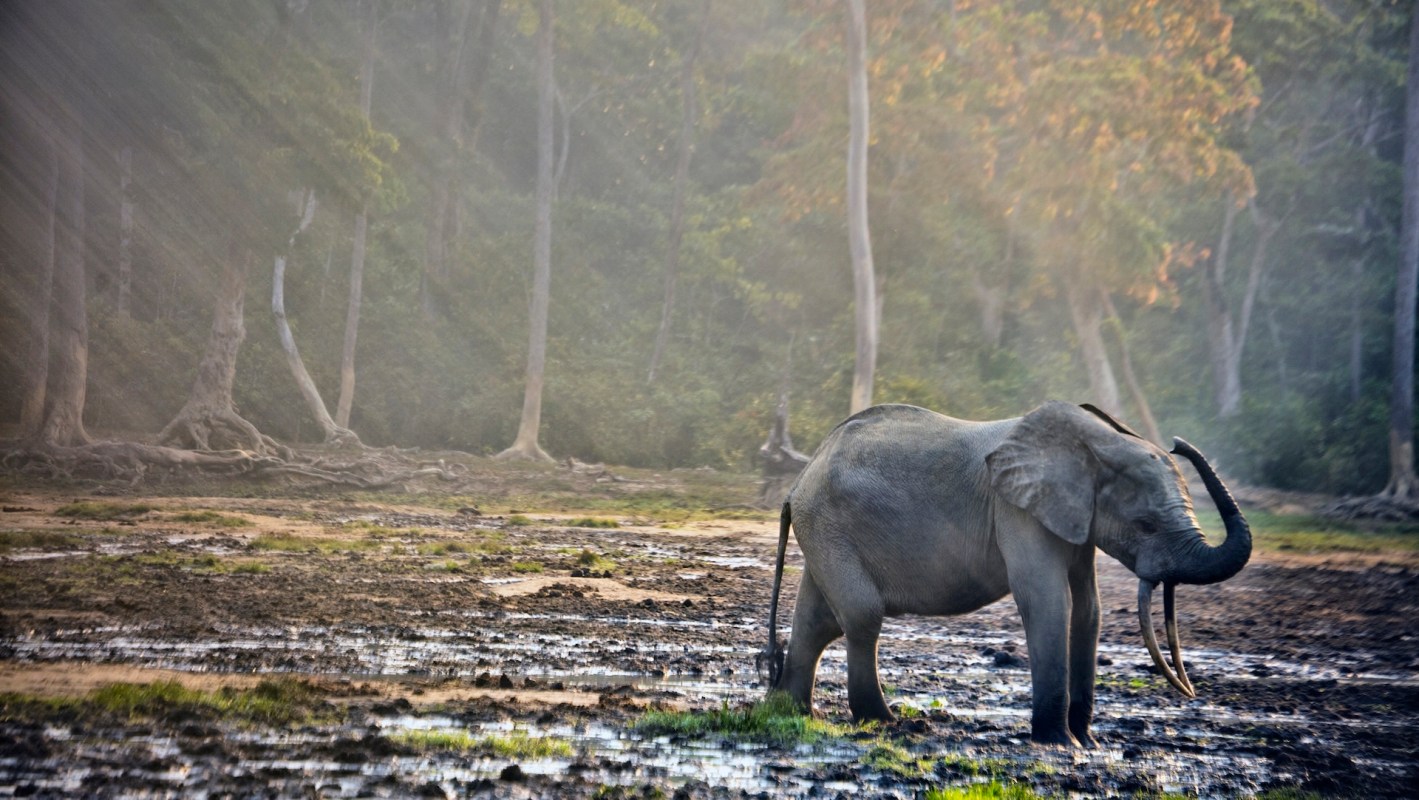
The decline in Africa's population of forest elephants has had a direct impact on the decline of its ebony trees, a new study based in Cameroon now shows.
What's happening?
A study published this August in the journal Science Advances may be the first to provide hard evidence of the mutualistic relationship between African forest elephants and African ebony, a dense and dark hardwood, according to Mongabay.
Forest elephants appear to play a key role in ebony seed dispersal. As the co-authors write in the opening line of their study, the animals "preferentially eat fruits and disperse seeds of carbon-dense trees."
The elephants' dung protects the seeds from rodents and other insects. And because the droppings are often spaced out, following the elephants' movements, ebony saplings end up well spaced and not competing with each other for sunlight.
This beneficial exchange between the two species is especially noteworthy as ebony has previously been subject to unsustainable harvesting for use in high-priced items, from musical instruments to weaponry. With the valued tree threatened, reproductive support from elephants is crucial.
However, these animals are critically endangered themselves. Populations decreased by 62 percent between 2002 and 2011, according to the World Wildlife Fund. Poachers pose a major threat to African elephants because demand for their tusks is still high, despite the trade being made illegal.
TCD Picks » Quince Spotlight
💡These best-sellers from Quince deliver affordable, sustainable luxury for all




With that, the fates of the elephant, hunted for its ivory, and the ebony tree are intertwined, scientists say. In Cameroon, the study team recorded a 68 percent drop in ebony saplings in areas where elephants were not present. "Small saplings accounted for 47.2 percent of all individuals in forests with elephants but just 15.1 percent where elephants were absent," the co-authors wrote.
Lead author Vincent Deblauwe told Mongabay, "In 100 years, maybe we'll discover the true damage that has been done to the forest today."
Why is this concerning?
In addition to the potential for further declines among threatened plants and wildlife as well as related ecosystemic impacts, there's also the matter of decreased carbon storage to consider.
The elephants favor high-density trees, like ebony, which also absorb more carbon. Forests with a high population of these trees can act as carbon sinks. This means they can help regulate the Earth's temperature by absorbing more carbon than they release.
|
Do you think America does a good job of protecting its natural beauty? Click your choice to see results and speak your mind. |
 Definitely 👍
 If ebony trees are in danger, so is a natural asset that helps cool our overheating planet. Rising temperatures have contributed to extreme weather events worldwide, displacing communities, compromising safety, and increasing health risks.
Carbon sinks are already at risk of being inefficient due to human-caused heat-trapping pollution outpacing nature's ability to absorb and regulate it. It is important to protect the well-being of African elephants and other animals for countless reasons, including their ability to contribute to the sustainability of ebony trees, which can take up to a century to mature.
"We are really on the precipice of extinction of forest elephants and the extinction of those ecological processes that regenerate forests," Thomas Smith, a co-author of the study, told Mongabay. "This is kind of code red."
What's being done about endangered elephants?
This study has reinforced the need to prevent poaching and protect forests. The researchers found that seed dispersal was higher in areas where hunting risks were lower.
While the international community has outlawed the practice, there is still work to be done to discourage poachers from continuing. Together with supporting policies that shrink the illegal trade of animal products and build local economies instead through green industries, consumers can make choices that lower the demand for goods that drive poaching.
Conserving forest habitats can also help threatened flora and fauna to thrive.

Join our free newsletter for good news and useful tips, and don't miss this cool list of easy ways to help yourself while helping the planet.







