


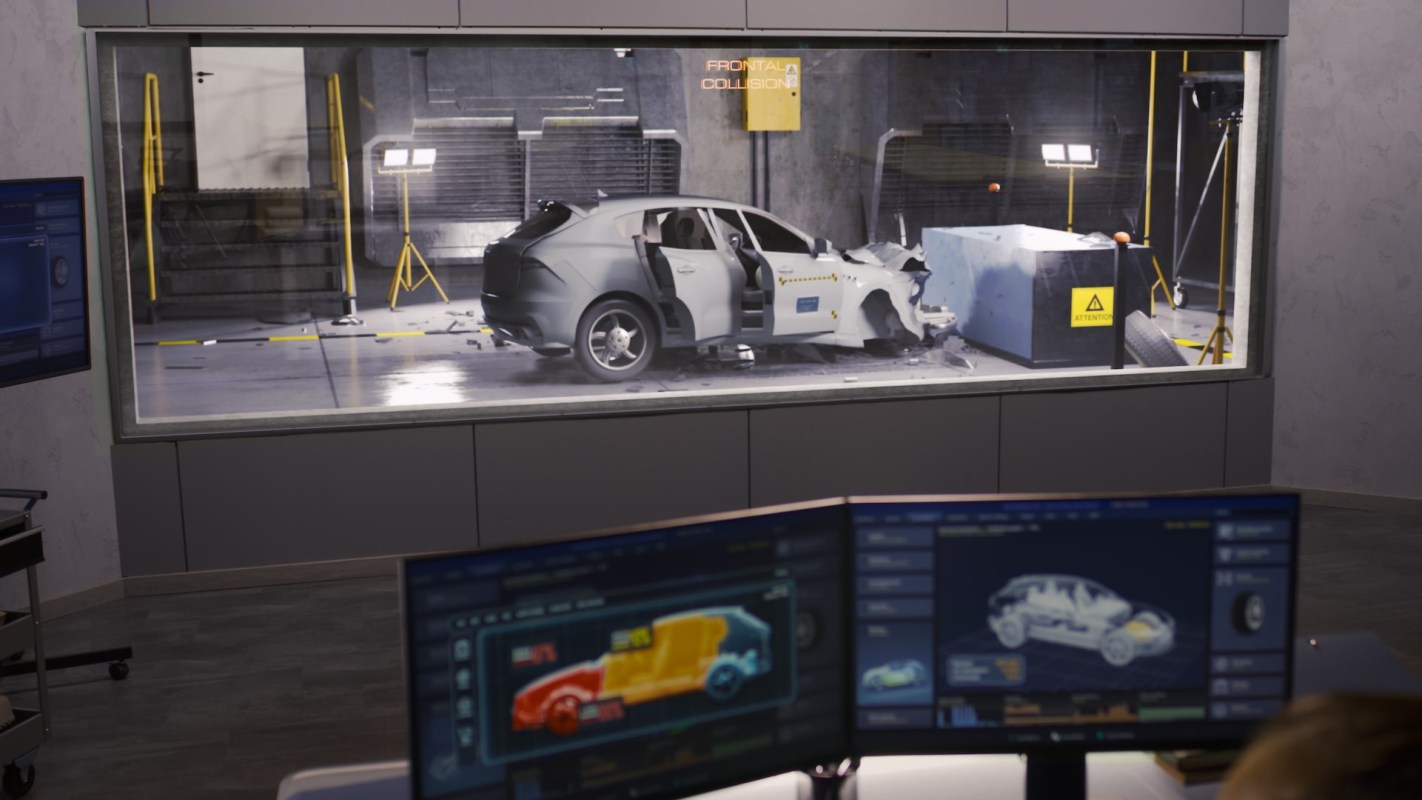
The Insurance Institute for Highway Safety just released crash safety test data for seven popular electric vehicle models, per CBS News.
Since 1969, the IIHS has conducted crash safety tests to identify structural weaknesses in models, which informs the evolution of automotive design.
On Tuesday, the IIHS issued its findings after crash-testing the BMW i4, Chevrolet Blazer EV, Tesla Cybertruck, Tesla Model 3, Volkswagen ID.Buzz, Nissan Ariya, and Ford F-150 Lightning.
As the automotive news site Jalopnik observed, the IIHS' EV testing was noteworthy, as several of the fully electric models involved had "never been evaluated by IIHS before."
EV adoption is on the upswing in the United States and worldwide, and IIHS safety data could further encourage drivers to consider making their next cars EVs.
According to an IIHS news release, five of the models "boast award-worthy performance in a key crash test." The i4, Blazer, Cybertruck, and ID.Buzz earned the highest rating, "good," while the Model 3 passed with an "acceptable" rating.
TCD Picks » Quince Spotlight
💡These best-sellers from Quince deliver affordable, sustainable luxury for all




The Ariya and F-150 Lightning "struggle with protection for back seat passengers," according to the IIHS. Backseat passenger safety metrics, which the IIHS said were "what differentiates vehicles" in testing, were not part of the evaluation criteria until 2022.
In the release, the IIHS stressed that nearly all seven models tested "offer good front-seat protection" in the tests conducted.
Raul Arbelaez, vice president of the IIHS, addressed the Lightning's "poor" score in the broader context of what actually contributes to a vehicle's safety versus public perception.
"Most people think … bigger is better. Heavier is better, and certainly we had that with the Ford F-150 Lightning. The vehicle structurally held up really well in this crash but fell short in protecting the rear seat position," Arbelaez told CBS.
|
Are you thinking about buying an electric vehicle?
Click your choice to see results and speak your mind. |
 Yes — in the next 6 months 🙌
 This isn't the first time the organization has identified EVs as exceptionally safe choices. Ten fully electric models were among its top safety picks for 2025.
In 2021, the IIHS acknowledged its testing had shown "electric vehicles are at least as safe as conventional ones." At the time, IIHS President David Harkey said it was "fantastic" that data indicated EVs were "as safe as or safer than gasoline- and diesel-powered cars."
"We can now say with confidence that making the U.S. fleet more environmentally friendly doesn't require any compromises in terms of safety," Harkey added.
It's true EVs are unquestionably better for the planet, but they're also beneficial from a purely economic standpoint. EV drivers save significantly on maintenance and fuel, savings that are virtually exponential for owners or lessees with solar panels. As electricity costs continue surging, installing solar panels is an increasingly valuable hedge against skyrocketing utility bills.
EnergySage provides free quotes from trusted technicians, and using the service can save new customers up to $10,000 on their home solar installation.

Join our free newsletter for good news and useful tips, and don't miss this cool list of easy ways to help yourself while helping the planet.






