


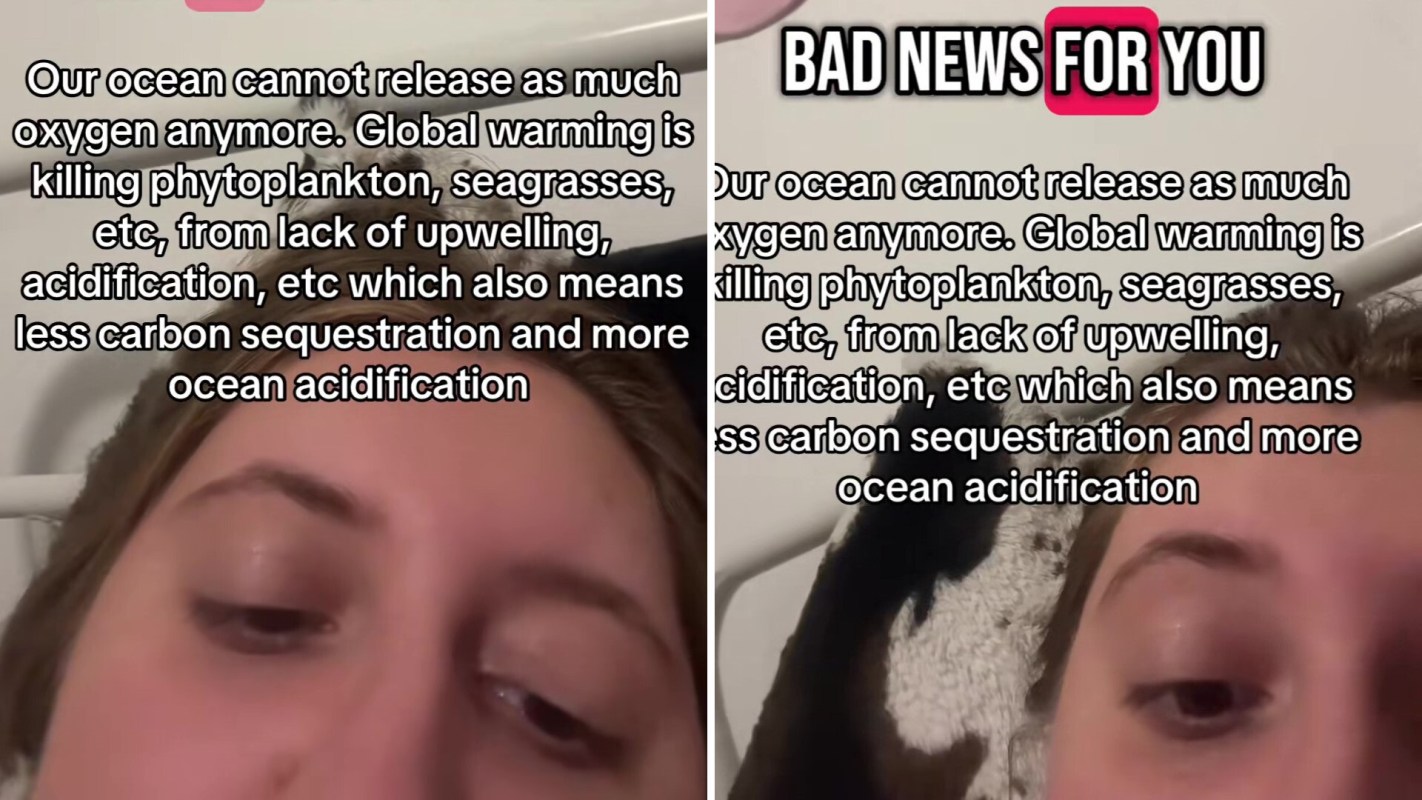
One TikToker felt the need to set the record straight when someone commented with misinformation on their video.
Murphy (@femme_masc) had to make a new video dedicated to refuting the commenter's misguided claim regarding oxygen and the world's oceans.
@femme_masc Replying to @axrons4 OH UHHH #globalwarming #oceans #policeoftiktok #environment #energy ♬ frutiger aero - amirthetrash
According to the National Oceanic and Atmospheric Administration, about half of the Earth's oxygen comes from the oceans, the majority of which comes from photosynthesizing activities of organisms in the ocean.
Prochlorococcus is the smallest photosynthetic organism on Earth, found in the ocean, and produces up to 20% of the oxygen in our biosphere, according to the NOAA.
Rising global temperatures, however, are warming the oceans, impacting their ability to hold oxygen and store carbon, which creates an unfortunate cycle of planet warming and declining ocean productivity, per the NOAA.
That's why it's so frustrating when people try to downplay the issue.
TCD Picks » Quince Spotlight
💡These best-sellers from Quince deliver affordable, sustainable luxury for all




"We actually not cooked," began the comment that Murphy received. "Most of our oxygen come from the ocean."
"Do I have bad news for you," Murphy said as they began to explain the critical climate issues that affect oxygen production by the ocean.
As the planet warms, the ocean's surface waters also become warmer. This changes the density of the surface water.
Warmer surface water is lighter than the colder water situated at deeper levels, effectively creating distinguished layers of water within the ocean, also known as stratification, as the University Corporation for Atmospheric Research has detailed.
|
Should the government ban gas-powered lawn equipment? Click your choice to see results and speak your mind. |
 Absolutely 💯
 This makes it harder for the surface water to mix with the deeper levels — a process called upwelling, per the NOAA. Upwelling brings new water up, and mixing helps absorb more carbon from the atmosphere, sending old water into the ocean.
Stagnant surface water is saturated with as much carbon dioxide as it can absorb, but it sits on the top, reducing the ocean's ability to absorb any more, per the World Ocean Review.
This can leave more carbon dioxide in the atmosphere, which, in turn, leads to more planet warming, creating a negative feedback loop.
Rising global temperatures, caused by increased heat-trapping gas pollution in the atmosphere, also increase the intensity of extreme weather events like hurricanes and wildfires, which destroy habitats and can lead to biodiversity loss.
Every aspect of the Earth is interconnected, which also means that efforts to improve one area of the planet can positively influence another.
Tackling rising global temperatures begins with education, followed by steps toward reducing heat-trapping gas pollution, such as biking instead of driving or using less energy by washing your laundry with cold water.
Commenters seemed angry and dejected, however, about the state of the planet's future.
"It's actually so sad that it feels like the state of our planet isn't in our hands," one commenter said.
"I've been trying hard to plant nice trees for the environment and planting flowers, veggies, herbs, fruits etc," another added.

Join our free newsletter for good news and useful tips, and don't miss this cool list of easy ways to help yourself while helping the planet.







