


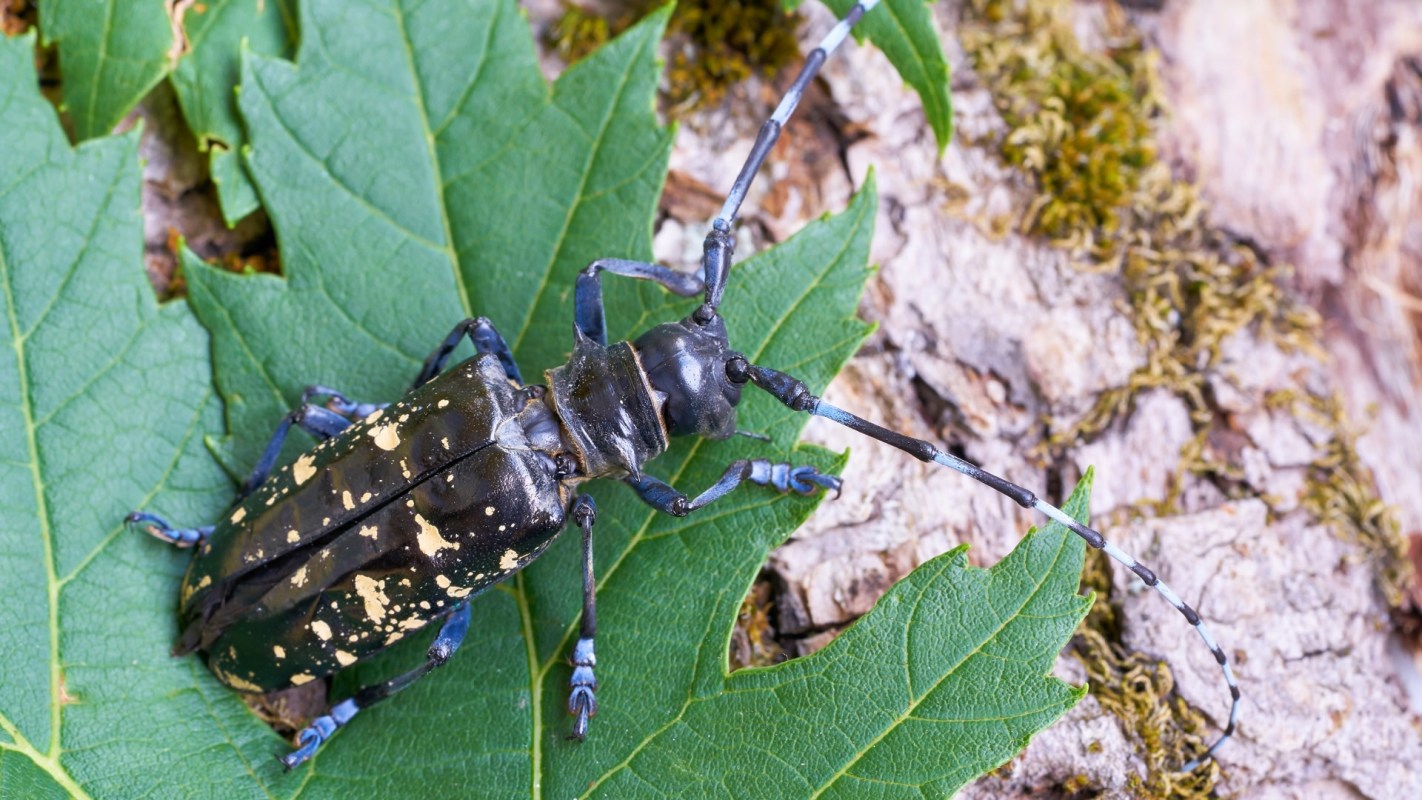
Connecticut wildlife authorities are asking residents to inspect their hardwood trees for signs of a destructive beetle that has already caused damage in neighboring states, WFSB reported recently.
What's happening?
The Asian longhorned beetle poses a threat to hardwood trees, such as maple, throughout the Northeastern United States and other regions. These insects grow to an inch and a half in length, according to Connecticut Fish & Wildlife.
The beetles display white markings against black bodies, with white and black banded antennae. Larvae bore into tree trunks and ultimately kill their hosts, per New York's Department of Environmental Conservation. As they emerge from trees, they create circular exit wounds about the width of a dime or smaller in the bark, WFSB reported.
While Connecticut hadn't recorded any confirmed sightings at the time of the report, government agencies continue battling established populations in Long Island, New York, and Worcester County, Massachusetts.
Why is the Asian longhorned beetle concerning?
When invasive species such as the Asian longhorned beetle arrive in new territories, they disrupt entire ecosystems by outcompeting local species for resources. Native wildlife depends on healthy forests for food and shelter, and these beetles threaten that balance.
Destroying hardwoods such as maple hurts more than just forest health. These trees help clean our air, prevent soil erosion, and provide shade that naturally cools neighborhoods. Losing them can impact property values, increase cooling costs for homes, and damage local timber industries.
TCD Picks » Quince Spotlight
💡These best-sellers from Quince deliver affordable, sustainable luxury for all




Protecting native habitats from invasive species helps maintain natural pest control, preserves food sources for wildlife, and prevents tree diseases that could affect agriculture and forestry.
What can I do to help?
If you spot a beetle that matches the description or notice circular wounds in bark around your property, report it to wildlife officials immediately. You can photograph any suspicious beetles or damage to trees to help with identification.
State officials recommend that homeowners capture suspected beetles in containers and freeze them to preserve the specimens for expert identification, according to WFSB.
To help prevent invasive species from spreading, purchase firewood locally instead of transporting it between regions, check outdoor furniture and equipment before relocating them, and learn to recognize invasive species common to your area. Growing native plants in your yard also bolsters local ecosystems against invasive threats.
|
Do you worry about having toxic forever chemicals in your home?
Click your choice to see results and speak your mind. |
 Majorly 😥
Join our free newsletter for good news and useful tips, and don't miss this cool list of easy ways to help yourself while helping the planet.







