


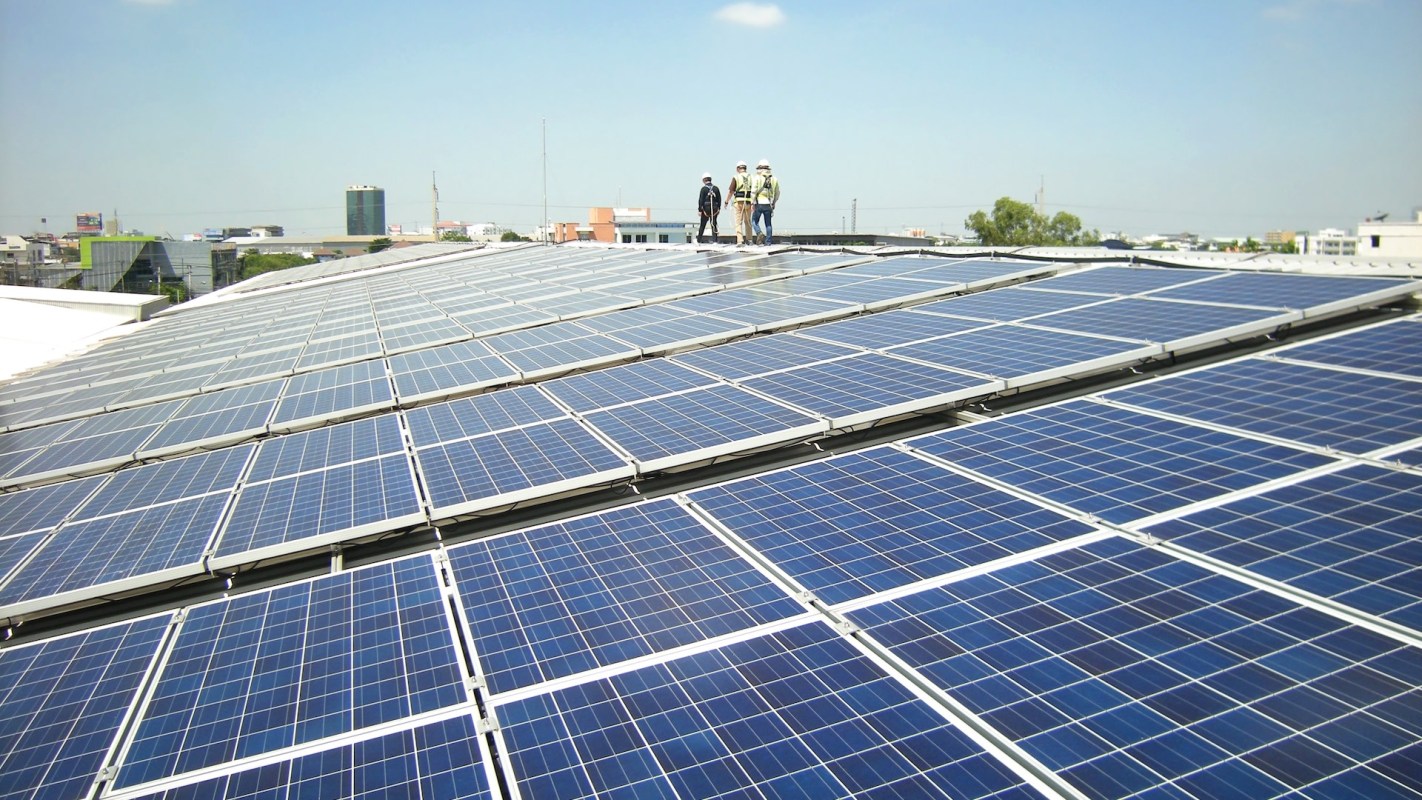
Solar technology firm SolarEdge and rooftop solar developer Solar Landscape are partnering to take advantage of a vast, untapped source of real estate: miles and miles of empty warehouse rooftops.
A recent Wall Street Journal exclusive announced this new collaboration, which aims to install 630 megawatts of solar capacity across more than 500 commercial and industrial rooftops across the U.S.
The projects are expected to be completed over the course of this year — just before federal tax incentives expire — and are said to mark America's largest rooftop solar installation to date.
"The U.S. is looking for more and more power. And this is one of the greatest ways to provide it. This is the quickest way to grid," Martin Rogers, U.S. general manager at SolarEdge, shared in the piece.
According to REGlobal, rooftop solar installations have grown 10 times in size over the past decade, and there's plenty of room for further growth.
It claimed that warehouses across the country have the potential to generate 185.6 terawatt-hours of solar-generated electricity annually, which could power 16% of all American homes, the report noted.
TCD Picks » Quince Spotlight
💡These best-sellers from Quince deliver affordable, sustainable luxury for all




Solar power accounted for 69% of all new electricity-generating capacity in the U.S. during Q1 2025 and represented 10% year-over-year growth in the sector. However, this figure falls short of the average annual growth of 29% since 2015.
Solar Landscape's business model involves leasing rooftop space, developing and owning the solar system, and delivering energy back to the grid.
"We estimate that less than 5% of commercial and industrial roofs have solar on them," Shaun Keegan, chief executive of Solar Landscape, told the WSJ.
"It's a really underutilized area. We're talking million-square-foot warehouses — think 10 Walmarts put together," he noted, adding that "leasing your roof can add 3% to 5% to the net operating income of a building."
|
If you don't have solar panels on your home, which of these factors is the biggest barrier to installing them? Click your choice to see results and speak your mind. |
 Upfront costs 💰
 While Solar Landscape's projects can be tailored to offset the building's own energy costs, community solar is also part of their portfolio.
Nearby homeowners and renters can subscribe to get a part of these energy savings applied to their electricity bill without having to install their own system. These solar installations also improve the resilience of the local grid.
"One advantage of rooftop solar is that it's distributed, which can more easily support the grid in times of stress. Especially when combined with batteries that utilities can draw from," Joseph Osha, senior managing director and equity research analyst at Guggenheim Securities, told the outlet.
Households that prefer to add their own solar panel systems can bring their own electricity costs down to or near $0, although they should act quickly before the tax incentives expire on Dec. 31 of this year.
Free services like EnergySage can help interested consumers compare quotes from vetted installers and save up to $10,000 on their project.
An added benefit from having solar panels for your home is that it makes other money-saving electric appliances, such as heat pumps, more affordable to run.
Mitsubishi also offers a service that can help consumers find the best and affordable model for your specific needs.

Join our free newsletter for good news and useful tips, and don't miss this cool list of easy ways to help yourself while helping the planet.






