


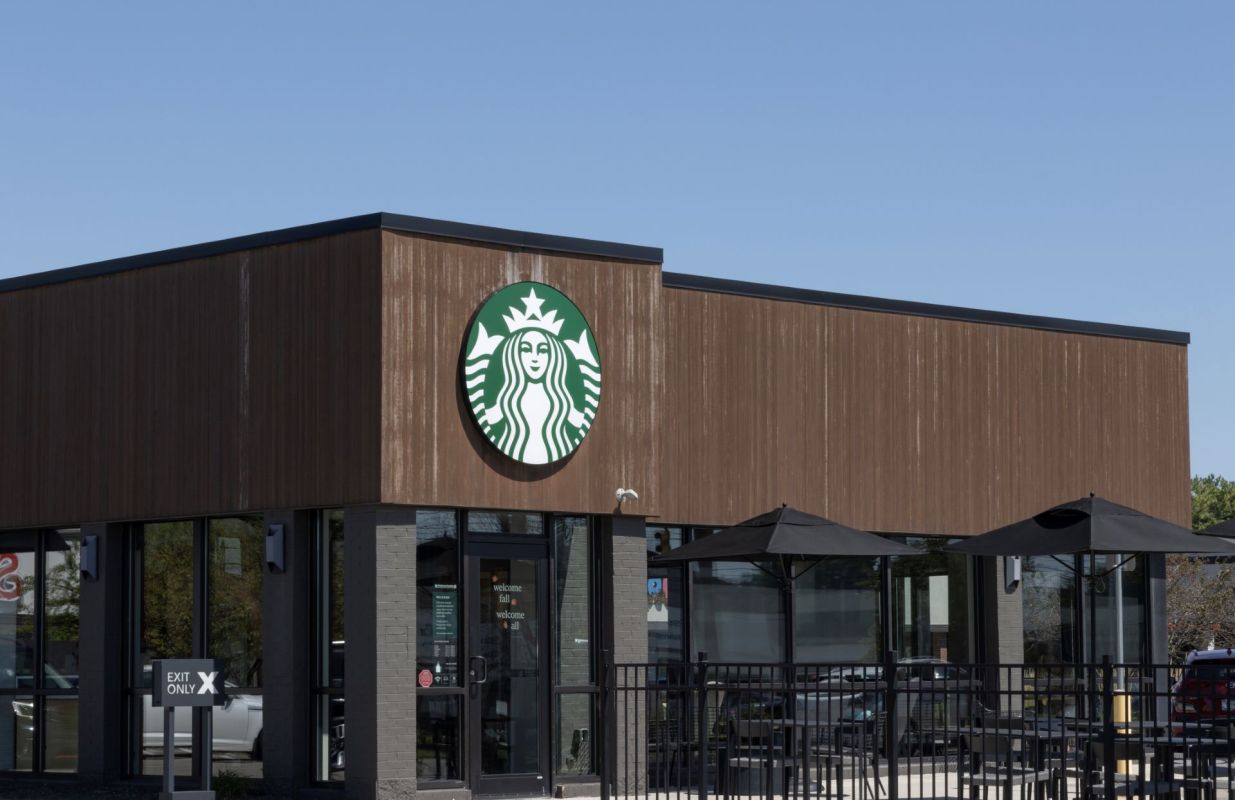
Coffee giant Starbucks will soon require its corporate workers to commute into the office four days a week, up from the current three. While framed as a culture-building move, the shift raises new concerns about environmental impact and community strain — both of which add up for a large company — at a time when climate goals should be moving forward, not in reverse.
What's happening?
As reported by Reuters, Starbucks is shifting its corporate work policy, requiring many employees to return to the office four days a week, up from the current three-day in-office schedule. The new mandate will take effect on Sept. 29 and applies to workers at the company's Seattle and Toronto support centers as well as regional offices across North America.
CEO Brian Niccol framed the change as essential to rebuilding company culture and improving business performance. "Being in person helps us build and strengthen our culture. As we work to turn the business around, all these things matter more than ever," he said in a message to employees.
In February, Starbucks had already asked its vice president-level leadership to relocate to Seattle or Toronto. The relocation requirement is now being extended to all support center people leaders, who are expected to relocate within 12 months.
The Cool Down reached out to Starbucks about whether Niccol — who did not relocate himself from California when he left Chipotle for Starbucks — would be relocating himself or increasing his private jet use to commute to the office, or if he would stay in Seattle for four consecutive days each week, but a representative had not been able to respond as of publish time.
In the meantime, Business Insider reported that Niccol recently had a new office completed five minutes from his Newport Beach, California, home so that he would have one nearby. The BI story did mention that Niccol does now have a home in Seattle and spends a lot of time throughout the year on the road regardless of where his home office would be, with 85 different markets to oversee, so it sounds as though Niccol has made some attempts to reduce his reliance on private jet usage to commute to an office.
TCD Picks » Quince Spotlight
💡These best-sellers from Quince deliver affordable, sustainable luxury for all




Still, it's fair to question how often a private jet is necessary to reach his required destinations on time over commercial flights that would still offer enough space to work while in the air.
"Brian spends the majority of his time visiting stores across the country and around the world and working in Seattle where he has both a home and an office," a spokesperson told BI. "For when he is in California, he has access to one of our Starbucks offices — which will also be used by other Starbucks partners (employees) — with meeting space allowing him to use his time effectively and keep moving the business forward."
Why is this change important?
While Starbucks says more in-person work aims to strengthen company culture, the shift means more commuting, leading to more emissions.
It is likely that many employees live far from city centers like Seattle and Toronto, where housing is expensive and public transit isn't always practical. That means more time in gas-powered cars, contributing to traffic, air pollution, and climate-harming pollution adding up across many employees doing so for an extra day each week over many years.
Transportation is already a massive contributor to carbon pollution, especially in urban areas. By requiring more office days, Starbucks is contributing to that burden. This seems to be at odds with its own climate goals and the urgent need to reduce fossil fuel use.
|
Do you worry about the quality of the air inside your home?
Click your choice to see results and speak your mind. |
 Yes — often 😬
 At a time when communities face worsening air quality, heatwaves, and environmental strain, backtracking on remote work is a step in the wrong direction.
What's being done to reduce carbon emissions?
Starbucks is taking some steps toward sustainability, including goals to halve its carbon footprint by 2030 and expand reusable cup programs. But reducing office commutes is another powerful tool and is tracked within the industry's leading pollution-reduction system, Scope, as part of what's called Scope 3 emissions (not directly controlled by the company).
TCD also asked Starbucks whether it had factored the Scope 3 emissions when making its decision to increase its minimum days in office and whether it planned to do more to offset those indirect emissions. The article will be updated if a company rep follows up with additional information.
Starbucks does provide free public transit passes and free parking for those who carpool to help incentivize its employees to travel to work in more environmentally friendly ways.
Companies can invest in hybrid flexibility, subsidized public transit, or offer incentives for electric vehicle use. For individuals, carpooling, biking, or advocating for better transit infrastructure can lessen commuting emissions. Small actions multiplied across thousands of workers can drive meaningful climate impact.

Join our free newsletter for good news and useful tips, and don't miss this cool list of easy ways to help yourself while helping the planet.






