


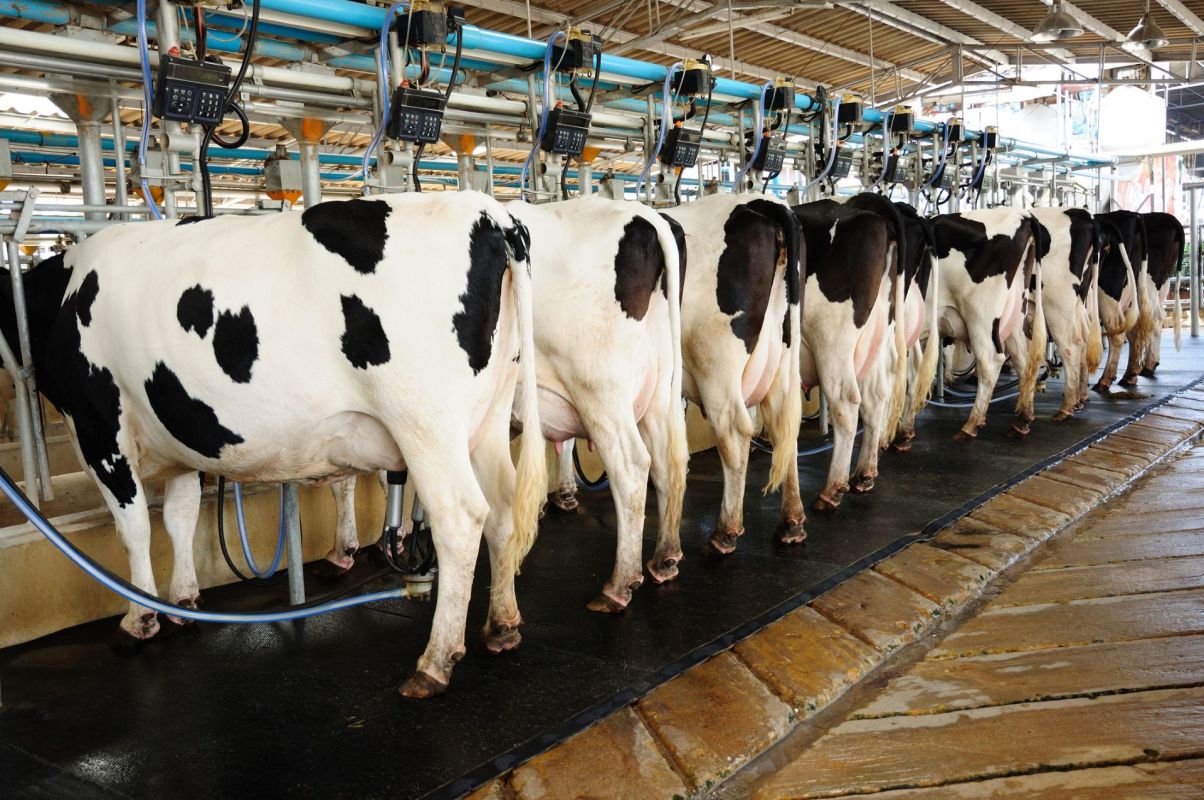
Extreme heat may reduce dairy cows' yields by 10%, according to researchers from the Universities of Jerusalem, Tel Aviv, and Chicago.
In the absence of changes to conditions or management strategies, the scientists say, heat stress could lower average daily milk yields by 4%"in some of the main dairy-producing countries" by 2050.
What's happening?
Researchers examined 12 years' worth of data from more than 130,000 cows and found that extreme heat can reduce dairy cow milk production by 10%, according to The Guardian's coverage of the study.
After just an hour of exposure to a "wet-bulb temperature" above 79°F, a cow's daily production can drop by 0.5%. That reduced output can persist for 10 days after exposure.
The study, published in the journal Science Advances in July, projects that average cow milk yields will drop by 4% by 2050 due to rising global temperatures.
Meanwhile, recent heat waves have ravaged agriculture of all kinds across Europe, North America, and Asia.
TCD Picks » Quince Spotlight
💡These best-sellers from Quince deliver affordable, sustainable luxury for all




Why is dairy production important?
Dairy accounts for a significant portion of global nutrition.
According to the International Dairy Foods Association, the United States Department of Agriculture reported that annual consumption of dairy products in 2023 reached 661 pounds per American.
As of 2021, Europeans had the highest dairy consumption per person — maintaining that supply through worsening weather conditions may be difficult.
Access to dairy has already been challenging in low- and middle-income countries due to multiple factors, including cost and insufficient infrastructure. Where vulnerable communities disproportionately experience child and maternal malnutrition, lack of access to such high-protein, nutrient-rich products can have particularly troubling consequences.
|
What is the biggest reason you don't grow food at home? Click your choice to see results and speak your mind. |
 Not enough time ⏳
 What's being done about dairy production?
The researchers found that cooling strategies, such as shade, ventilation, and sprinkling, could only mitigate the loss of dairy production by about 40% on hotter days. Still, that may be worth the investment, as the study suggested spending over $30,000 on cooling equipment could break even compared to yield losses within a year and a half.
Technology alone isn't likely to be the long-term answer, however. Cows are major contributors to methane pollution. That pollution exacerbates destructive weather patterns, including the very extreme heat that can reduce dairy yields.
Improving access to healthy dairy-free diets may be one way to reduce methane emissions and their negative consequences. Scientists are also investigating the potential for altered cattle feed and genetics to reduce methane emissions from cows.
Besides mitigating rising global temperatures, such as through greater investments in the clean energy transition, researchers called for the reduction of other sources of cattle stress.
"Look into more strategies to not only cool cows but reduce stressors, like confinement and calf separation," advised lead author Claire Palandri, per The Guardian. "Stressors make cows more sensitive to heat and less resilient."

Join our free newsletter for easy tips to save more and waste less, and don't miss this cool list of easy ways to help yourself while helping the planet.







