


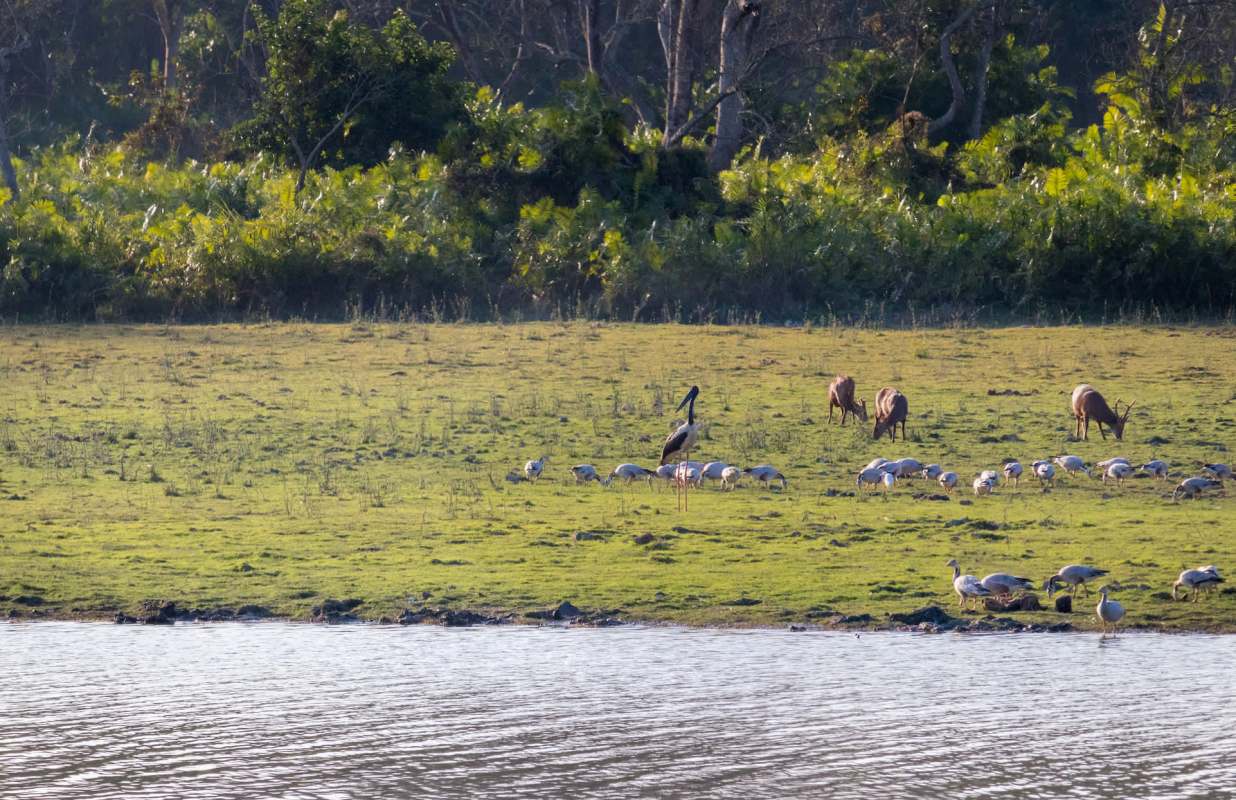
Several invasive species in the Koshi Tappu Wildlife Reserve (KTWR) are threatening the natural habitat and wildlife, The Rising Nepal reported.
"Their growth has become uncontrollable," Bhupendra Prasad Yadav, chief conservation officer at KTWR, told The Rising Nepal.
What's happening?
Several species of fast-growing weeds and vines are taking over the buffer zones and forest areas of the reserve, and their dominance is affecting the natural food and water supply for local wildlife.
Prasad Yadav explained to The Rising Nepal that the increasing presence of the invasive weeds is also affecting animal health, the balance of the ecosystem, and biodiversity. The wetland area's native trees and shrubs are struggling to grow as the invasive plants take over protected areas, and, as a result, it is becoming more difficult for the native animals to find the food they need to thrive.
The invasive plants are growing and spreading faster than the native plant species. They are resistant to disease, and they are spreading quickly, regardless of the weather conditions.
Why is protecting the reserve from the invasive species important?
The invasive species at KTWR are threatening endangered species. As the weeds cover their grazing areas, they are blocking paths that animals use to navigate the area. The animals are losing access to the fields and native grasses. And the grasses themselves are being robbed of the sunlight and warmth they require to grow.
TCD Picks » Quince Spotlight
💡These best-sellers from Quince deliver affordable, sustainable luxury for all




This reduction in land suitable for grazing has led to a shortage of food for the endangered species that depend on it. These species include birds, fish, endangered wild buffalo, and gharial, a species of crocodile.
This spread of invasive plants is also drying up water sources that native plants and animals depend on for survival.
According to The Rising Nepal, area experts say that the crisis is growing because the invasive plants are quickly adapting and reproducing in new environments, which is leading to even faster spread and more damage to the ecosystems. As the plants take over, they are narrowing waterways, robbing marshlands of water, and blocking sunlight. This impacts everyone who wants to enjoy these natural areas, everyone with an interest in the protected species there, and everyone whose living depends on the protected area.
What's being done about the invasive species?
It is important to take quick action once native species are detected, the Nature Conservancy explained. Early detection and a rapid response are key to winning the battle.
|
Do you think America does a good job of protecting its natural beauty? Click your choice to see results and speak your mind. |
 Definitely 👍
 Removing the invasive species and restoring the natural habitat is the next step toward protecting the native plant and animal species as well as resources in the area, per the National Wildlife Federation and the U.S. Department of the Interior.
It is also important to educate visitors — both local and tourist — so they can help prevent further spread of invasive species.
Concern about the status of KTWR remains. Prasad Yadav noted that "these plants are spreading widely and are having a serious impact on the ecosystem."

Join our free newsletter for good news and useful tips, and don't miss this cool list of easy ways to help yourself while helping the planet.







