


An employee at an undisclosed company spotlighted a surprising source of plastic waste: office printers. They revealed that it was only the tip of the iceberg involving the threat to public health.
What's happening?
In the r/Anticonsumption subreddit, the employee shared a photo of the plastic waste associated with office printers — at least 10 pounds' worth and counting.
"Not even half way done more plastic to come," they explained, adding: "That's not counting the massive amount of Styrofoam too. We bring that to a recycling place at least."
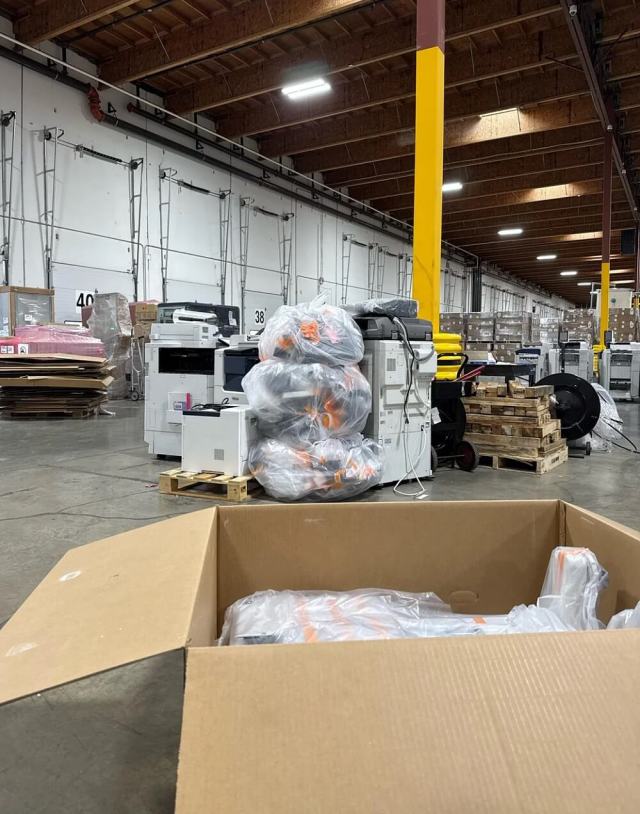
"That's insane. Just insane," one shocked Redditor responded.
Why is this important?
Even though the original poster said that the Styrofoam was headed to recycling, other Redditors were skeptical. "Recycling center: 'To the incinerator,'" one person wrote.
Trying to recycle is far better than throwing something in the trash, but it is not difficult to see why some commenters in the thread were unconvinced that the OP's company was meaningfully combating waste, as plastic isn't an infinitely recyclable material.
TCD Picks » Quince Spotlight
💡These best-sellers from Quince deliver affordable, sustainable luxury for all




According to Greenpeace, only around 5% to 6% of plastics — which are overwhelmingly derived from dirty fuels — are recycled in the United States.
Plastics can take generations to break down and frequently end up accumulating in our landfills or as litter in our communities and waterways.
Like other plastics, Styrofoam, which isn't accepted by most curbside recycling programs, contains toxic chemicals that can contaminate our food supply.
Why would a company discard its office printers?
The employee said their company keeps its printers for around five to seven years. According to EO Johnson Business Technologies, that is right in line with their usual lifespan, "depending on how the printer is used, the environment it operates in, and how well it is maintained."
|
Should the federal government ban Styrofoam packaging material? Click your choice to see results and speak your mind. |
 Absolutely ✅
 The OP didn't provide details regarding which brand of printers their company used, but it is worth questioning whether the manufacturer incorporated "planned obsolescence" into the design — a strategy in which businesses create something to become useless after a certain period, thereby enticing consumers to make additional purchases of their product.
Unfortunately, planned obsolescence doesn't just drain consumers' wallets, but it also generates massive amounts of waste. In addition to having plastic components, printers and other electronics can contain hazardous substances such as lead and mercury.
However, some consumers are fighting back against planned obsolescence by filing class-action lawsuits against companies they suspect of utilizing this strategy.
How can I limit office waste more broadly?
Office superstore Staples is one major retailer rewarding members for recycling with its free take-back program. If your home office is in need of a refresh, you can earn $30 in points when you buy a qualified printer in one of its stores and recycle your old one in return.
You can also limit office waste by choosing alternatives to plastic whenever possible — for instance, by opting for reusable water bottles instead of cost-ineffective disposable ones.

Join our free newsletter for good news and useful tips, and don't miss this cool list of easy ways to help yourself while helping the planet.






