


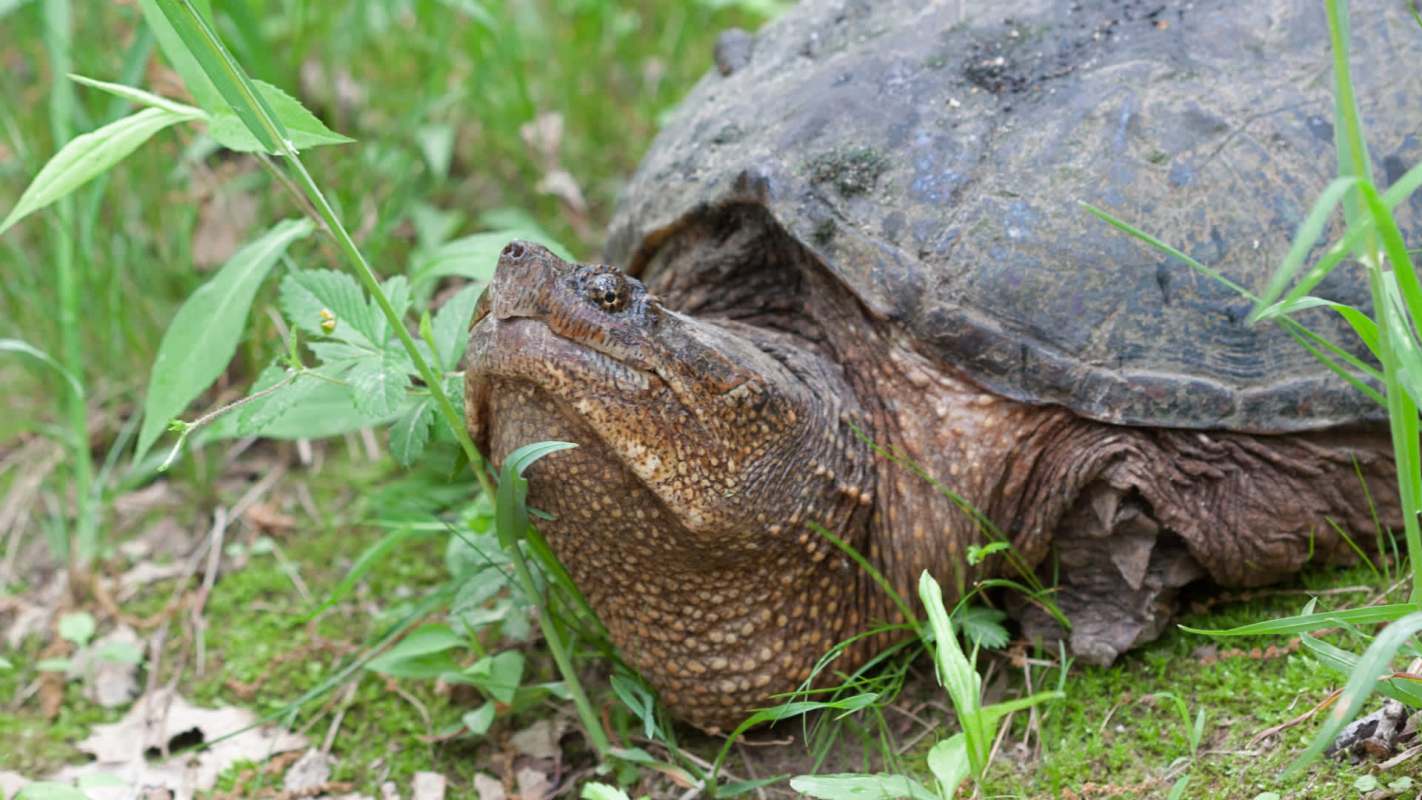
South Korean officials announced they were working to rectify a potentially damaging error after an invasive turtle was released into the wild.
What's happening?
According to a late-June report from Korea JoongAng Daily, when a common snapping turtle was spotted at a park in Incheon, authorities mistakenly believed the large reptile had escaped from a nearby reservoir.
They decided to have the animal released back into the wild. Unbeknownst to the contractors handling the situation, however, the turtle is classed as an invasive species in the area.
A district official told the outlet, "It appears the turtle was mistakenly released by a private contractor … We are currently searching the area and working to recapture the animal."
Why is an invasive turtle on the loose such a concern?
The common snapping turtle is normally found throughout much of the United States and Canada. As Natural Sciences notes, in its native range, it fulfills a valuable ecological role as a top predator and scavenger.
However, outside of its natural habitat, its aggression, longevity, and rapid reproduction pose a considerable threat to the ecosystems it intrudes. The animal can also carry diseases and parasites that can be passed on to native turtles. Like other invasive species, once the common snapping turtle enters a new biosphere, it can be extremely difficult to remove.
TCD Picks » Quince Spotlight
💡These best-sellers from Quince deliver affordable, sustainable luxury for all




With no natural predators in Korea, it could inflict harm by outcompeting native species and disrupting the food chain. A 2020 paper published in BioInvasions Records, explained that "advances in transportation and expansion of the pet trade have increased the influx of non-native species into the Republic of Korea."
What can be done about invasive species?
As the Korean authorities try to find the renegade reptile, they have updated their animal control procedures to help prevent a repeat incident. An official told the Korea Herald, "We have now revised our manual so that any turtle found, regardless of species, will be taken to the city office for identification before any action is taken."
The change is in line with the call to action from the South Korea-based co-authors of the 2020 paper: "Rapid responses, for example policy changes, are needed to reduce risk caused by the introduction of non-native turtles."
Ultimately, the mistake was one anyone might make. The story underscores the crucial importance of raising awareness about these issues and consulting with experts when encountering wildlife in atypical situations. Education and local action can be some of the most effective tools for protecting fragile ecosystems and the essential biodiversity they host.
|
Do you think our power grid needs to be upgraded? Click your choice to see results and speak your mind. |
 Definitely 👍
Join our free newsletter for good news and useful tips, and don't miss this cool list of easy ways to help yourself while helping the planet.







