


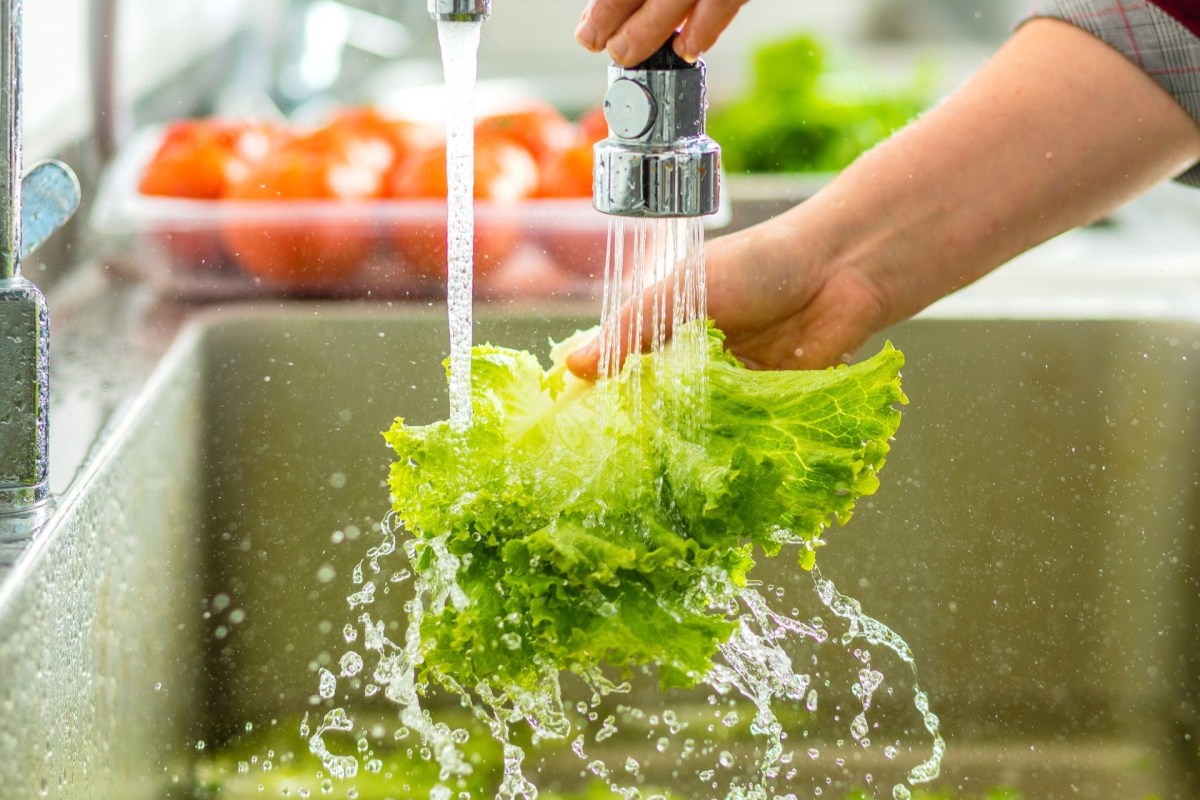
Families may not need dedicated produce sprays — or a fully organic grocery haul — to meaningfully cut down on pesticide residue at home. A basic wash with tap water appears to help a good deal.
That conclusion comes from an analysis of 47 peer-reviewed studies, which found that rinsing with tap water alone can lower agricultural chemical residue on fruits and vegetables and that soaking produce in water-based baking soda or vinegar mixtures can reduce it further.
Here's what to know
The analysis, published in Frontiers in Environmental Health, focused on produce-washing practices commonly used at home and was led by Dayna de Montagnac, a scientist at the Environmental Working Group.
According to Harvest Public Media, the review found that washing produce under the tap for at least 20 seconds or letting it sit in plain water for about 10 to 15 minutes can reduce residue.
Even the more intensive washing methods recommended as effective through this analysis relied simply on low-cost pantry staples. The review co-authors highlighted methods that involve soaking produce in water combined with baking soda or vinegar.
The group does not recommend commercial produce washes, which the U.S. Food and Drug Administration has cautioned against because it has not assessed their safety or effectiveness.
TCD Picks » Quince Spotlight
💡These best-sellers from Quince deliver affordable, sustainable luxury for all




"People deserve to enjoy the health benefits of fresh fruits and vegetables without the worry of exposing themselves and their families to pesticide residues," de Montagnac told Harvest Public Media.
More background
The findings come as concerns rise over how widespread pesticide exposure may be — and as scientists work to understand what that exposure could mean for human health.
Reporting from Investigate Midwest published last winter noted that most of the high-pesticide-use counties in the U.S. are in Midwestern states, with 60% of those counties having cancer rates above the national average.
Eleanor Rogan, a professor and associate dean in the University of Nebraska Medical Center's College of Public Health, told Harvest Public Media that looking at links between the chemicals and cancer rates "is definitely a growing area of research."
Further investigations may explore this limitation of produce-washing as pesticide-exposure mitigation: Washing mainly helps with chemicals on the surface, while some pesticides can move into the flesh of produce, where rinsing will not reach.
Still, experts stress that people should not stop eating produce.
What can be done?
"It's a good idea to wash your produce and get rid of as much of what's on the exterior as you can," Rogan said.
Using tap water to rinse or soak produce, along with recommended amounts of water-based baking soda or vinegar mixtures, is not only effective but can also save money. Rather than buying specialty produce washes — which are not recommended anyway — shoppers can rely on water alone or inexpensive ingredients they may already have at home.
And for anyone looking to cut exposure further without being able to afford all-organic groceries, de Montagnac suggested prioritizing organic purchases for items that tend to carry more residue, such as leafy greens, strawberries, grapes, and peaches.
The Environmental Working Group also advises scrubbing firm produce such as potatoes with a brush. Peeling can remove surface residue as well, though it also strips away edible skins that contain nutrients.
Where can I learn more?
These stories look at why washing is important, why baking soda keeps coming up, and how newer cleaning methods may compare with water alone:
• Home cooks can dramatically clean pesticides off fruits and vegetables with one ingredient.
• A professional chef says baking soda in water can cut residue on fruits and vegetables.
• Scientists created a natural produce wash that removed 96% of pesticides and slowed spoilage.

Get TCD's free newsletters for easy tips, smart advice, and a chance to earn $5,000 toward home upgrades. To see more stories like this one, change your Google preferences here.







