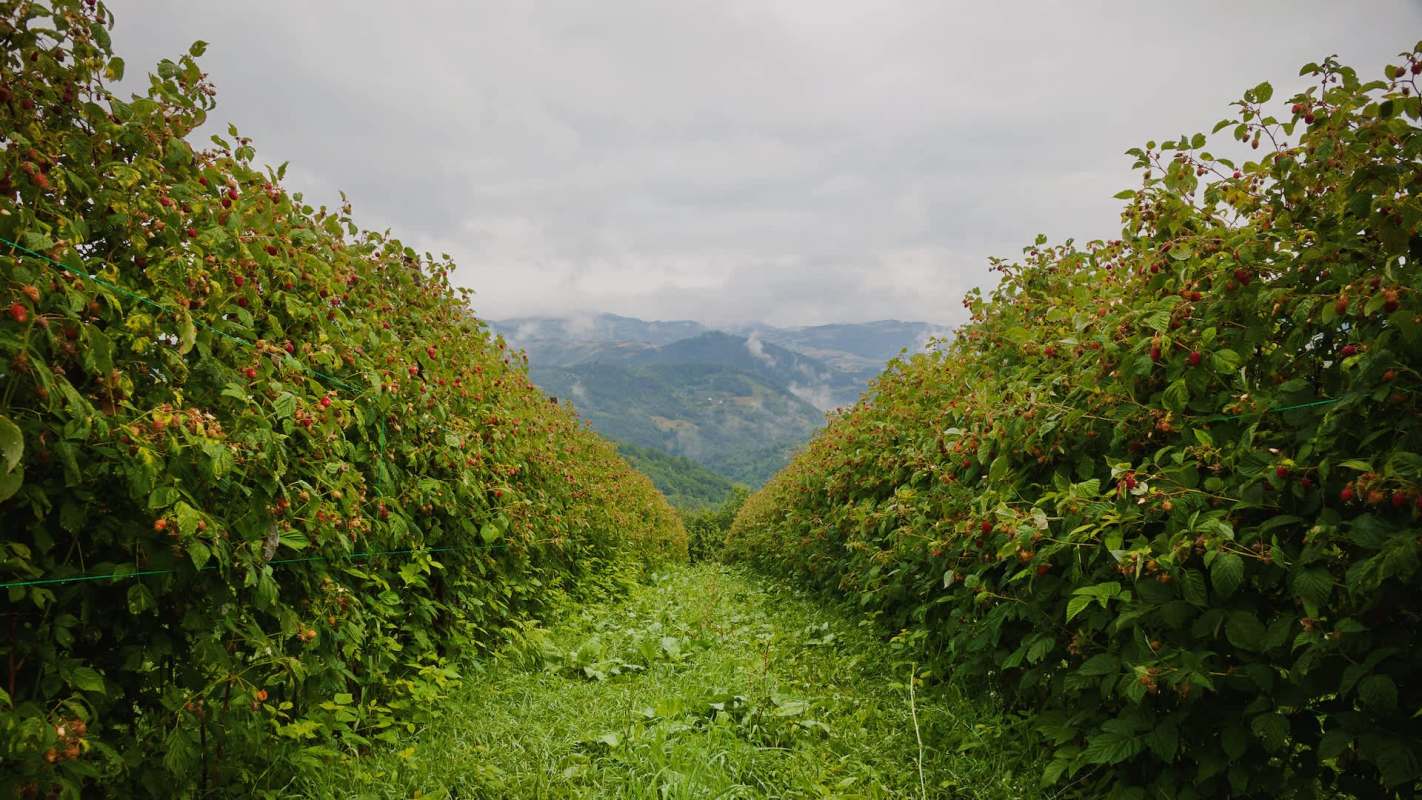
One of the world's largest sources of raspberries likely will produce less than half its projected yield this year, causing prices to surge around the globe, according to a report from FreshPlaza. The shocking shortfall has been attributed to extreme weather.
What's happening?
Serbia is the third-largest raspberry producer in the world, behind only Russia and Mexico, according to the British-Serbian Chamber of Commerce. In recent years, the Eastern European nation has yielded as much as 130,000 tons of the beloved berries annually, contributing significantly to the global supply.
This year, however, experts have predicted that number to drop as low as 33,000 tons, according to Mintec, a market analyst. The cause has been extreme weather, including both devastating droughts and destructive freezes.
Why is it important?
The sharp drop in raspberry production has caused prices to spike by as much as 51% in a single year, according to FreshPlaza. This sharp increase has hurt consumers, who have already been plagued by rising grocery prices.
Also impacted have been the local economies of raspberry-growing regions. Raspberry production was introduced into Serbia following World War II and quickly became a source of local pride and economic activity, according to the U.N. Food and Agriculture Organization.
With raspberries often referred to as "red gold," Serbian exports of the popular berry were worth around $240 million in 2024, according to France 24. Many of these berries ended up in Western European countries like France and Germany.
Perk up the winter blues with natural, hemp-derived gummies Camino's hemp-derived gummies naturally support balance and recovery without disrupting your routine, so you can enjoy reliable, consistent dosing without guesswork or habit-forming ingredients. Flavors like sparkling pear for social events and tropical-burst for recovery deliver a sophisticated, elevated taste experience — and orchard peach for balance offers everyday support for managing stress while staying clear-headed and elevated.
Learn more → |

Experts have attributed the extreme weather to rising global temperatures.
"Due to climate change, climate variability has increased," said Ana Vukovic Vimic, a meteorologist at the University of Belgrade, according to France 24. "The warm, dry season is getting longer, while peak rainfall has moved from June to May, with the trend continuing toward earlier months."
What's being done about it?
The decline in Serbian raspberry production has been just one example of how rising temperatures and changing weather patterns around the globe have impacted food supplies and prices. The result has been a loss of income for farmers, farm workers, and food producers, while consumers face higher prices at the grocery store.
In the short term, companies have been scrambling to find alternative sources of foods like raspberries, shifting production to different regions. Over the long term, however, the only solution is to take significant action to address rising global temperatures.
TCD Picks » Upway Spotlight
💡Upway makes it easy to find discounts of up to 60% on premium e-bike brands





|
Would you buy juice or yogurt made with bruised or misshapen fruit?
Click your choice to see results and speak your mind. |
 If I couldn't tell the difference 🤔
💰Get TCD's free newsletters for easy tips to save more, waste less, and make smarter choices — and earn up to $5,000 toward clean upgrades in TCD's exclusive Rewards Club.
Cool Picks