


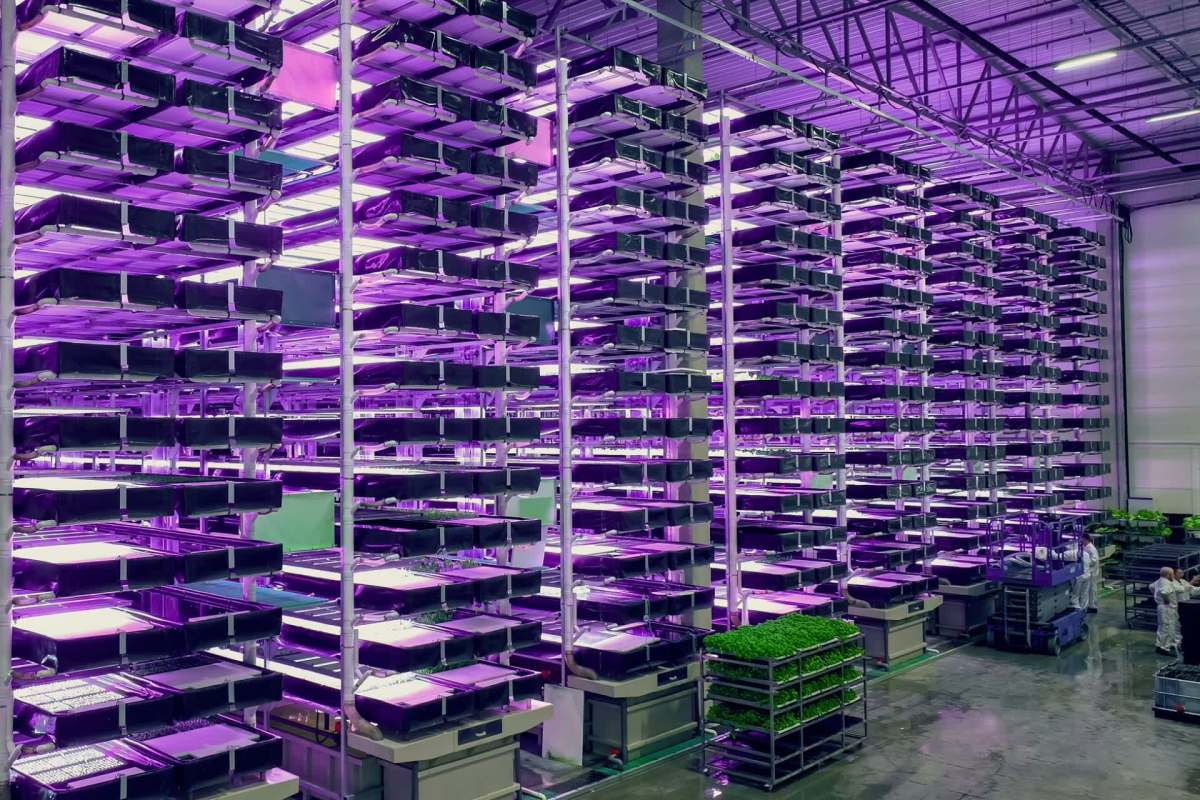
Researchers from the University of York in the United Kingdom have developed a new model that could help farmers decide which "light recipe" to use in indoor farms to boost yields, which will come in handy as the world's population grows.
As the news release on the study, which was published in Quantitative Plant Biology, explained, the recipe is essentially different combinations of lighting that can be altered based on location and the type of plants grown. The research was conducted at the indoor urban farm Grow It York, which is uniquely located inside a shipping container. Vertically Urban, a UK-based horticultural lighting company, also collaborated on the study and analyzed how lighting impacted the growth of crops in various parts of the facility.
Vertical farming is becoming increasingly popular as a method of food production, but Dr. Daphne Ezer, from the University of York's department of biology, said one downside of the modern farming method is that it requires a lot of energy for artificial lighting and climate control, and operators usually don't have the resources to experiment with energy-saving lighting techniques "that would improve their yields while reducing their carbon footprints."
Will Claydon, the lead researcher of the study, added: "These vertical farms might have a light recipe that is 'good enough,' but it would be a risk to try new light treatments because it could risk their commercial production."
While vertical farms already have highly controlled lighting, the team wanted to help optimize their efficiency and improve the lighting systems. To do this, it came up with a mathematical model that shows farmers how light varies in color and intensity in different parts of the facility and how they can use this information to improve lighting treatments without having to pause operations.
Through the insights gained from the data, "researchers were able to see which aspects of light quality are most important for each species of crop," according to Claydon. They hope that other vertical farms in the area will benefit from the model, saving money and energy while maintaining their production schedules. If vertical farms can boost efficiency, it could be a game changer for the future of climate-friendly food.
Perk up the winter blues with natural, hemp-derived gummies Camino's hemp-derived gummies naturally support balance and recovery without disrupting your routine, so you can enjoy reliable, consistent dosing without guesswork or habit-forming ingredients. Flavors like sparkling pear for social events and tropical-burst for recovery deliver a sophisticated, elevated taste experience — and orchard peach for balance offers everyday support for managing stress while staying clear-headed and elevated.
Learn more → |

"More than 6 billion people will be living in urban centers by 2050, and there is a growing need to ensure that individuals living in these areas have access to fresh fruits and vegetables, especially as climate change threatens crop yields," Dr. Ezer added.
|
What is the biggest reason you don't grow food at home? Click your choice to see results and speak your mind. |
 Not enough time ⏳
Join our free newsletter for easy tips to save more and waste less, and don't miss this cool list of easy ways to help yourself while helping the planet.
Cool Picks




