


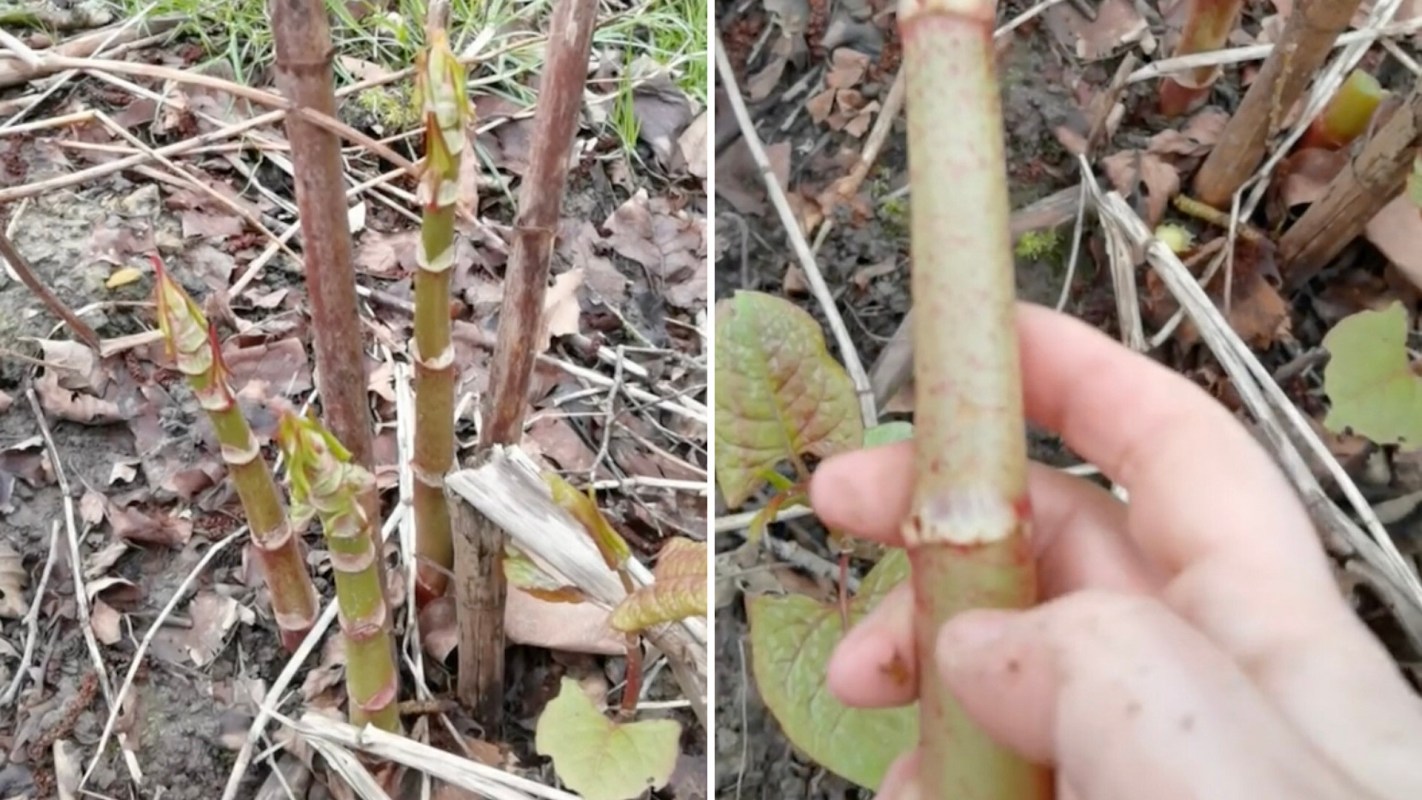
A forager is drawing attention online for their unconventional approach to tackling one of the U.K.'s most destructive invasive plants — by eating it. In a widely shared TikTok, the creator urges people to harvest Japanese knotweed responsibly and says, "I absolutely love it."
The video, posted by TikTok user Iona (@wildaboutthewoods), shows the forager walking through a wooded area as young shoots of Japanese knotweed emerge from the ground. They don't treat the plant as a nuisance. Iona instead presents it as an opportunity for people to remove an invasive plant by using it as a food source.
@wildaboutthewoods ♬ original sound - Wild_About_the_Woods
The forager further explains in the video that young Japanese knotweed shoots taste similar to rhubarb. The shoots should be harvested because removing them helps to limit the plant's spread.
Iona highlights their identifying features such as bamboo-like segmented stems and heart-shaped leaves. They emphasize careful handling to avoid spreading fragments, including using a solid cloth bag and keeping cutting away from waterways.
It's also important to confirm that the plant hasn't been sprayed with herbicides. Avoid toxic lookalikes such as hemlock, and don't eat anything that you can't confidently identify.
Japanese knotweed is infamous across the U.K. for its aggressive growth. It can crowd out native plants, damage infrastructure, and spread rapidly if left unchecked — making infestations difficult and expensive for communities to manage.
In recent years, foragers and gardeners have pointed to edible invasive plants as one way individuals can help address these challenges. Wild radish overtaking gardens and creeping bellflower appearing in backyards are opportunities to change it up in your kitchen and minimize gardening headaches.
By encouraging responsible harvesting, the video showed how small, informed actions can help restore balance in areas overtaken by invasive species.
Commenters responded with a mix of enthusiasm and curiosity.
"Never compost it!" one commenter explained.
TCD Picks » Quince Spotlight
💡These best-sellers from Quince deliver affordable, sustainable luxury for all




"This is one of the most responsible and informative and exciting videos I've seen in a long time," said another.
"We had them behind the house, didn't know you could eat it," reflected a third.
|
What's the most you'd pay per month to put solar panels on your roof if there was no down payment?
Click your choice to see results and speak your mind. |
 $200 or more 💰
Get TCD's free newsletters for easy tips to save more, waste less, and make smarter choices — and earn up to $5,000 toward clean upgrades in TCD's exclusive Rewards Club.
Cool Picks




