


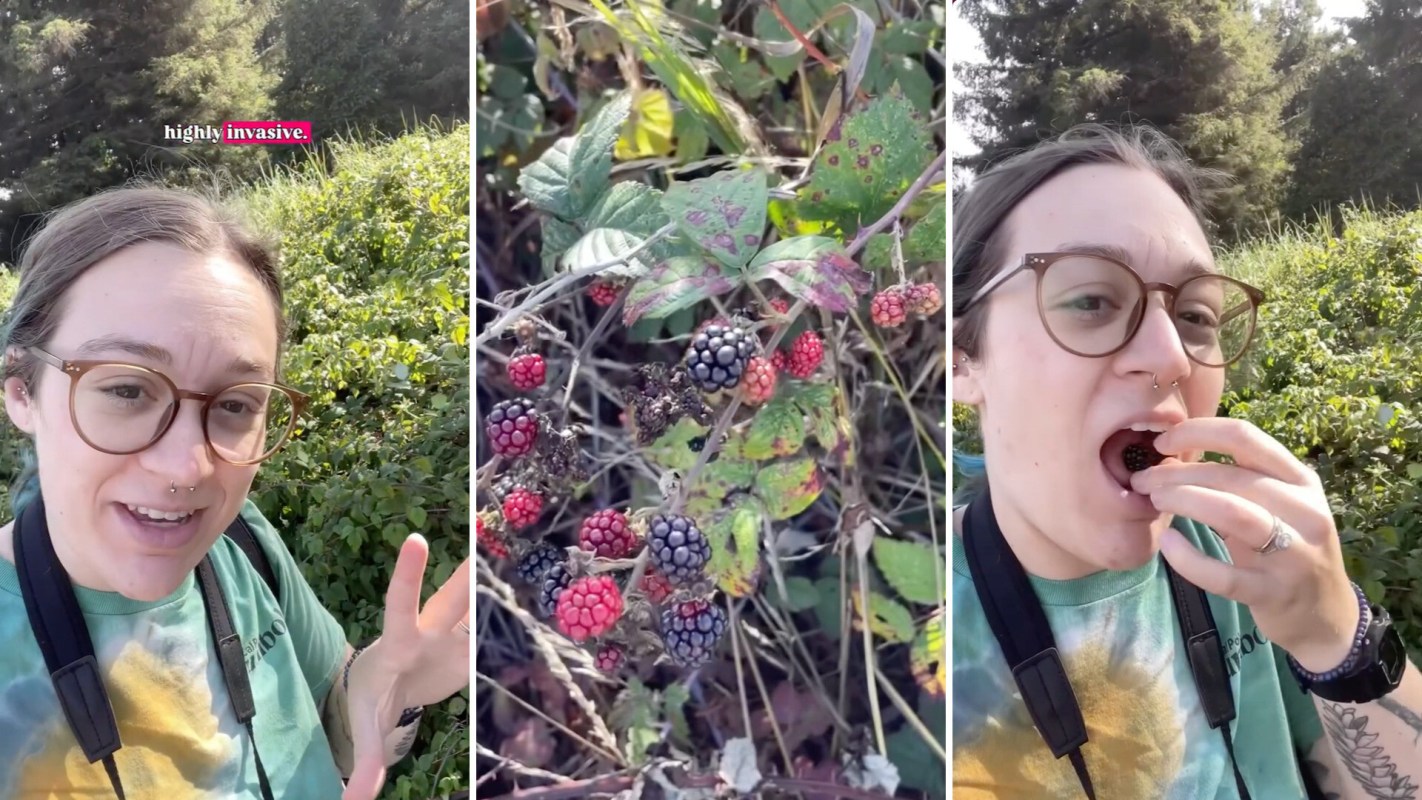
A creator shared that one plant makes for a great snack — and eating it comes with benefits for the environment, too.
Emma Dendler (@thesimpleenvironmentalist) shares content dedicated to zero waste living with her nearly 70,000 followers. In one Instagram Reel, she focused on a common invasive species found in the Pacific Northwest: the Himalayan blackberry.
In the clip, Dendler said eating the blackberries is a helpful way to mitigate the spread of the invasive species.
"You're preventing the seeds from falling on the ground or an animal eating it and pooping it out on the ground somewhere else, and you're stopping the spread of the invasive species," she said.
Per the National Park Service, the Himalayan blackberry is an edible, invasive plant that often crushes other plants by spreading over them. Like other invasive species, the Himalayan blackberry is a threat to biodiversity.
According to the National Wildlife Federation, invasive plants and animals put about 42% of threatened or endangered species at risk. Invasives spread quickly and compete with native species for vital resources such as food.
Researchers say human activities are a primary driver of the spread of invasive species. These plants and animals are frequently shipped around the world as various goods.
Invasive species can also lead to the spread of diseases that can impact human health, according to the National Invasive Species Information Center. Additionally, the World Economic Forum reported that invasives cause $423 billion in damages every year.
While eating Himalayan blackberries is one way to help slow the spread of invasive species (ensuring, of course, that you're following safety protocols before eating anything you forage), you can also help by rewilding your yard with native plants. Native plants are better for pollinators.
Plus, the plants require less water and chemicals to flourish, which keeps money in your pocket.
TCD Picks » Quince Spotlight
💡These best-sellers from Quince deliver affordable, sustainable luxury for all




Dendler's video created conversation.
|
What's the most you'd pay per month to put solar panels on your roof if there was no down payment?
Click your choice to see results and speak your mind. |
 $200 or more 💰
 "Do you have any tips for eradicating it?" one commenter asked.
She replied, "You gotta pull the whole plant out, I believe."
"Love eating (and removing) invasive species!" another user wrote.

Get TCD's free newsletters for easy tips to save more, waste less, and make smarter choices — and earn up to $5,000 toward clean upgrades in TCD's exclusive Rewards Club.
Cool Picks




