


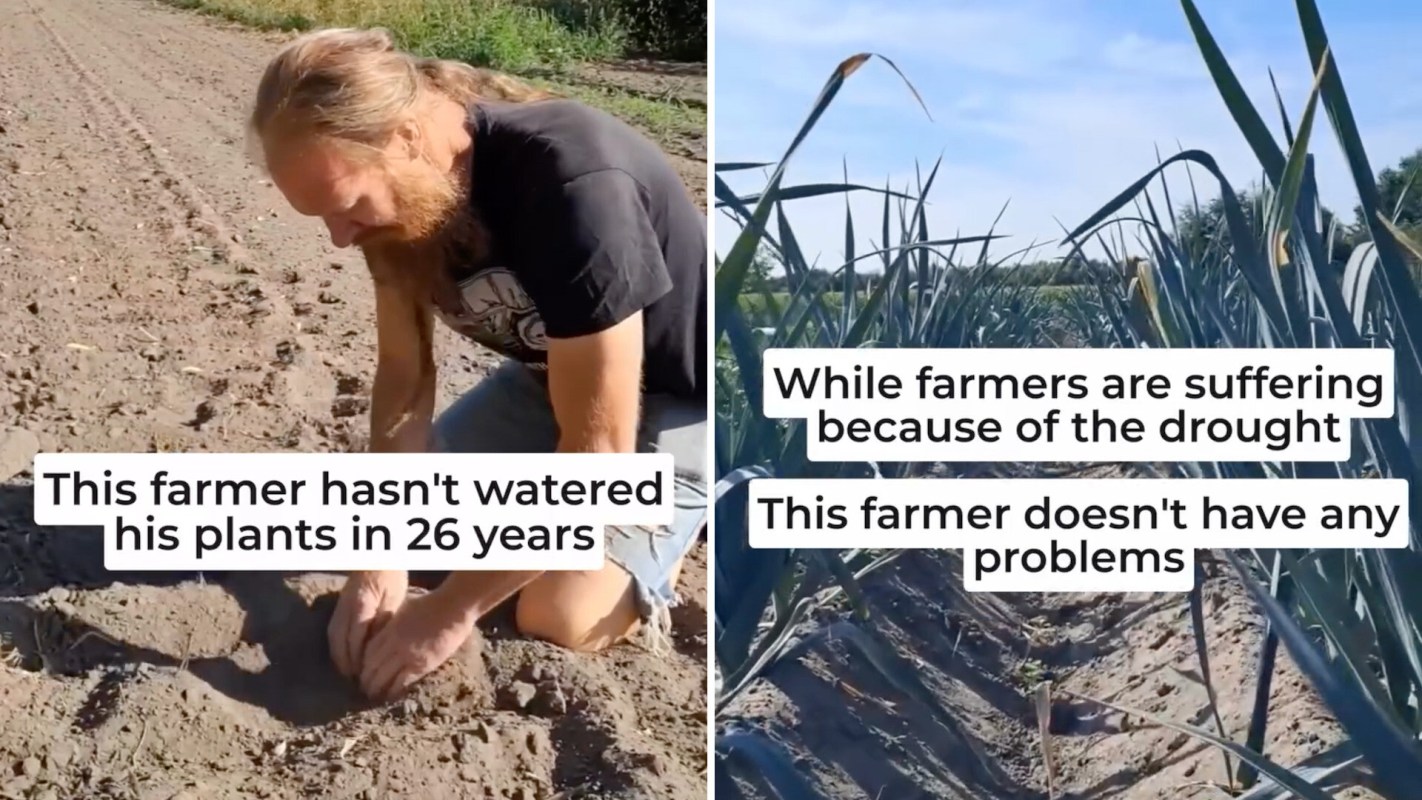
During a heat wave, water becomes a hot topic, and with farms being some of the primary users of the vital resource, they get a good amount of attention.
Belgian farmer Diederik Steyaert's dry-looking field is sparking a major reaction online after an Instagram video appeared to show moisture still beneath the surface, underscoring his claim that careful soil management has let him go 26 years without irrigation.
Instagram creator Louis De Jaeger (@louis.de.jaeger) used an Instagram post to feature the West-Flemish farmer and his claim that he relies only on rain.
The post drew around 30,000 likes and 772 comments.
Here's what to know
What seems to be driving the post is the on-camera soil check. The caption describes shallow digging that revealed wetness beneath the crust: "Just five to ten centimeters down, the soil was already moist. Only the very top layer was dry."
In Steyaert's account, keeping that water in place comes down to management choices such as avoiding plowing, continuing to add organic material, and viewing weeds as contributors to water storage rather than simply a problem.
TCD Picks » Quince Spotlight
💡These best-sellers from Quince deliver affordable, sustainable luxury for all




Grass is piled up and left for one to two years, where rainfall is absorbed before the material breaks down into dark material that is eventually spread back onto the field.
Healthier soil can act like a sponge. When land holds moisture longer, farms may need less irrigation, which can reduce pressure on local water supplies and help crops stay productive during hotter, drier periods.
More resilient growing systems can support steadier food supplies and potentially reduce some of the cost and disruption that come when harvests are hit by extreme weather.
More background
The post presents Steyaert's field as a challenge to the assumption that drier weather automatically means farms must compensate by applying more water.
It emphasizes that the condition of the soil itself, its structure and organic content, can influence how long plants can keep accessing moisture.
That soil management style is part of regenerative agriculture, a set of practices focused on improving soil health. Methods such as reducing tillage, keeping roots in the ground, and returning plant material to the soil are often promoted as ways to improve water retention, reduce erosion, and support farm productivity over time.
Farms that rely less on irrigation may be better prepared for water restrictions, heat waves, or rising utility costs. Stronger soil can also mean fewer losses when the weather becomes less predictable.
What can be done?
It's not likely that a farmer can stop irrigation overnight. Local climate, crop choice, and soil type all matter. Regenerative farming is a long process that requires careful planning.
Among the takeaways highlighted in the post are minimizing soil disturbance, steadily building organic matter, and seeing living cover on the ground as useful rather than bothersome.
People looking to shrink the resource footprint of their meals can also explore more plant-based food options, which can complement farming systems designed to use land and water more efficiently.

Get TCD's free newsletters for easy tips, smart advice, and a chance to earn $5,000 toward home upgrades. To see more stories like this one, change your Google preferences here.








