


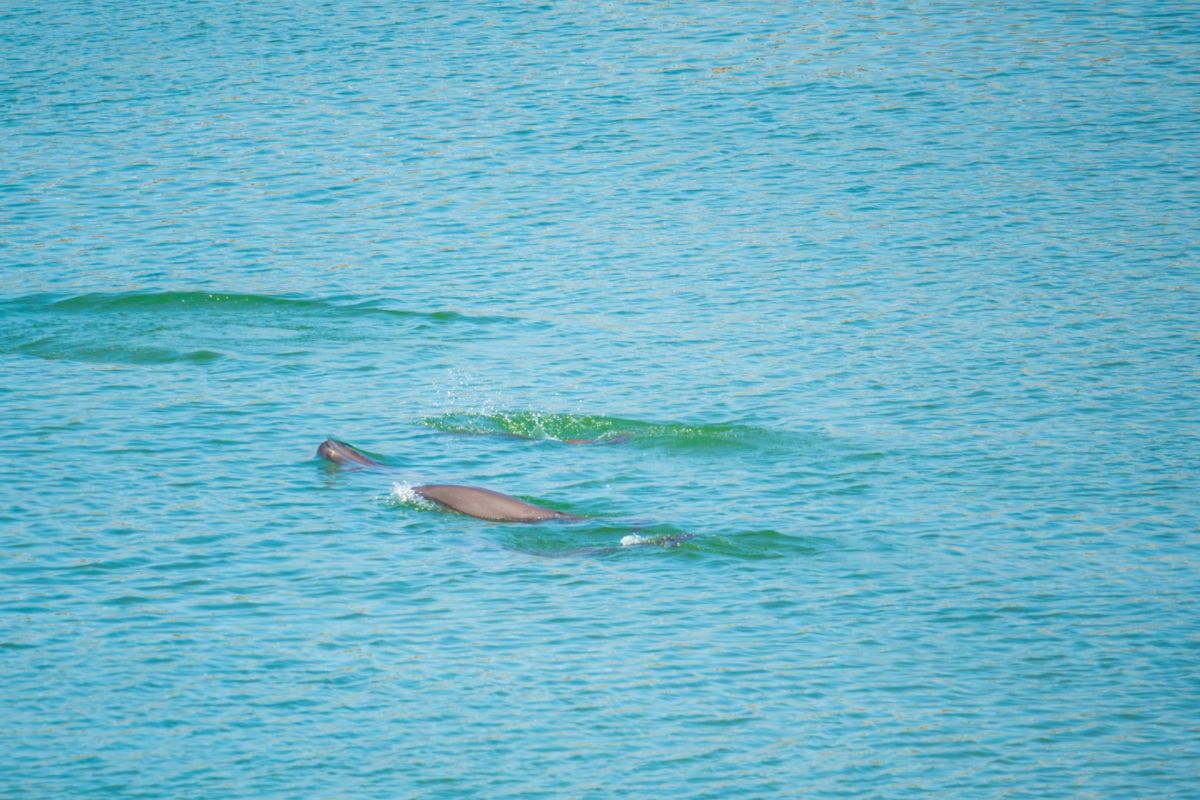
Yangtze finless porpoise populations have risen thanks to Chinese conservation efforts, including a fishing ban.
As China Daily reported, the number of Yangtze finless porpoise increased to 1,426 in 2025. This figure represents an increase of 177 animals over three years.
In 2021, the Ministry of Agriculture and Rural Affairs established a fishing ban in the Yangtze River. Habitat loss due to human activities was causing the species to decline, but recent restoration work has been successful.
China has built a network of conservation zones to protect the porpoises. Conservationists have bred porpoises there to replenish wild populations. Researchers at the Chinese Academy of Sciences' Institute of Hydrobiology also established a sperm bank to improve breeding success.
Yangtze finless porpoises are a crucial species in the river and essential to biodiversity.
With more of the porpoises once again in the water, other fish species are thriving better than before the fishing ban as well. Additional protected species, such as the Chinese high-fin banded shark, are also seeing increases in their numbers after an over-20-year absence.
However, researchers emphasize that this type of large-scale habitat restoration work takes time and that fragmented habitats still require more attention.
"As China presses ahead with the fishing ban and ecosystem restoration projects, the aquatic life in the Yangtze River is expected to continue its gradual recovery over the next five years," said Gui Jianfang, an expert who led the fishing ban assessment, per China Daily.
This encouraging news from China mirrors recent conservation successes elsewhere. With a dedication to biodiversity preservation and habitat restoration, other communities have also witnessed nearly extinct species making surprising comebacks and impressive population growth.
While sometimes controversial, fishing bans, such as the one in the Yangtze River, are important steps toward preserving marine life and promoting sustainable fishing practices.
TCD Picks » Quince Spotlight
💡These best-sellers from Quince deliver affordable, sustainable luxury for all




|
Which of these savings plans for rooftop solar panels would be most appealing for you?
Click your choice to see results and earn rewards to spend on home upgrades. |
 Save $1,000 this year 💸
 These measures protect vulnerable species from overfishing, helping them remain a vital part of local ecosystems and allowing fish populations to recover. This work also benefits communities whose livelihoods depend on fishing.
In the abstract published in Science, the researchers wrote about the Yangtze River fishing ban, "Eliminating fishing pressure was likely key to this recovery, in addition to actions targeting water quality improvement, hydrological and riparian habitat restoration, and vessel traffic reduction."
Fangyuan Xiong from the Chinese Academy of Sciences said that the porpoise population improvements "provide hope that in an era of global biodiversity decline, ambitious political decisions that support large-scale restoration efforts can help reverse the ecosystem damages of the past and lead to a brighter future," per the Guardian.

Get TCD's free newsletters for easy tips to save more, waste less, and make smarter choices — and earn up to $5,000 toward clean upgrades in TCD's exclusive Rewards Club.
Cool Picks






