


Wildlife tourism is a big player in the travel industry. Whether it's safaris in Africa or polar bears in the Yukon, millions of tourists travel specifically to have wildlife experiences.
According to the World Travel and Tourism Council, wildlife tourism brings in $346.3 billion annually and sustains 21.8 million jobs globally.
But this doesn't count the unethical experiences, which include unaccredited zoos, drugged-up animals posing for pictures, and animals without training giving rides on the beach.
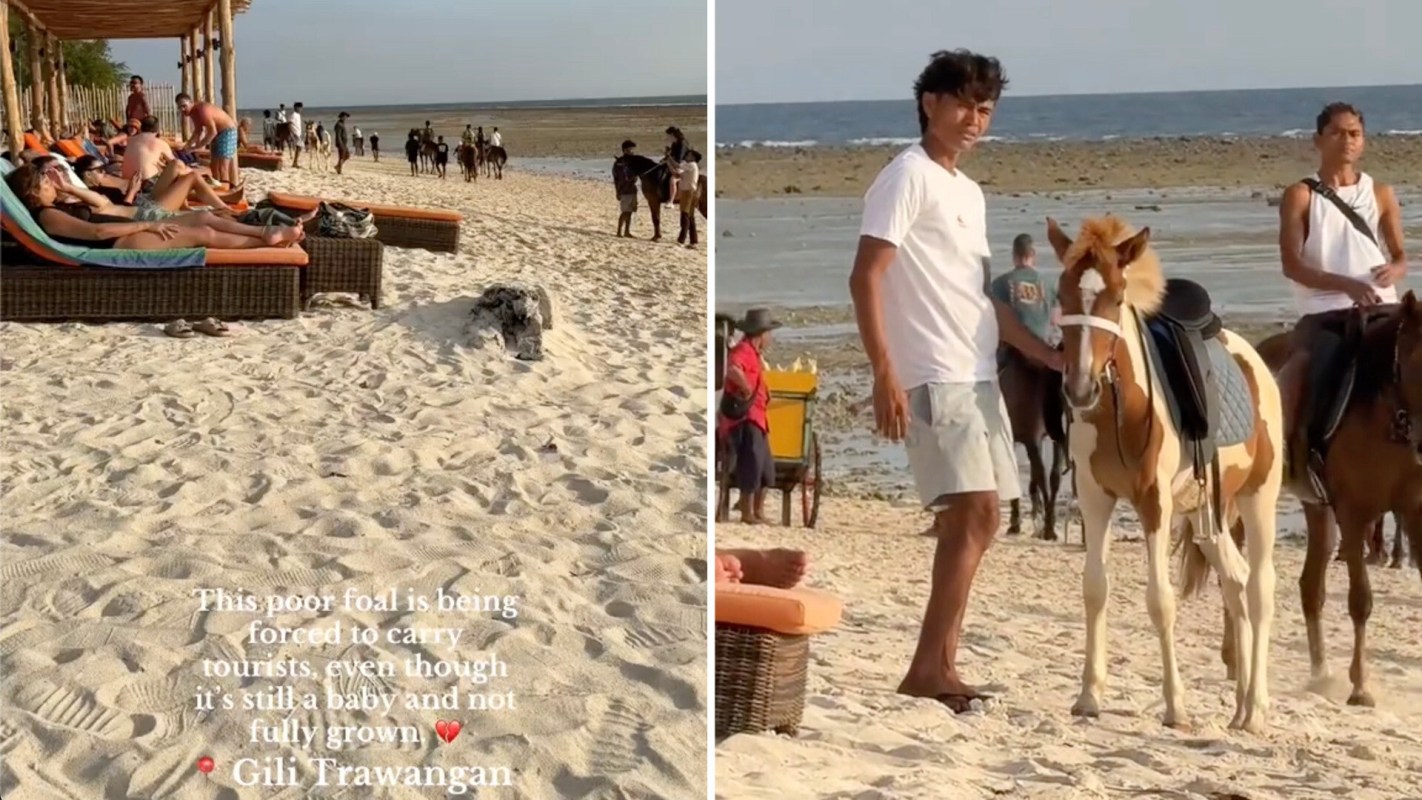
Horse lover Klara Luise (@klara.luise) shared a video of an unethical tourism experience she spotted while on vacation in Indonesia.
"This poor foul is being forced to carry tourists, even though it's still a baby and not fully grown," she wrote in the caption. "This is pure animal cruelty. I filmed what's happening and reported it to the Gili Eco Trust. They are already aware of the case and have even spoken to him. Sadly, he just laughed and refused to listen. This cannot go on."
@klara.luise This poor foal is being forced to carry tourists, even though it's still a baby and not fully grown. 💔 This is pure animal cruelty. I filmed what's happening and reported it to Gili Eco Trust — they are already aware of the case and have even spoken to him. Sadly, he just laughed and refused to listen. This cannot go on. These animals need our voices! Please share and help stop this 🙏🏻 #gilitrawangan#poorhorses#help#animalcruelty#bali ♬ LABOUR - the cacophony - Paris Paloma
The video zooms in on a young man holding onto a foul while scoping out potential clients on the Gili Trawangan island in Indonesia.
Horses need to be fully grown before it is safe for them to be ridden, and many factors go into determining "readiness" for the horse, according to the Huntley Equestrian.
If the growth plates in the legs and spine have not closed properly, the animal cannot bear a rider's weight without damage. Depending on the breed, horses are ready to be ridden between three and four years old, or six to seven years old for some larger breeds.
Horses must also be properly trained and have reached mental maturity to be safely ridden by the rider, especially untrained tourists. If horses are trained too soon, this can lead to anxiety in the animal.
If horses are underfed, exposed to unethically long hours in harsh conditions, forced to be ridden before they are mature, and brought to areas of the world where they are not native, these tourist attractions are not only dangerous for humans, but should be marked as animal cruelty.
TCD Picks » Quince Spotlight
💡These best-sellers from Quince deliver affordable, sustainable luxury for all




|
Should it be illegal to throw away old clothes?
Click your choice to see results and speak your mind. |
 Heck yes 👍
 TikTokers were saddened to see such a prominent display of animal cruelty on the beach.
"As a horse owner … I'm too scared to even throw a saddle on them at a year," one commenter shared.
"This makes me cry," another person commented.
"Exactly why we don't entertain tourist traps," another user wrote.

Join our free newsletter for good news and useful tips, and don't miss this cool list of easy ways to help yourself while helping the planet.
Cool Picks






