


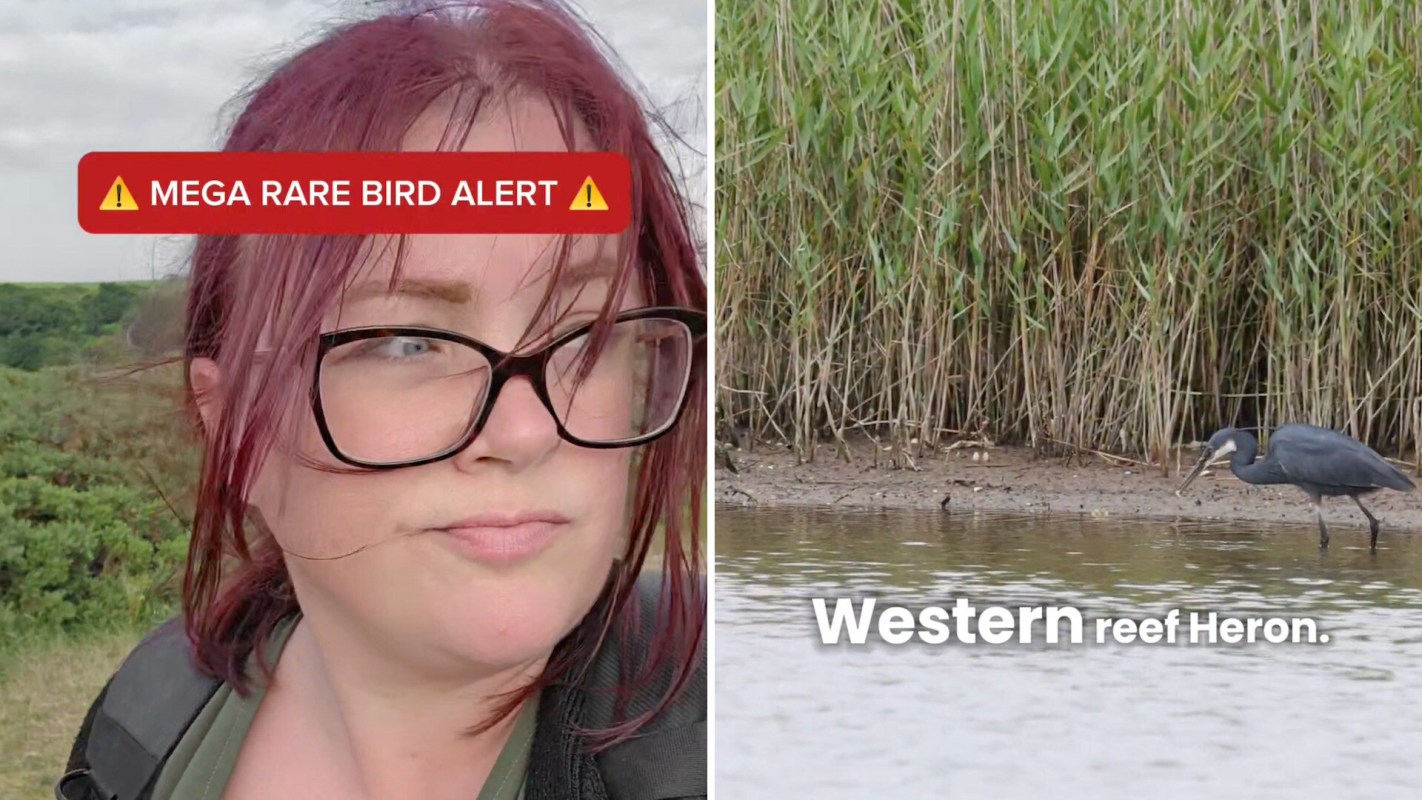
During an early-morning hunt sparked by rumors of a "mega-rare" bird, a wildlife photographer captured footage of an incredible creature.
What happened?
According to a Parade Pets report carried by Yahoo, content creator Olivia Kate (@oliviakatephotography) headed out after hearing that an unusual heron had been spotted at a site four hours away — and she found it.
The bird she ultimately filmed and photographed was a Western Reef Heron, a species that has never been recorded in the U.K. before.
@oliviakatephotography ⚠️ Mega rare bird alert ⚠️ #birdphotography #birdwatching #rarebird #westernreefheron #wildlife ♬ original sound - Olivia | Wildlife Photography
Parade Pets indicated that the species' usual range lies much farther south and east, spanning southern Europe and parts of Africa and Asia. The outlet cited Audubon, which said the bird shows up only rarely in that region.
At roughly 23 to 25 inches long, a fully grown Western Reef Heron is about comparable in size to a mallard duck. The species also appears in several color forms, including white, dark gray, and mixed gray-and-white.
"Wow!" one commenter said. "It looks like a tricolored heron with the head feather, the color of a little blue heron with feet of a snowy Egret. Amazing capture! Thank you for your determination and sharing this."
TCD Picks » Quince Spotlight
💡These best-sellers from Quince deliver affordable, sustainable luxury for all




Why does it matter?
Animals turning up far outside their normal range can sometimes signal broader environmental changes.
One sighting alone does not prove a trend, but changing temperatures, altered coastlines, shifting food sources, and habitat disruption caused by human activity can all affect where birds travel, stop, or settle.
"If this doesn't say something about the migration patterns of animals because of the change of climate, then idk what," one commenter observed.
What can I do?
If you spot an unusual animal, the best first step is to keep your distance. Rare birds can be stressed by crowds, noise, or people trying to get too close for a better photo.
Carefully documenting the animal from afar and reporting the sighting to local conservation groups can also be genuinely helpful, since experts and birding organizations often rely on public reports. Meanwhile, community science platforms and regional bird alerts can help track range shifts over time.
People can also support wetland and coastal habitat protection, which gives migratory birds safer places to rest and feed. Reducing pollution and backing climate-friendly policies helps address some of the human-driven pressures pushing wildlife into unfamiliar places.
TikTok users could not get over the beautiful critter.
"Absolutely fantastic!" one replied. "Wonderful footage and photos! What a stunner."

Get TCD's free newsletters for easy tips, smart advice, and a chance to earn $5,000 toward home upgrades. To see more stories like this one, change your Google preferences here.







