


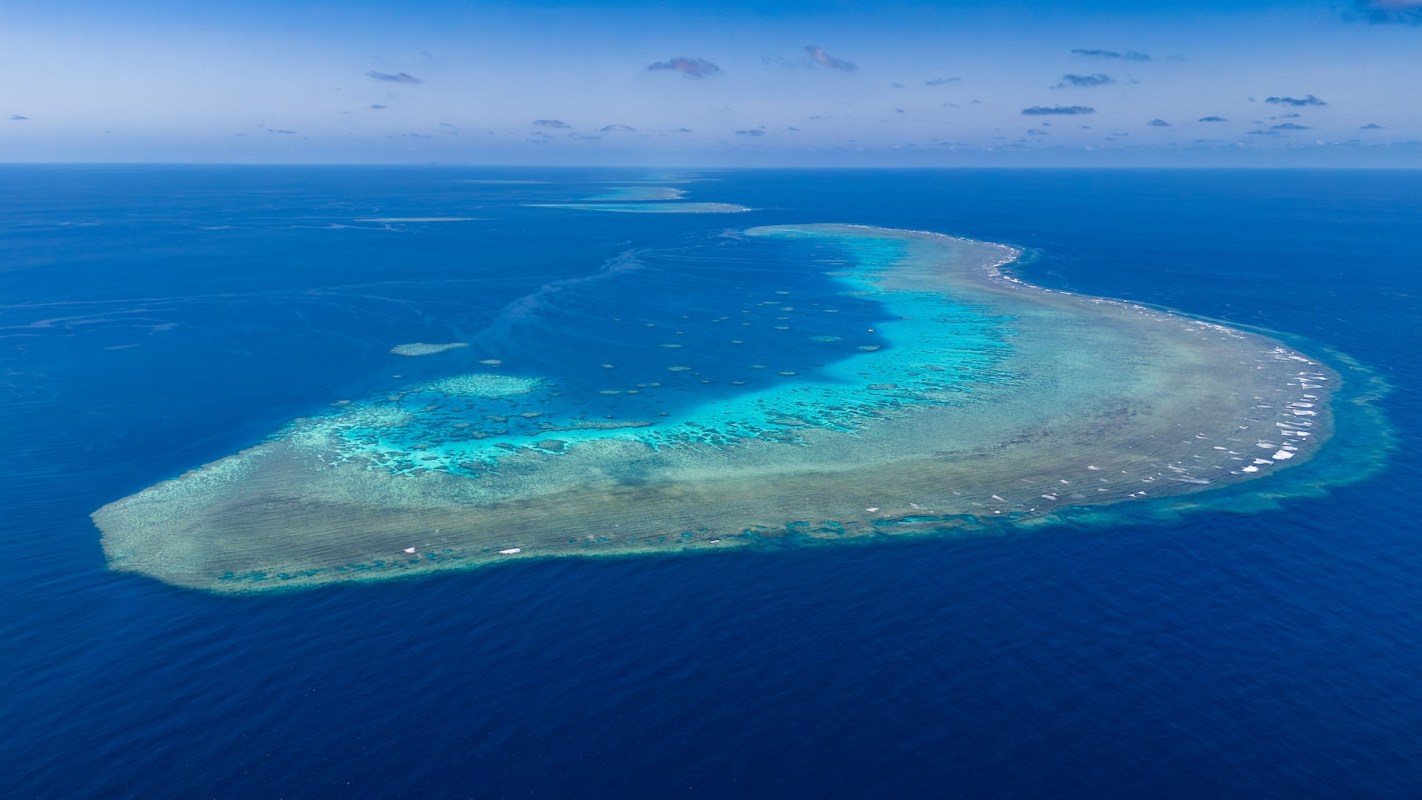
Off the remote northern edge of Australia's Great Barrier Reef, a sacred gathering is unfolding beneath the waves. Wreck Bay has emerged as a seasonal hotspot for whale sharks, reported Mongabay, giving scientists a rare front-row seat to a spectacle that has long eluded study.
These giants, some as long as a city bus, move with deliberate calm, their bodies covered in striking patterns of spots and stripes. Groups of these whales are sometimes called "constellations" because of the star-like designs on their backs. Despite their size, whale sharks are gentle filter feeders, drifting through swirls of zooplankton, traveling thousands of kilometers across tropical seas in search of food.
Whale sharks (Rhincodon typus) are the largest fish in the world and are endangered but are hard to study because...
Posted by Mongabay.com on Tuesday, August 19, 2025
A new study, published in Ecology and Evolution, confirms that Wreck Bay hosts a recurring aggregation of mostly juvenile male whale sharks. This marks the first known gathering in eastern Australia and the entire southwest Pacific.
Across four expeditions from 2019 to 2024, researchers identified 59 individual sharks, ranging from 3.5 to 8 meters (11 to 26 feet). Adults can grow more than twice that size, up to 18 meters (59 feet), but these juveniles dominate coastal aggregation sites worldwide.
Researchers say this discovery could become a critical hub for understanding regional and global whale shark populations.
"In terms of regional and global population assessments and conservation management, this is going to be quite significant," said Ingo Miller, a researcher at the Biopixel Oceans Foundation and first author of the study, according to Mongabay.
Tracking the whale sharks required a mix of historical sighting records, oceanographic data, and satellite tagging. A tagged shark first spotted near Cooktown ultimately led the team to confirm Wreck Bay as a seasonal gathering ground. Wreck Bay is remote, and whale sharks are typically solitary most of the year.
The congregation happens mainly in late November and December, when nutrient-rich waters rise during monsoon season, creating dense feeding patches. Most sharks feed at dusk and night, a behavior researchers are still trying to decode.
Gonzalo Araujo, founder of the U.K.-based Marine Research and Conservation Foundation, called the work "a great approach" that combines multiple methods to reveal whale shark behaviour in a previously unknown area.
TCD Picks » Quince Spotlight
💡These best-sellers from Quince deliver affordable, sustainable luxury for all




"This study highlights the importance of using local ecological knowledge and citizen science to advance our understanding of enigmatic species, such as the whale shark," he told Mongabay.
|
Do you think America does a good job of protecting its natural beauty? Click your choice to see results and speak your mind. |
 Definitely 👍
 Globally, whale sharks face declining populations due to the overheating of the planet, ship strikes, plastic pollution, and bycatch in industrial fishing. Wreck Bay sits largely within highly protected zones of the Great Barrier Reef Marine Park, offering a rare sanctuary for these drifting giants.

Join our free newsletter for good news and useful tips, and don't miss this cool list of easy ways to help yourself while helping the planet.







