


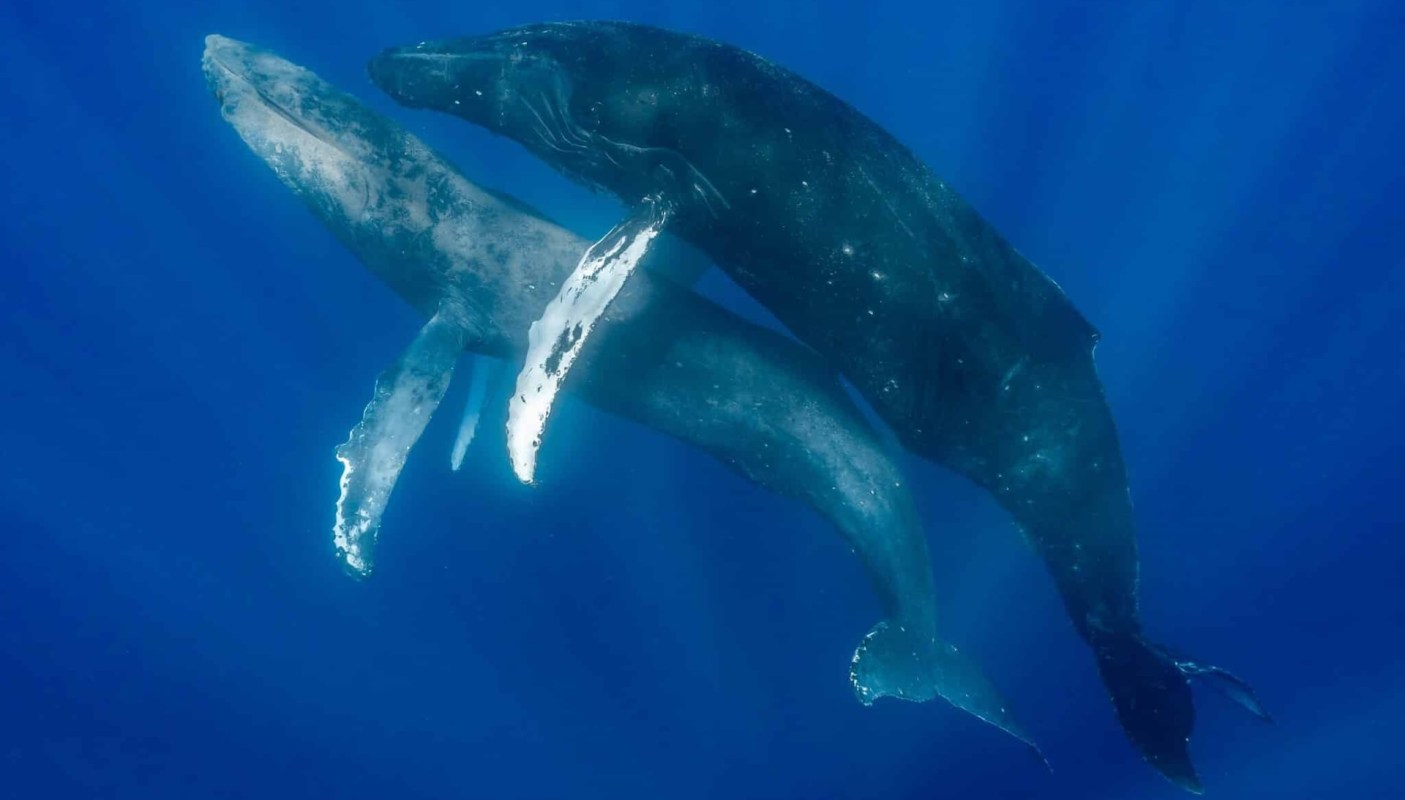
Researchers have observed an increase in the number of whale entanglements in Australian waters. Fishing gear and shark nets can injure and trap marine life, which can contribute to slow, torturous deaths.
What's happening?
Over a period of just a few months as of October, Griffith University researcher Olaf Meynecke and his team in South East Queensland documented 48 entanglements of humpback whales off the Australian coast. As Meynecke wrote at The Conversation, that's more than his team recorded throughout all of last year.
The researcher went on to explain that while humpback whales have made a strong comeback since reaching near decimation in the 1960s, entanglements have also increased alongside their numbers since the 1990s.
In-use and abandoned fishing gear — including lines, ropes, and nets used for recreational and commercial fishing — continues to threaten the population with injury and even death. Shark nets, intended to protect busy beaches by deterring or catching the large predators along coastlines, can present another major hazard. Some groups, like Action for Dolphins, have also questioned the nets' efficacy in preventing shark attacks.
Meynecke explained that reduced food availability, linked to sea ice melt in the Antarctic, has pushed whales to swim into more high-risk areas. Desperately in search of food, the animals may be more likely to encounter commercial operations.
Why is this concerning?
When animals swim into this gear, it can be nearly impossible for them to get free of the tangled mess. Ropes and lines can wrap tightly against the flesh of whales and other marine life, leading to trauma and serious wounds that can become infected.
The gear can also impact their ability to swim or dive to catch food, sometimes leading to weight loss, starvation, and death. It also limits their agility, making it harder for them to avoid predators and collisions with vessels.
For smaller marine life, such as seals and sea lions, losing the ability to swim can quickly lead to drowning. Larger marine life, such as whales, can sometimes drag the entangled gear for longer distances, but they may still eventually succumb to injuries.
There's also the gear itself, which can introduce pollution, such as microplastics, into ocean waters.
Taken altogether, researchers are concerned about threats to biodiversity.
TCD Picks » Quince Spotlight
💡These best-sellers from Quince deliver affordable, sustainable luxury for all




|
How concerned are you about the plastic waste in our oceans? Click your choice to see results and speak your mind. |
 Extremely 😫
 As Meynecke described, "The outlook is grim for many," making his work to raise awareness and provide high-quality information about the issue essential to the solutions that could make a difference.
What can be done?
Meynecke's team gathered information about the 48 recent entanglements through "social media posts, newspaper articles, and enquiries to authorities," as no database tracking these entanglements yet exists. Creating one could be an important next step in addressing the problem through data-informed policies and practices.
The researcher also noted that increased entanglements may be exacerbated by Antarctic sea ice melt, which is disrupting food availability and forcing whales to feed in areas where more commercial fishing occurs. Human activity, including burning dirty fossil fuels for energy, has contributed to the rising global temperatures driving this melt, so another way to help address the entanglements crisis is to support a shift toward cleaner, more renewable energy sources, such as solar and wind.
To address the issue of littered gear, some groups and individuals have been cleaning up abandoned — or "ghost" — nets, left to clog and contaminate ocean waters.
In St. Petersburg, Florida, a local volunteer effort helped remove over 4,000 pounds of abandoned crab traps, making the water safer for marine life. In Canada, the Ocean Legacy Foundation has been taking rescued ghost gear and recycling it into plastic pellets to create new products, from patio furniture to flower pots.
To improve long-term outcomes, clean-up efforts can be joined with long-term policy to reduce the gear going into the ocean to begin with. In Queensland, following a study showing that drones can be more than twice as effective at catching sharks near populated shores, a new program is rolling out. By boosting drone-enabled monitoring, officials may reduce the number of nets used for shark control, potentially reducing marine life entanglements at the same time.

💰Get TCD's free newsletters for easy tips to save more, waste less, and make smarter choices — and earn up to $5,000 toward clean upgrades in TCD's exclusive Rewards Club.
Cool Picks






