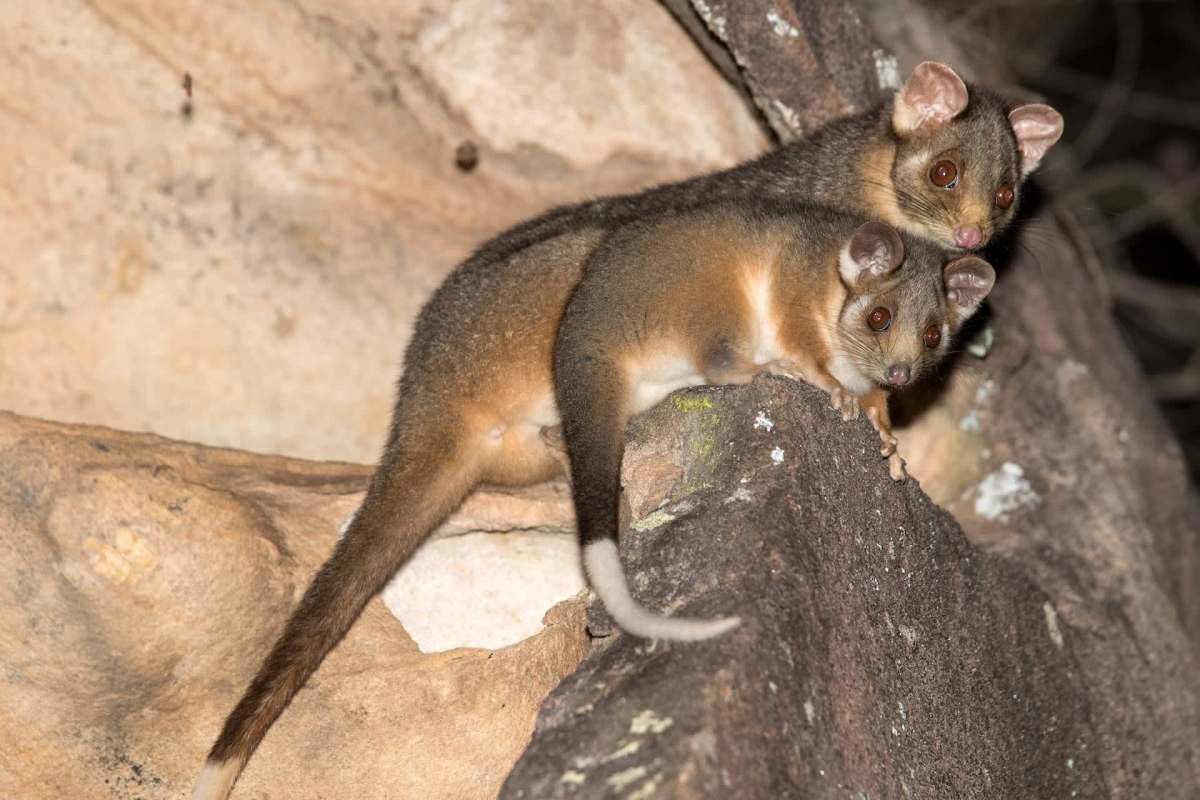
Extreme heat is forcing Western Australia's critically endangered western ringtail possum to reduce its essential feeding and activity, threatening the species' survival and delaying conservation progress, per a recent study shared on ConnectSci.
What's happening?
A research team fitted motion-sensing collars on western ringtail possums living near Perth during the summer months spanning 2024 and 2025. Their findings, published in Pacific Conservation Biology, demonstrated how sweltering temperatures alter the animals' nightly routines.
Days surpassing 40 degrees Celsius (104 degrees Fahrenheit) saw major behavioral shifts. Males decreased their movement by up to 43%, and females reduced their activity by 31% compared to conditions around 27 degrees Celsius (around 80 degrees Fahrenheit).
"What really stood out was that the biggest drop in activity happened early in the evening, when western ringtail possums usually do most of their feeding," Roy Teale, a Murdoch University Ph.D. candidate and zoologist, said in an article from the university on Phys.org. "That's concerning, because it suggests they're missing critical foraging opportunities on the hottest days, which can lead to weight loss and lower energy levels."
"With climate change driving more frequent and intense heat waves, our latest findings show new risks emerging that could still threaten the species' long-term survival," Teale added.
Why is this study important?
When possums can't feed properly during extreme heat, they lose weight and have less energy, leading to fewer babies born and more animals dying.
Perk up the winter blues with natural, hemp-derived gummies Camino's hemp-derived gummies naturally support balance and recovery without disrupting your routine, so you can enjoy reliable, consistent dosing without guesswork or habit-forming ingredients. Flavors like sparkling pear for social events and tropical-burst for recovery deliver a sophisticated, elevated taste experience — and orchard peach for balance offers everyday support for managing stress while staying clear-headed and elevated.
Learn more → |

The western ringtail possum population crashed by more than 80% over 10 years, earning it a critically endangered classification. Recent surveys, however, found around 21,800 possums still alive, far more than previously estimated.
However, that still doesn't solve the problem that rising temperatures create for animals across the world. Conservation challenges like this delay progress toward protecting biodiversity and sustaining functional ecosystems.
The possums' struggle illustrates widespread ecological vulnerability, with intensifying heat threatening countless species that are also compounded by pressures from habitat loss and human expansion.
What's being done about extreme heat impacts?
Harry Moore, lead researcher and scientist with Western Australia's Department of Biodiversity, Conservation, and Attractions, emphasized that protection efforts must account for more than just death tolls.
TCD Picks » Upway Spotlight
💡Upway makes it easy to find discounts of up to 60% on premium e-bike brands





"Our results show that it's not enough to look at whether animals survive heat waves — we also need to understand what heat is costing them," Moore said in the Murdoch University article. "Protecting cooling habitat like large trees, canopy cover, and natural hollows, and factoring behavioral stress into climate-risk planning, will be critical as extreme heat becomes more frequent."
|
What's the most you'd pay per month to put solar panels on your roof if there was no down payment?
Click your choice to see results and speak your mind. |
 $200 or more 💰
Get TCD's free newsletters for easy tips to save more, waste less, and make smarter choices — and earn up to $5,000 toward clean upgrades in TCD's exclusive Rewards Club.
Cool Picks