


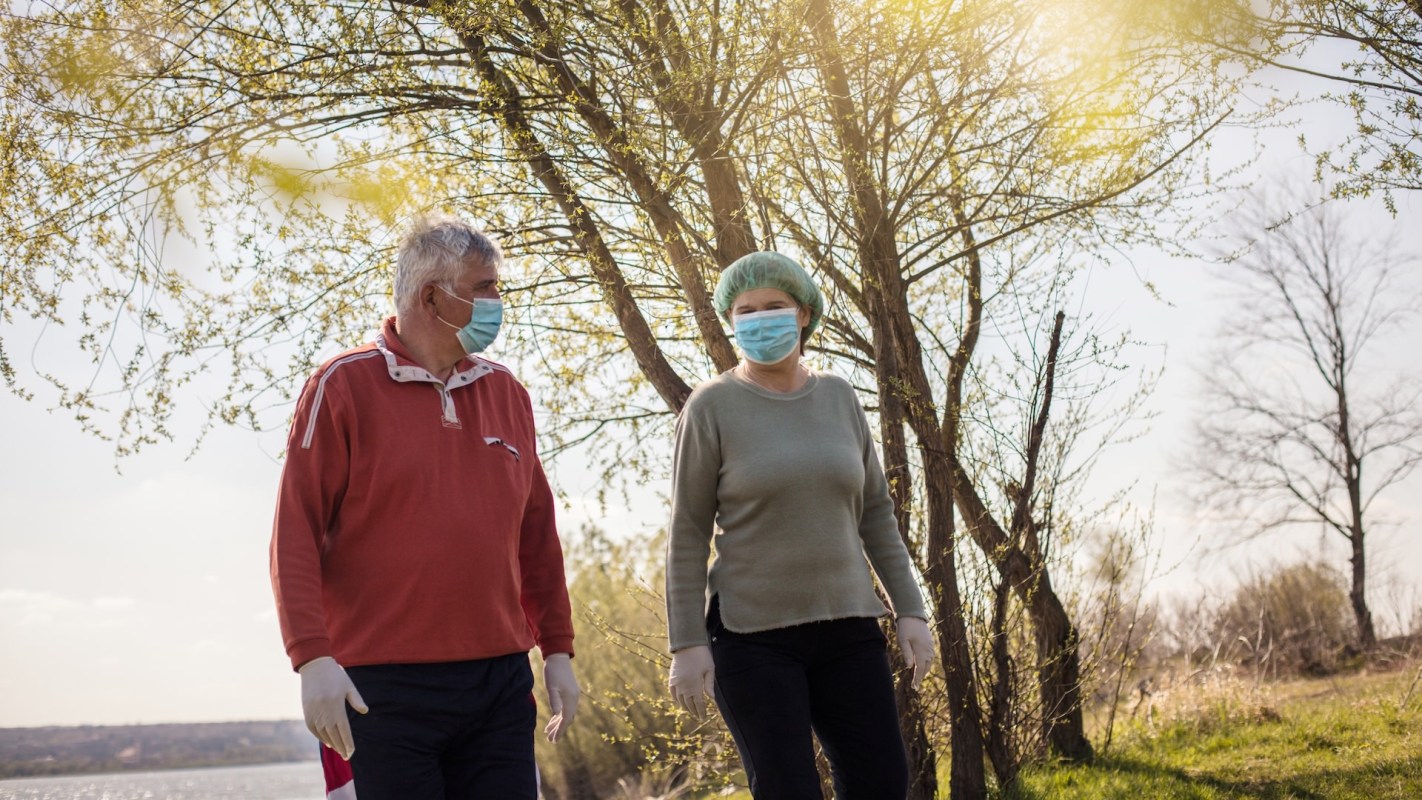
During the COVID-19 pandemic, social isolation made mental health plummet worldwide.
According to a new study, which was published in PLOS One, one key neighborhood feature kept people's spirits up: green spaces.
Researchers from Carleton University and the University of Toronto studied 13,130 Canadian adults over 50. They measured participants' depression before and six months into the pandemic, finding that those living in neighborhoods with more green spaces had lower odds of depression.
According to the U.S. Environmental Protection Agency, green spaces refer to any land that is partly or completely covered with grass, trees, shrubs, or other vegetation.
While trees and parks might not seem that special at first glance, study after study has proved the benefits of incorporating green spaces into people's communities and everyday lives. In fact, one study showed that long-term exposure to green spaces positively impacts your mental health; another found that proximity to nature slowed cognitive decline.
It's no surprise that they helped during the pandemic, though the benefits were more pronounced among certain demographics. People with restricted access to more distant green spaces, like those with limited mobility or lower incomes, benefited more from having greenery nearby.
On this point, the study's authors emphasized the importance of abundant urban green space as a mental health booster for vulnerable populations.
Esme Fuller-Thomson, University of Toronto professor and study co-author, said, as relayed by Medical Xpress: "There is a need to expand equitable access to green space, particularly in lower-income neighborhoods, to protect and preserve local greenery, even during public health emergencies, and to integrate green infrastructure into mental health resilience strategies."
Planting more urban greenery, especially with native plants, is also great for the environment. Trees, for example, provide habitats for squirrels and birds, while native plants across the board give local pollinators much-needed food sources.
Dr. Paul J. Villeneuve, professor and lead author of the study, said, "Urban greenery wasn't just a backdrop — it played a protective mental health role in one of the most stressful global events in recent history."
TCD Picks » Quince Spotlight
💡These best-sellers from Quince deliver affordable, sustainable luxury for all




|
What source of air pollution do you worry most about at home? Click your choice to see results and speak your mind. |
 Wildfires 😷
Join our free newsletter for good news and useful tips, and don't miss this cool list of easy ways to help yourself while helping the planet.
Cool Picks






